 Save
Save I stumbled onto this Thai green curry soup during a rainy Tuesday when my local market had just received fresh Thai basil, and I couldn't resist the vibrant bundle. What started as an experiment with curry paste I'd been meaning to use turned into something that filled my kitchen with such an intoxicating aroma that my roommate came home early just to ask what I was making. The balance of creamy coconut milk with that sharp, grassy heat from the curry paste clicked immediately, and I've been making it ever since.
The first time I served this to friends who claim they don't really cook, they were skeptical about the fish sauce until they tasted it—then they got quiet, the way people do when food is actually good. One friend asked if I'd bought it from somewhere, and I remember feeling genuinely proud that something so simple could make people pause mid-conversation.
Ingredients
- Green curry paste: This is where the soul lives—two tablespoons might seem small, but it blooms into something magical when it hits the hot oil, releasing all those grassy, herbaceous notes that make people ask what the secret ingredient is.
- Firm tofu or chicken breast: Choose whichever feels right for your mood; tofu absorbs the broth beautifully and turns silky, while chicken adds a different kind of richness.
- Coconut milk: Full-fat is non-negotiable here—it creates that luxurious mouthfeel that makes the soup feel like a treat rather than just something healthy.
- Fish sauce: I know it smells aggressive, but trust it; that umami depth is what separates this from tasting vaguely Thai and actually tasting like authentic Thai.
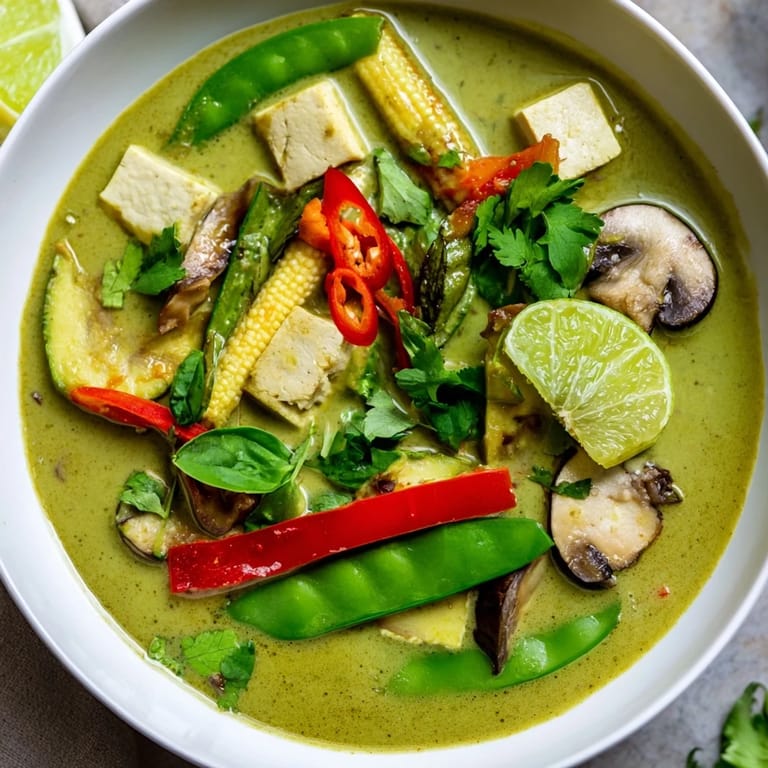
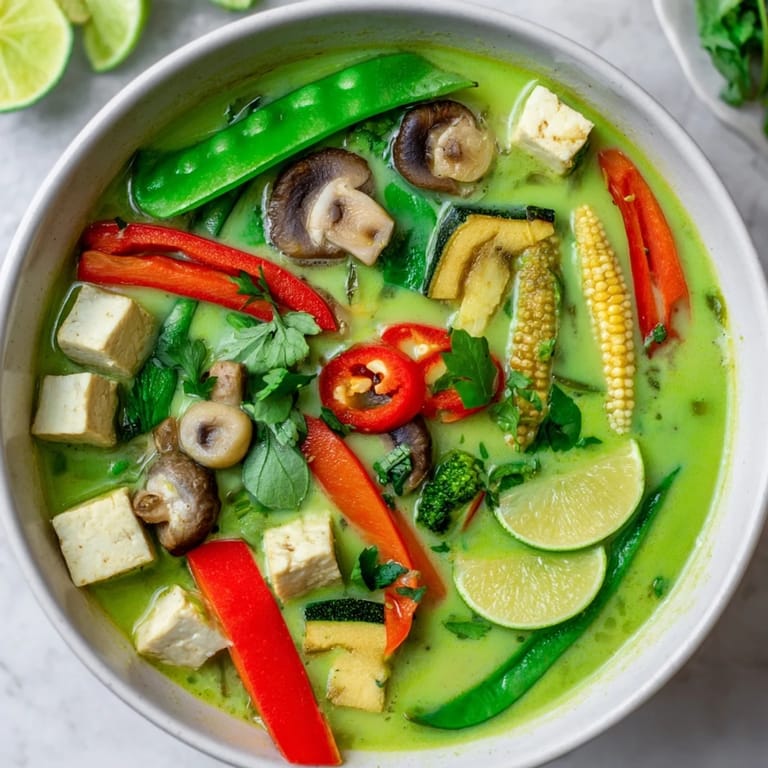
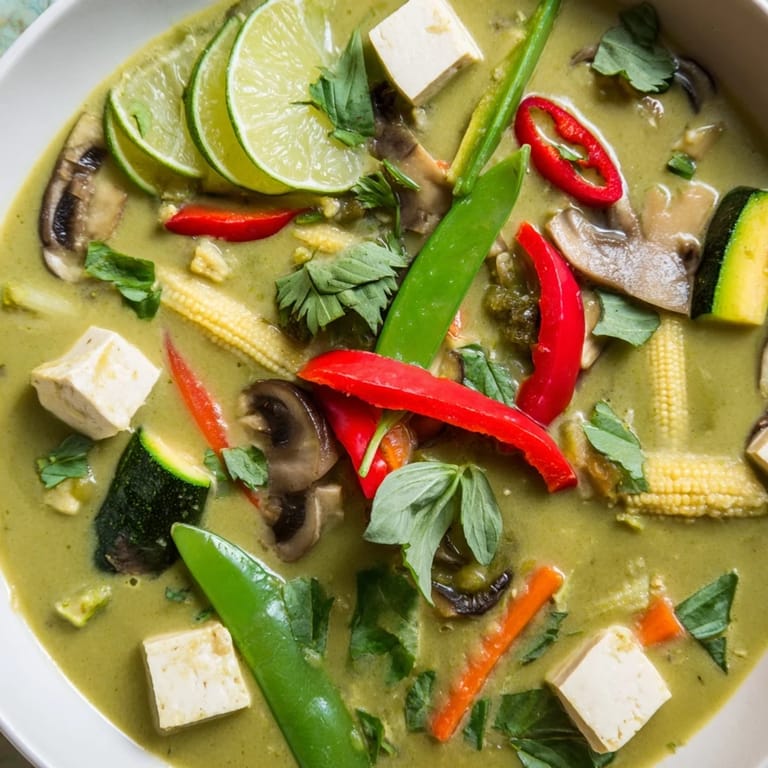
- Fresh vegetables: Red bell pepper, zucchini, baby corn, snap peas, mushrooms, and carrot—choose whatever speaks to you, but keep the variety; the mix of textures matters.
- Vegetable or chicken broth: This dilutes the richness just enough so you can eat a full bowl without feeling like you've had a meal made entirely of cream.
- Fresh cilantro and Thai basil: These aren't optional garnishes; they're the final note that transforms the soup from good to memorable, so don't skip them.
Tired of Takeout? 🥡
Get 10 meals you can make faster than delivery arrives. Seriously.
One email. No spam. Unsubscribe anytime.
Instructions
- Bloom the curry paste:
- Heat the oil over medium heat until it just barely shimmers, then add the curry paste and let it sizzle for a full minute or two—you're waking up all those spices, and you'll know it's working when the smell hits you.
- Build your base:
- Add the sliced onion and cook until it softens at the edges, about two minutes; this mellows the onion's bite and gives the curry paste something to cling to.
- Start your protein:
- Add your tofu or chicken and give it a quick 2–3 minute cook, just enough so the outside starts to take on color and the flavors meld slightly.
- Pour in the creamy broth:
- Combine the coconut milk and broth, then bring everything to a gentle simmer—aggressive boiling will make the coconut milk break and lose that silky texture you're after.
- Add vegetables and simmer:
- Add your vegetables in order of how long they take to cook, aiming for that sweet spot where they're tender but still have a little snap; this usually takes about 8–10 minutes.
- Season and taste:
- Fish sauce and sugar are your final adjustments; the fish sauce brings depth and the sugar rounds out the heat, but taste as you go because what feels right to you matters more than a rule.
- Finish and serve:
- Ladle the soup into bowls while it's still steaming, then top each one generously with cilantro, Thai basil, a lime wedge tucked on the side, and chili if you like the heat.
 Save
Save There's something about serving a soup that feels both indulgent and nourishing at the same time that makes people relax into conversation. The cilantro and basil on top add this brightness that keeps the soup from ever feeling heavy, no matter how much coconut milk is in there.
Balancing Heat and Creaminess
The magic of this soup lives in that tension between the sharp, almost aggressive heat of green curry and the smoothing, soothing presence of coconut milk. If your version comes out too spicy, you haven't failed—you've just learned your personal threshold, and you can adjust next time by using less curry paste or diluting it with more broth. If it's too mild and creamy, a squeeze of lime and a sprinkle of fresh chili at the end wakes everything back up.
Making It Your Own
Once you've made this a few times, you'll start seeing it as a template rather than a strict recipe, which is when cooking actually becomes fun. I've made versions with shrimp, with only leafy greens, with baby potatoes for heartiness, and they've all been delicious in different ways. The structure stays the same, but the specifics become yours.
Serving and Pairings
This soup is complete on its own, but if you want to turn it into something more substantial, jasmine rice or thin rice noodles on the side make it a full meal. The soup's bold flavors actually support other elements really well—I've served it alongside cucumber salad or quick-pickled vegetables, and the contrast makes both better.
- Jasmine rice soaks up the broth beautifully, turning each spoonful into something more complex.
- Fresh lime juice squeezed at the table lets each person adjust the acidity to their taste.
- Keep extra cilantro and basil nearby so people can add as much as they want without you worrying you've been stingy.
 Save
Save This soup is one of those dishes that reminds you why cooking at home beats almost everything else—the smell alone is worth the effort. Make it once, and you'll find yourself craving the ritual of blooming that curry paste and watching everything come together.
Recipe FAQs
- → Can I use chicken instead of tofu in this soup?
Yes, chicken breast can be thinly sliced and used as a protein alternative to tofu, absorbing the curry flavors beautifully while offering a different texture.
- → What vegetables work best in this soup?
Red bell pepper, zucchini, baby corn, snap peas, mushrooms, carrots, and onions create a balanced medley that softens perfectly in the broth.
- → How can I adjust the spiciness of the soup?
Adding more green curry paste or fresh sliced chili peppers increases heat. Alternatively, reduce curry paste for a milder flavor.
- → Is coconut milk necessary for the soup base?
Coconut milk provides the creamy richness essential to the soup’s balance, complementing the curry paste and vegetables.
- → What garnishes enhance the soup's flavor?
Fresh cilantro, Thai basil leaves, lime wedges, and optional sliced red chili add bright, herbal, and zesty notes.
- → Can I make this soup gluten-free?
Yes, by using gluten-free soy sauce or fish sauce alternatives, the soup remains suitable for gluten-free diets.