 Save
Save My neighbor stopped by one evening with a bag of enormous shrimp from the farmer's market, insisting I had to do something with them before they lost their sweetness. I had maybe twenty minutes before dinner needed to be on the table, so I grabbed whatever colorful vegetables were lurking in my crisper drawer and threw together this stir-fry on pure instinct. The kitchen filled with the most intoxicating smell of garlic and ginger hitting hot oil, and suddenly my rushed dinner felt like something I'd been planning all week. That quick, vibrant meal became the recipe I return to whenever I need food that tastes like it took hours but asks for almost none of your time.
I made this for my partner during one of those weeks where we'd both been so buried in work that actual cooking felt like a luxury we couldn't afford. Watching the colors pop in the wok and hearing the sizzle reminded both of us why we actually enjoyed eating together. By the time we sat down with steaming bowls, the whole mood of the evening had shifted from exhausted to something close to celebratory over what was essentially 25 minutes of work.
Ingredients
- Large shrimp (1 lb): Buy them as fresh as possible, and if they smell even slightly off, trust that instinct and walk away—good shrimp should smell like the ocean, not like old pennies.
- Red and yellow bell peppers: The color contrast matters more than you'd think, both visually and because the sweeter bell peppers balance the savory sauce beautifully.
- Broccoli florets: Cut them smaller than you think you need to, because they'll soften just enough in the stir-fry to be tender but still have that satisfying crunch.
- Fresh ginger and garlic: Minced fine and fresh, never from a jar—the smell the moment they hit the oil is how you know everything's about to taste right.
- Low-sodium soy sauce: The low-sodium version gives you room to season further without the sauce turning into a salt bomb.
- Oyster sauce (optional): It adds an umami depth that makes the whole thing taste somehow more complete, but skip it if you're cooking vegetarian.
- Sesame oil: Just a teaspoon or two goes a long way, so don't overshadow the other flavors with too much of this heady ingredient.
- Rice vinegar and honey: These two balance each other out, creating a sweet-tart backdrop that keeps the sauce from tasting one-dimensional.
Tired of Takeout? 🥡
Get 10 meals you can make faster than delivery arrives. Seriously.
One email. No spam. Unsubscribe anytime.
Instructions
- Make your sauce while the pan is still cold:
- Whisk together soy sauce, oyster sauce, sesame oil, honey, rice vinegar, cornstarch, and water in a small bowl and set it aside. This way, when things get hectic on the stove, your sauce is already waiting and won't be a frantic scramble.
- Pat your shrimp completely dry:
- Moisture is the enemy of a good sear, so take a moment to blot each shrimp with paper towels and season lightly with salt and pepper. This tiny step is what separates shrimp that sticks to the pan from shrimp that gets golden.
- Cook the shrimp first, then set it aside:
- Heat 1 tablespoon oil in your wok or skillet over medium-high heat and cook the shrimp for 2 to 3 minutes, stirring often, until they turn pink and opaque. Don't let them hang around longer than that or they'll start toughening up.
- Build your aromatics in fresh oil:
- Add the remaining oil, then your minced garlic and grated ginger, stirring constantly for about 30 seconds until the smell is so good you can barely stand it. This blooming process unlocks their flavor so it spreads throughout the whole dish.
- Stir-fry the vegetables in stages:
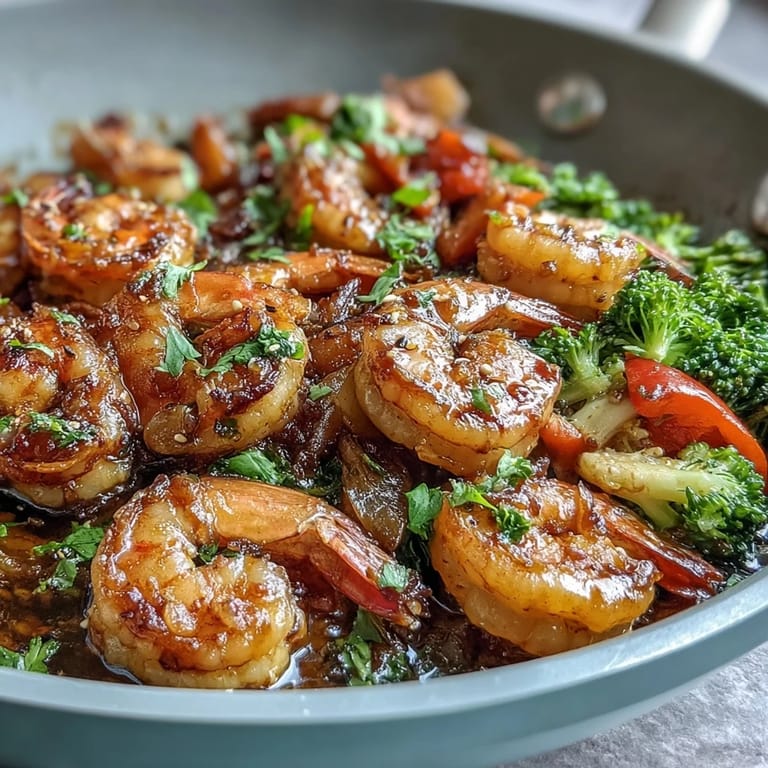
- Add your bell peppers, broccoli, carrot, and sugar snap peas all at once, then toss them around for 3 to 5 minutes until they're bright and just barely tender. You want them to still have a little resistance when you bite into them, not soft and sad.
- Bring everything back together:
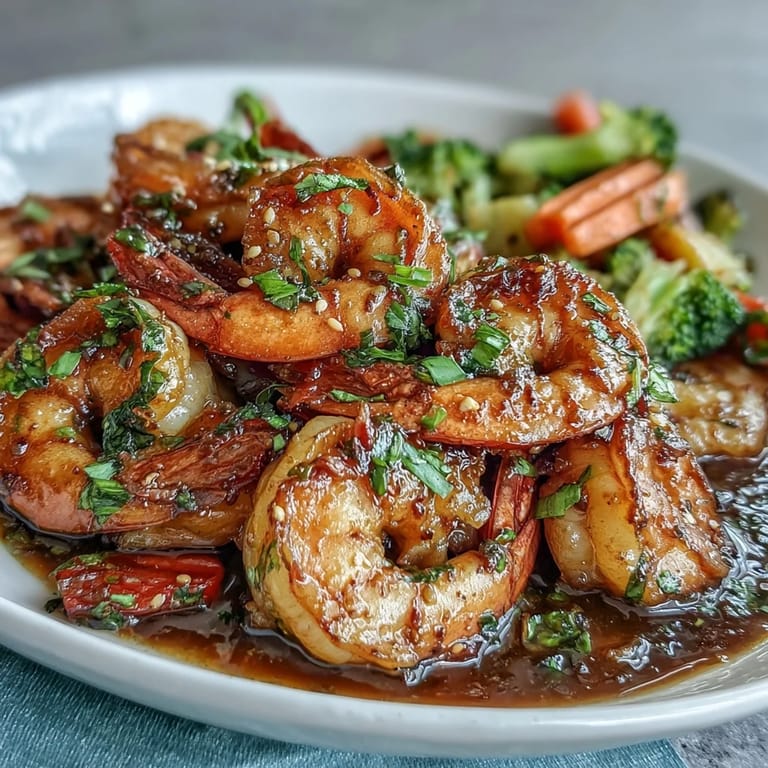
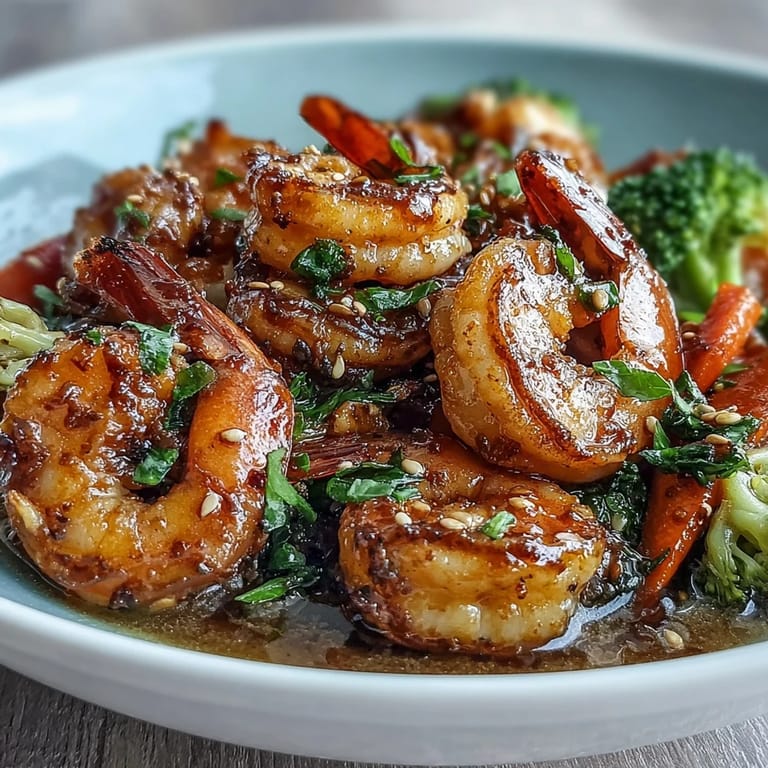
- Return the shrimp to the pan along with the sliced green onions, then pour your sauce over everything and stir like you mean it. Watch as the sauce thickens and coats everything in this glossy, gorgeous layer—it takes 2 to 3 minutes and smells like pure comfort.
- Finish with a flourish:
- Scatter sesame seeds and fresh cilantro or green onion tops over the top and serve immediately over rice or noodles. The moment you garnish is the moment the dish becomes restaurant-quality in your own kitchen.
 Save
Save I remember my mom tasting this and asking if I'd secretly trained as a chef, which made me laugh because I was standing there in an old t-shirt with ginger under my fingernails. That moment stuck with me—it's rare when something this simple gets mistaken for something fussy, and it made me realize how much the quality of your ingredients and your attention to the little moments actually matters.
The Case for High Heat
The difference between good stir-fry and mediocre stir-fry is heat, and I learned this the hard way by making several disappointing batches at medium heat before someone finally told me to crank it up. High heat seals the shrimp quickly, keeps the vegetables bright instead of letting them turn to mush, and creates tiny moments of caramelization that add layers of flavor. Once you feel that heat coming off the wok or skillet, you'll understand why stir-frying is supposed to be this exciting, fast-paced kind of cooking.
Vegetables That Actually Make Sense Together
I used to throw in whatever vegetables I had without thinking, and then I realized that vegetables in stir-fry should be chosen partly for how fast they cook. Bell peppers soften quickly and add a gentle sweetness, broccoli needs a bit longer to tenderize, carrots stay firm and crisp, and sugar snap peas should barely be cooked at all. Once you understand the logic, you can swap in other vegetables—zucchini, mushrooms, green beans—knowing how they'll behave and adjusting your timing accordingly.
Serving and Storing Your Stir-Fry
Stir-fry is at its absolute best the moment it comes off the heat, served over steaming rice or noodles while everything still has that slight crispness. Leftovers are fine for a day or two in the refrigerator, but reheating never quite captures that original magic, so eat it fresh whenever possible. If you do have leftovers, store the components separately if you can—rice apart from the stir-fry—so the vegetables don't turn to soup by tomorrow.
- Serve immediately over jasmine rice, brown rice, or noodles for the best texture contrast.
- Leftover stir-fry works in grain bowls, wraps, or on top of salad if you're looking to stretch it into another meal.
- Store any leftover sauce separately and reheat the stir-fry gently in a pan rather than the microwave to keep things from getting soggy.
 Save
Save This stir-fry has become my answer to the question of what to make when I need to prove that good food doesn't require hours of effort or an impossibly long ingredient list. Every time I make it, I'm grateful for how much pleasure 25 minutes of focused cooking can deliver.
Recipe FAQs
- → How do I keep the vegetables crisp during cooking?
Stir-fry vegetables quickly over high heat, avoiding overcrowding the pan to maintain their crisp texture.
- → Can I substitute the shrimp with other proteins?
Yes. Chicken or tofu can be used as alternatives to shrimp for different flavors and dietary preferences.
- → What is the best oil for stir-frying this dish?
Vegetable oils with high smoke points, such as canola or peanut oil, work best to prevent burning and maintain flavor.
- → How can I add extra heat to this dish?
Add red pepper flakes or sliced fresh chili during cooking to introduce a spicy kick.
- → Is this dish suitable for gluten-free diets?
Use tamari instead of soy sauce and substitute oyster sauce with a gluten-free alternative to make it gluten-free.