 Save
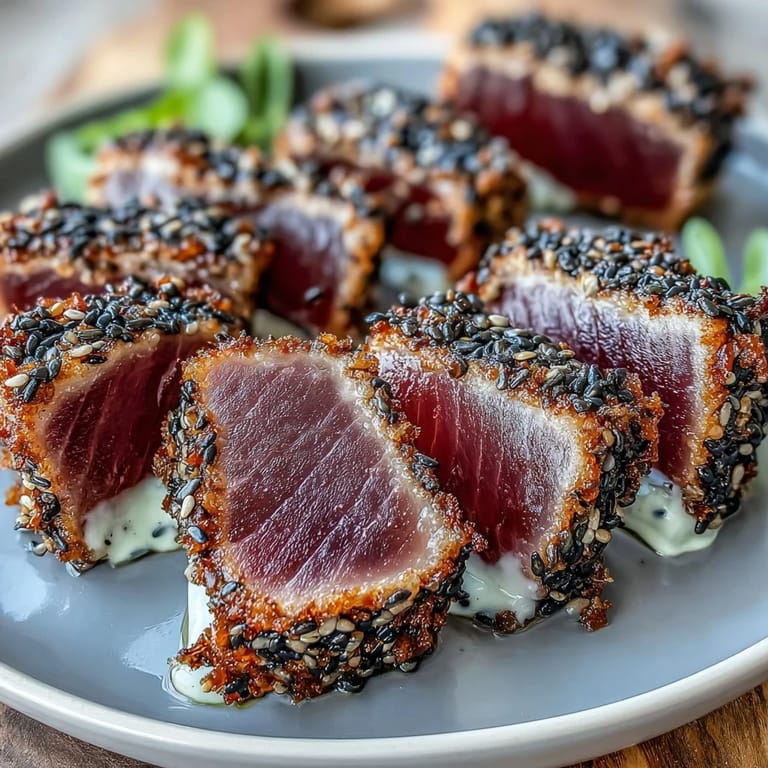
Save The first time I seared tuna with a black sesame crust, the kitchen filled with this incredible nutty aroma that made my roommate ask what restaurant I was calling from. I'd watched a chef do it once at a sushi counter and became slightly obsessed with recreating that moment of golden, crackling seeds giving way to buttery rare tuna. Turns out, you don't need a fancy kitchen or years of training—just good fish, high heat, and confidence that three minutes is all you need.
I made this for someone I wanted to impress, and I remember standing at the stove thinking I was going to mess it up because the whole thing felt too simple to be real. But then the pan sizzled, the sesame turned golden in seconds, and I pulled it off heat before my anxiety could take over. The look on their face when they tasted it made me realize that sometimes the best dishes are the ones where you get out of your own way.
Ingredients
- Sushi-grade tuna steaks (2 pieces, 6 oz each, about 1 inch thick): This is non-negotiable—regular supermarket tuna won't work here because you're eating it practically raw, so source from a reputable fishmonger or Japanese market.
- Soy sauce (1 tablespoon): A quick marinade that seasons the fish and helps the sesame seeds adhere better to the surface.
- Sesame oil (1 teaspoon): Don't skip this; it adds a warm, toasted flavor that makes the whole dish feel intentional.
- Salt and black pepper: Keep it minimal since soy sauce already brings saltiness.
- Black sesame seeds, toasted (1/2 cup): Toast them yourself if you can—store-bought toasted seeds are fine, but the aroma when you toast them fresh is worth the two minutes.
- White sesame seeds, optional (1/4 cup): Adds visual contrast and a lighter flavor if you want to cut through the intensity of the black seeds.
- Mayonnaise (1/4 cup): Use good quality mayo because wasabi mayo is only as good as its base.
- Wasabi paste (1 to 2 teaspoons): Start with less and taste as you go—some brands are surprisingly spicy.
- Rice vinegar (1 teaspoon): A touch of acidity that brightens the mayo and prevents it from feeling heavy.
- Lemon juice (1 teaspoon): Brings freshness and sharpness to the wasabi mayo sauce.
- Scallions, pickled ginger, and lemon wedges for garnish: These aren't extras—they're flavor bridges that complete the plate.
Tired of Takeout? 🥡
Get 10 meals you can make faster than delivery arrives. Seriously.
One email. No spam. Unsubscribe anytime.
Instructions
- Prepare your tuna:
- Pat the steaks completely dry with paper towels because any moisture will steam instead of sear. Brush both sides with soy sauce and sesame oil, then season gently with salt and pepper—you're building layers of flavor, not masking them.
- Coat with sesame crust:
- Pour your toasted sesame seeds onto a shallow plate and press each tuna steak firmly into them, rotating to coat all sides evenly. Be generous but not obsessive; the seeds should stick naturally from the soy and sesame oil.
- Heat your pan properly:
- Place your skillet (non-stick or cast iron both work) over high heat for a full minute—this is crucial because a cold pan means steam instead of sear. When it's ready, it should shimmer and just barely smoke.
- Sear with precision:
- Add a thin film of oil and immediately place the tuna in the pan—you'll hear a satisfying sizzle. Sear for exactly 30 to 45 seconds per side, resisting the urge to move it around or peek underneath; you want a golden crust, not a well-done steak.
- Make wasabi mayo:
- While the tuna rests for two minutes, whisk together mayo, wasabi paste, rice vinegar, and lemon juice until completely smooth. Taste and adjust the wasabi heat to your preference—this is your chance to make it yours.
- Slice and plate:
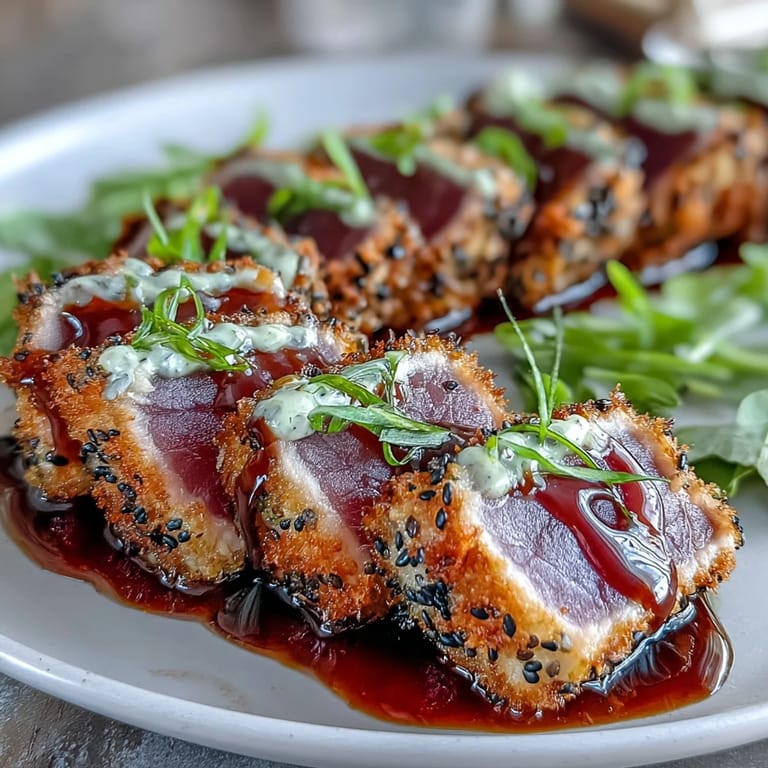
- Slice the tuna against the grain into half-inch pieces, which keeps each bite tender and shows off the beautiful rare center. Arrange on plates, drizzle generously with wasabi mayo, and scatter with scallions and pickled ginger.
 Save
Save One evening, a friend who claimed not to like raw fish took one bite and went quiet in that specific way that means you've changed their mind about something. We didn't talk much after that—we just kept eating, letting the wasabi mayo do the talking, and I realized food does this sometimes.
The Crust That Matters
Black sesame seeds aren't just decorative—they're doing actual work here. When they hit that hot pan, they turn nutty and almost smoky, creating a textural contrast that regular white sesame seeds can't quite achieve. The toasting matters too; if your seeds smell faintly musty or taste bland, they were probably old. Fresh black sesame seeds taste almost peppery, which is why they pair so perfectly with rare fish and that aggressive wasabi kick.
Wasabi Mayo as the Star
This isn't just a condiment—it's what transforms a seared piece of fish into something memorable. The rice vinegar and lemon juice do invisible work, keeping the mayo from sitting heavy on your palate, while the wasabi adds heat and a weird, wonderful musky quality that makes you want another bite. I've made this mayo wrong before by using too much wasabi all at once, thinking I needed to make a statement, when really the subtlety is the point.
Timing and Temperature Considerations
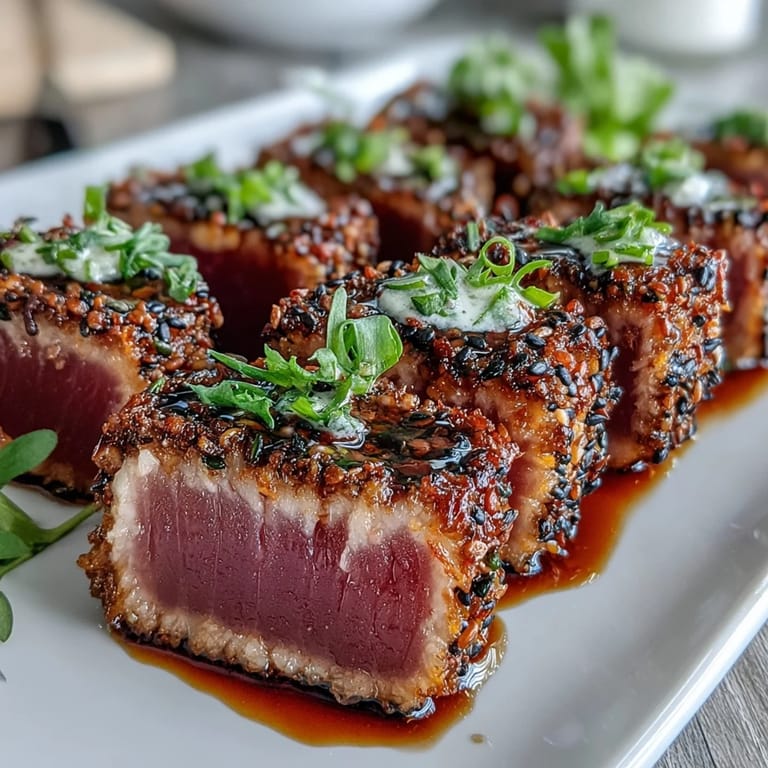
The oven-like heat of a properly preheated pan is what creates that golden, crispy exterior without cooking the inside. If your kitchen runs cool or you're using a pan that doesn't hold heat well, you might need to extend the sear by ten seconds per side, but watch carefully because every second counts. Room temperature tuna sears better than cold tuna, so pull it from the fridge while you're preparing your ingredients and coating it with sesame seeds.
- Use a meat thermometer if you're nervous—rare tuna should hit about 110 to 115 degrees Fahrenheit internally.
- Let the tuna rest for two minutes after searing so the residual heat doesn't keep cooking the center.
- Slice against the grain to keep each piece tender and showcase that beautiful rare center.
 Save
Save This dish taught me that sometimes less is more, and that a minute and a half in the pan can taste like confidence. Make it when you want to feel like a chef without the stress.
Recipe FAQs
- → How do I get the sesame seeds to stick to the tuna?
Brush the tuna steaks with soy sauce and sesame oil before pressing firmly into toasted black sesame seeds to ensure an even crust.
- → What is the best doneness for this tuna dish?
Pan-sear tuna quickly for a rare center, about 30–45 seconds per side, to maintain a tender and flavorful texture.
- → Can I make the wasabi mayo spicier or milder?
Adjust the amount of wasabi paste in the mayo to your taste, starting with one teaspoon and increasing gradually.
- → Are there suitable alternatives for mayonnaise?
For dairy-free options, use vegan mayonnaise while keeping the other ingredients the same.
- → What garnishes enhance the flavor of this tuna dish?
Thinly sliced scallions, pickled ginger, and fresh lemon wedges add brightness and contrast to the rich tuna and wasabi mayo.
- → Can I substitute white sesame seeds in the crust?
White sesame seeds are optional; using only black sesame seeds still provides a crunchy texture and deep flavor.