 Save
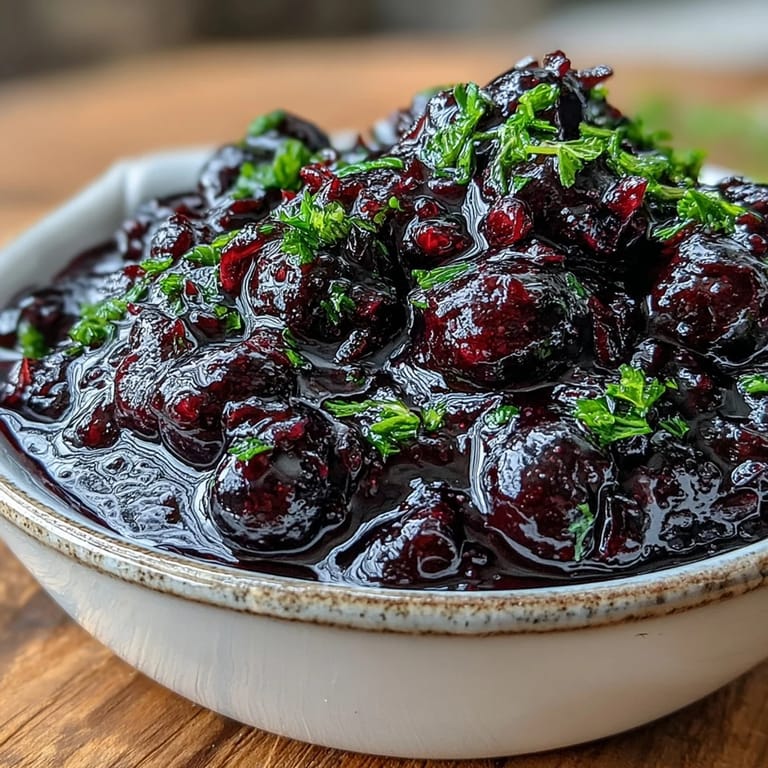
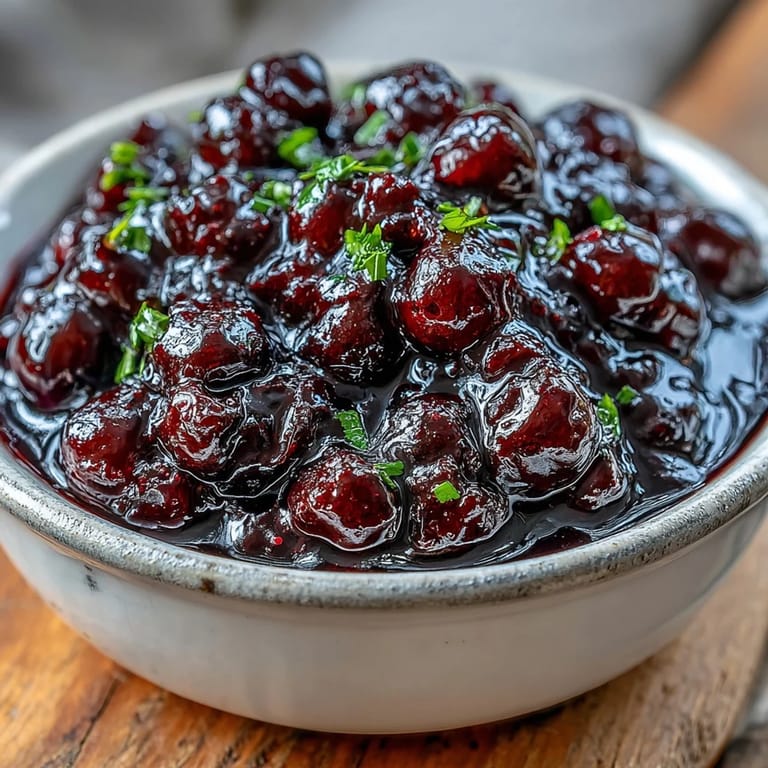
Save My first encounter with a black currant reduction happened on a November evening when a friend brought over a bottle of crème de cassis and challenged me to do something interesting with it. I'd never worked with black currants before—didn't even know they existed beyond vague mentions in cooking shows—but there was something about their dark, almost mysterious appearance that made me curious. That night, I made my first reduction by accident, really, just letting wine and fruit simmer while I figured out what I was doing, and by the time it thickened into this glossy, jewel-toned sauce, I understood why chefs become obsessed with this kind of alchemy.
I made this sauce for a dinner party where I'd planned something ambitious but ultimately underwhelming, so I poured everything into getting the reduction exactly right to save the meal. Halfway through simmering, my kitchen smelled like red wine and dark berries in a way that made everyone pause and sniff the air—suddenly, the whole evening felt elevated before we'd even sat down. That's when I realized this sauce does more than flavor food; it sets a mood.
Ingredients
- Fresh or frozen black currants (1 cup / 150 g): Use frozen without thawing if that's what you have; they burst more easily and release their flavor beautifully, giving you a deeper color and more concentrated berry notes.
- Dry red wine (1 cup / 240 ml): Don't save money here—choose something you'd actually drink, because thin or off-tasting wine becomes more obvious as it reduces and concentrates.
- Good-quality chicken or vegetable stock (1/2 cup / 120 ml): Homemade is ideal, but store-bought works if you taste it first and it doesn't taste salty or off.
- Balsamic vinegar (2 tbsp / 30 ml): The acidity keeps the sauce from tasting one-dimensional and adds a subtle sweetness that black currants love.
- Shallot, finely chopped (1 small): This gives the sauce an aromatic backbone without any harsh bite if you cook it gently until translucent.
- Fresh thyme sprig (1): One sprig is enough; too much thyme can overpower the delicate fruit flavor and make the sauce taste medicinal.
- Bay leaf (1): It sits in the background, contributing an earthy note that deepens everything without announcing itself.
- Granulated sugar (2 tbsp / 25 g): Balance the wine's tannins and acidity—taste before serving and adjust if the reduction tastes too sharp.
- Freshly ground black pepper (1/4 tsp): Grind it fresh right before adding; pre-ground loses its liveliness and can taste dusty.
- Fine sea salt (1/4 tsp): Finish with this rather than using it all at the start, since the sauce concentrates as it reduces and salt intensifies.
- Cold unsalted butter, cut into cubes (2 tbsp / 30 g): Cold butter is essential—it emulsifies into the sauce and creates that glossy, silky finish that makes people think you've done something magical.
Tired of Takeout? 🥡
Get 10 meals you can make faster than delivery arrives. Seriously.
One email. No spam. Unsubscribe anytime.
Instructions
- Start with shallots in butter:
- Melt the first tablespoon of butter over medium heat and let the chopped shallot soften for a couple of minutes until it turns translucent and smells sweet. You're not trying to brown it—just coax out its gentle sweetness.
- Combine everything and let it marry:
- Add the black currants, red wine, stock, vinegar, thyme, bay leaf, sugar, salt, and pepper all at once, stirring so the sugar dissolves. Bring the whole thing to a gentle boil, then turn the heat down.
- Reduce with patience:
- Simmer uncovered for 15 to 20 minutes, stirring every few minutes so nothing sticks to the bottom. You'll watch the liquid go from wine-colored to deep purple-black as it reduces and the currants break down into the sauce.
- Strain for smoothness:
- Pour everything through a fine mesh strainer into a clean saucepan, and don't rush this step—press the currants gently with the back of a spoon to extract all their liquid and intensity. What you discard is just skin and fiber; what you keep is pure, concentrated flavor.
- Mount with cold butter:
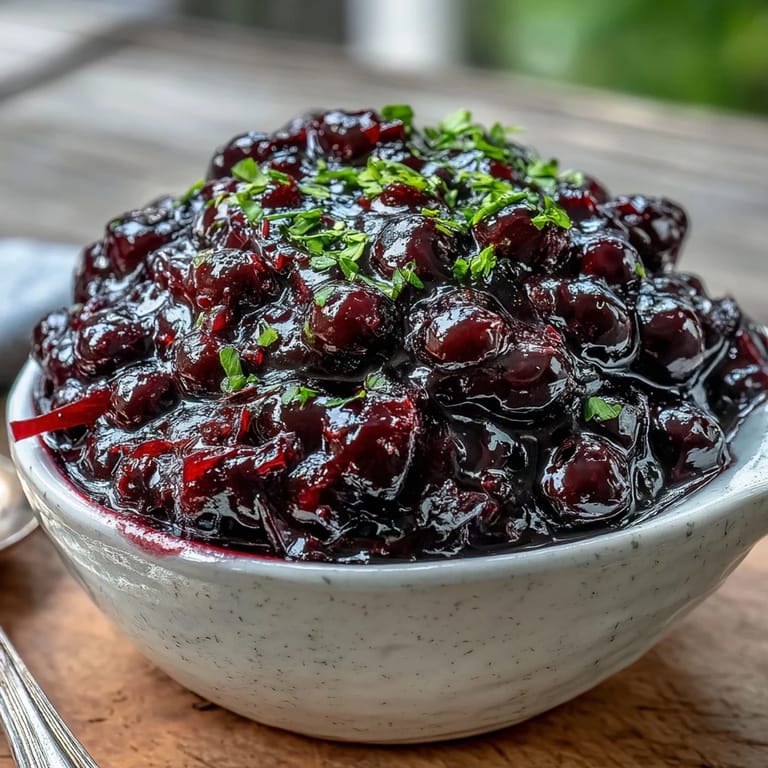
- Return the strained sauce to low heat and whisk in the cold butter cubes one at a time, letting each piece disappear before adding the next. The emulsion will turn glossy and beautiful, with a silky mouthfeel that feels luxurious.
- Taste and adjust:
- Finish with a pinch more salt if needed, or a splash more vinegar if it tastes too sweet. Then serve it warm over whatever meat or charcuterie is waiting for it.
 Save
Save The moment I made this reduction for a holiday charcuterie board, a usually quiet friend took one bite and suddenly became animated, asking if I'd made it myself and insisting I teach them how. Food doesn't always spark those conversations, but something about the depth and sophistication of this sauce opened something up that night.
When to Make This Ahead
I've discovered that making this sauce a day or two before serving actually works in your favor—the flavors meld and deepen overnight in the refrigerator, becoming more nuanced. Just store it in an airtight container and reheat gently over low heat with a splash of water or wine if it's thickened too much, whisking in a small knob of butter at the end to restore its glossy finish. It keeps for up to three days, which means you can plan a dinner around it without the last-minute stress.
Pairing Beyond the Obvious
Most people think of duck or venison when they imagine black currant reduction, and those pairings are indeed spectacular, but I've learned to be more adventurous. A spoonful over seared scallops transforms them into something almost decadent, and I've used this sauce as a glaze for roasted lamb chops, drizzled over creamy pâtés, and even stirred into a grain salad for unexpected sweetness and depth. Even a simple roasted chicken breast becomes memorable when you finish the plate with this.
Making It Your Own
The beauty of this reduction is how forgiving it is once you understand the basic technique. I've experimented with swapping the red wine for rosé or even a dry Riesling for something lighter, added crushed juniper berries for a gin-like note, and once replaced half the stock with a splash of port for deeper richness. The recipe is a foundation, not a rulebook—taste as you go and adjust to what your palate loves.
- For extra acidity and brightness, add a squeeze of fresh lemon juice or a splash of sherry vinegar at the very end.
- If you can find crème de cassis, substitute it for 2 tablespoons of the red wine to amplify that distinct black currant depth.
- Make a bigger batch and freeze it in ice cube trays so you always have elegant sauce on hand for weeknight meals.
 Save
Save This sauce taught me that elegant cooking doesn't require complicated techniques or hard-to-find ingredients—just patience, attention, and a willingness to taste constantly. Every time I make it, I'm reminded that the simplest things, done thoughtfully, become the most memorable.
Recipe FAQs
- → What meats pair best with this reduction?
Duck is the classic pairing—the rich, fatty meat perfectly balances the tart-sweet sauce. Pork tenderloin, roasted venison, and lamb also work beautifully. For charcuterie boards, drizzle over pâté or strong cheeses like aged cheddar and goat cheese.
- → Can I use frozen currants?
Absolutely. Frozen currants work equally well since they'll be cooked down and strained. No need to thaw first—just add them directly to the saucepan. The reduction process extracts all their deep flavor regardless of fresh or frozen state.
- → How do I store leftovers?
Keep refrigerated in an airtight container for up to 5 days. The flavors deepen and meld overnight. Reheat gently over low heat, whisking to restore emulsion. For longer storage, freeze for up to 3 months—thaw overnight in the refrigerator before reheating.
- → What's the purpose of straining?
Straining removes skins, seeds, and cooked aromatics, creating a smooth, elegant sauce that coats the back of a spoon. Press firmly on the solids to extract all their flavorful liquid before discarding them.
- → Can I make this dairy-free?
Yes—simply omit the butter at the end or replace with a plant-based alternative. The sauce will still be delicious, though slightly less glossy and creamy. You can also mount with a teaspoon of olive oil for richness without dairy.
- → What if my currants are very tart?
Taste the reduction before straining and add sugar in 1 teaspoon increments until balanced. Remember the butter will slightly mellow the tartness at the end. If still too sharp after finishing, add a pinch more sugar.