 Save
Save The first time I made this teriyaki salmon bowl, I wasn't even planning to. I had some salmon thawing on the counter and a carton of leftover rice taking up fridge space, so I decided to improvise. The kitchen filled with this incredible aroma—soy sauce caramelizing with honey and ginger—and I realized I'd stumbled onto something that felt both restaurant-quality and completely doable on a Tuesday night. Now it's the dish I reach for when I want something that feels special but doesn't demand hours of my time.
I made this for a friend who swears she doesn't cook, and watching her plate it up with such confidence—layering the vegetables, drizzling the mayo, sprinkling sesame seeds—she looked like she'd been doing this forever. She texted me the next day asking for the recipe, which told me everything I needed to know. It's the kind of dish that makes people feel capable in the kitchen.
Ingredients
- Salmon fillets (150 g each): Skinless makes cooking easier and the texture more forgiving, though skin-on works beautifully if you prefer it crispy.
- Soy sauce: The backbone of your glaze—don't skip it or swap it for something lighter, as it's what gives you that deep, savory umami.
- Mirin: This adds a gentle sweetness that balances the salty soy; it's genuinely worth finding in your grocery store's Asian section.
- Honey or maple syrup: Your choice here changes the flavor slightly—honey is brighter, maple adds earthiness.
- Rice vinegar: The acidity cuts through the richness beautifully; regular vinegar works but will taste sharper.
- Sesame oil: Just a teaspoon goes a long way; it adds a toasted, nutty depth that you'll notice immediately.
- Garlic and ginger: Fresh is best—they perfume the glaze and make everything taste more alive.
- Cornstarch slurry: This thickens the glaze so it clings to the salmon instead of running off into the bowl.
- Short-grain white rice: The slight stickiness helps everything hold together; day-old rice actually works best.
- Avocado: Ripe but still firm; if it's too soft, add it right before eating so it doesn't turn to mush.
- Cucumber and carrot: The crunch is essential—these aren't just decoration, they balance the warm, glazed salmon.
- Sriracha mayo: This is your secret weapon; the lime juice keeps it from tasting one-dimensional.
- Scallions, sesame seeds, and nori: These finishing touches add texture and that unmistakable Japanese-inspired flavor.
Tired of Takeout? 🥡
Get 10 meals you can make faster than delivery arrives. Seriously.
One email. No spam. Unsubscribe anytime.
Instructions
- Make your glaze:
- Whisk soy sauce, mirin, honey, rice vinegar, sesame oil, garlic, and ginger together in a small bowl—it should smell incredible. This is the moment where you realize the whole dish is going to work.
- Marinate the salmon:
- Place salmon in a shallow dish and pour half the glaze over it, letting it sit for 10 minutes while you prep your vegetables. The salmon will start to firm up slightly and soak in the flavors.
- Sear the salmon:
- Heat your skillet over medium heat until it's warm but not smoking, then add the salmon. Cook 3–4 minutes per side until the flesh is opaque but still tender inside—you want it just cooked through, not dry. The edges should turn golden brown and look crispy.
- Build your glaze:
- Pour the remaining marinade into the hot pan with the cooked salmon, then stir in your cornstarch slurry to thicken it. Simmer for about 1–2 minutes, spooning the thickened glaze over the salmon until it's glossy and clinging to the fish.
- Make the sriracha mayo:
- Mix mayonnaise, sriracha, and lime juice until smooth—taste it and adjust the heat level to your preference. If it's too spicy, add more mayo; if you want more kick, add more sriracha.
- Assemble the bowls:
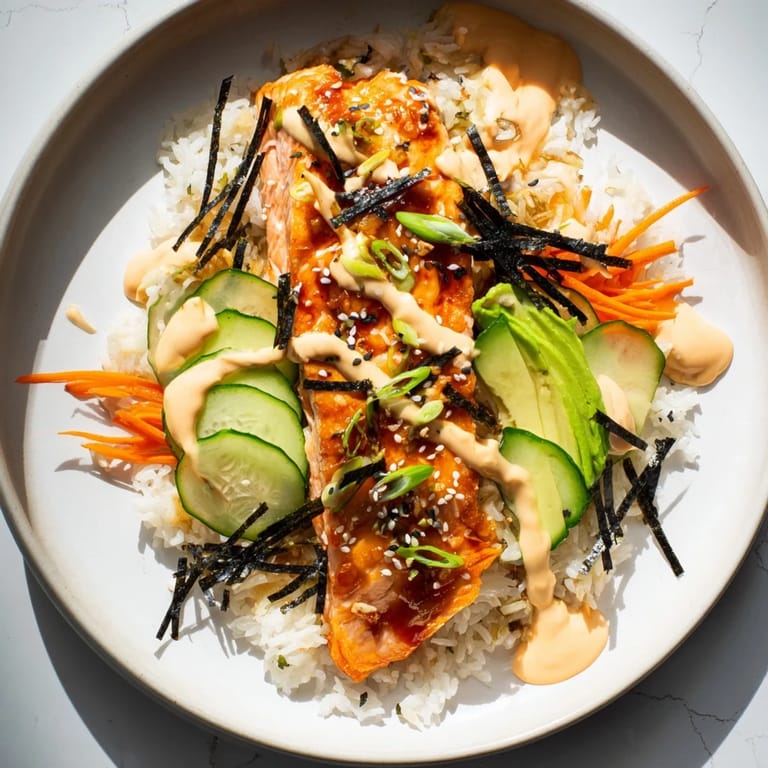
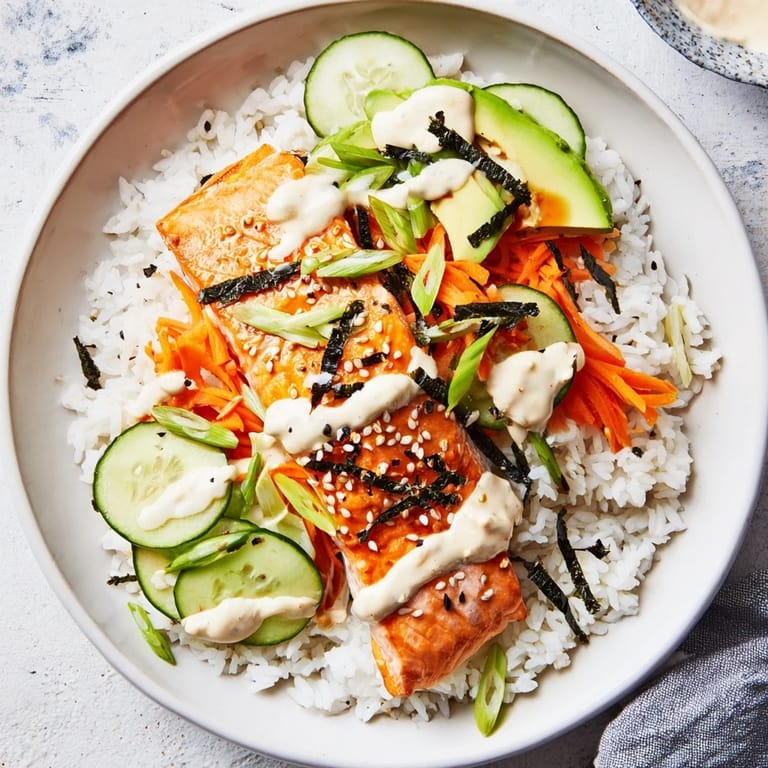
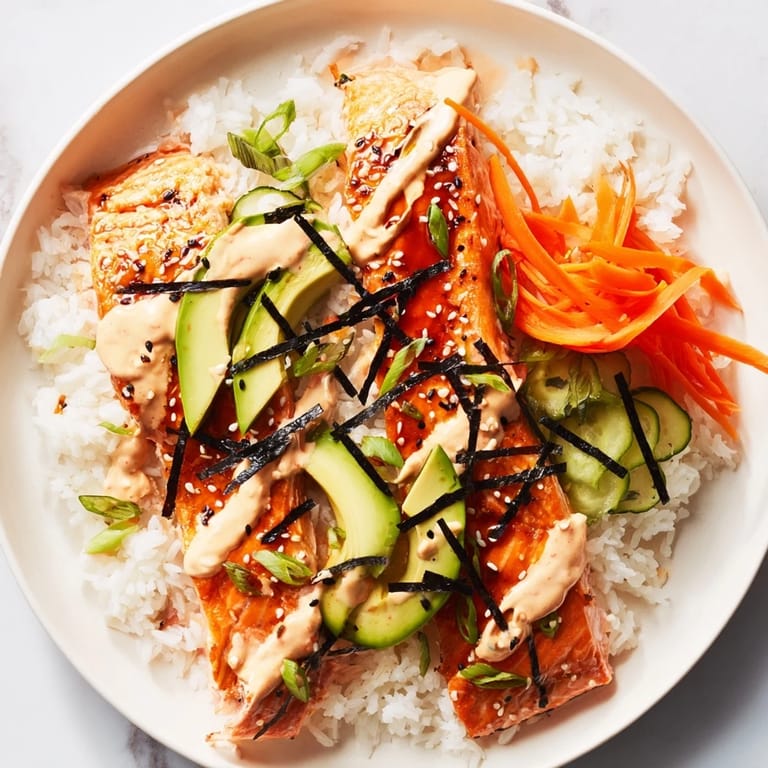
- Divide rice between two bowls, flake the glazed salmon over it, and arrange the avocado, cucumber, and carrot around the salmon like you're composing something beautiful. Drizzle with sriracha mayo and don't be shy with it.
- Finish and serve:
- Top with scallions, sesame seeds, and nori strips, then serve immediately while everything is still warm and the vegetables are crisp. The hot rice and salmon will soften the avocado just enough as you eat.
 Save
Save There's something about a warm bowl of food that tastes thoughtful but doesn't require you to be a trained chef that changes how you feel about cooking. This salmon bowl does that—it gives you permission to make something restaurant-quality on a regular Tuesday.
Why the Glaze Matters So Much
I used to think teriyaki was this complicated technique, but it's really just balancing salty, sweet, and tangy in a pan. Once you understand that the soy sauce is the anchor, the mirin adds brightness, and the rice vinegar keeps everything balanced, you can adjust these proportions to taste. The first time I made this glaze, I tasted it raw and thought it was too salty, but once it's reduced on the salmon, everything transforms. That's the moment you realize cooking is less about following rules exactly and more about understanding why each ingredient is there.
Building Flavor Through Temperature and Texture
What makes this bowl sing is the contrast between warm and cool, soft and crisp. The hot rice and salmon warm up the avocado just slightly, softening it enough to spread a little, while the cucumber and carrot stay cool and crunchy. The nori adds an almost crispy texture, and the sesame seeds toast slightly from the heat of the rice. This isn't accidental—it's what happens when you think about how each component will interact.
Your Blueprint for Variations
Once you've made this bowl a few times, you'll start seeing it as a template you can adapt. Swap the salmon for sea bass or even shrimp if you're feeling it. Use brown rice or quinoa for a nuttier taste and extra fiber. Add pickled ginger for brightness or edamame for plant-based protein. The glaze stays the same, so you're really just shifting what goes into the bowl around it.
- Make it gluten-free by swapping soy sauce for tamari—same depth of flavor, no wheat.
- For a vegan version, teriyaki-glazed tofu works surprisingly well with this same sauce and vegetable mix.
- If you're batch cooking, the glaze keeps in the fridge for a week, so you can make salmon bowls on the fly.
 Save
Save This bowl has become my go-to when I want to feel like I'm taking care of myself but don't have the bandwidth for something complicated. It's nourishing, beautiful, and honestly faster than ordering takeout.
Recipe FAQs
- → How is the teriyaki glaze prepared?
The glaze is made by whisking soy sauce, mirin, honey, rice vinegar, sesame oil, garlic, and grated ginger together, then thickened with cornstarch slurry after cooking the salmon.
- → Can I substitute the salmon with other proteins?
Yes, grilled tofu works well for a plant-based alternative, and other firm fish can be used if preferred.
- → What rice types can be used for this bowl?
Short-grain white rice is ideal, but brown rice or quinoa are great substitutions for added fiber and nutrition.
- → How spicy is the sriracha mayo and can it be adjusted?
The sriracha mayo offers a mild to moderate heat, which can be tailored by adjusting the amount of sriracha used.
- → Are there gluten-free options for this dish?
Yes, using tamari in place of soy sauce ensures gluten-free preparation without compromising flavor.