 Save
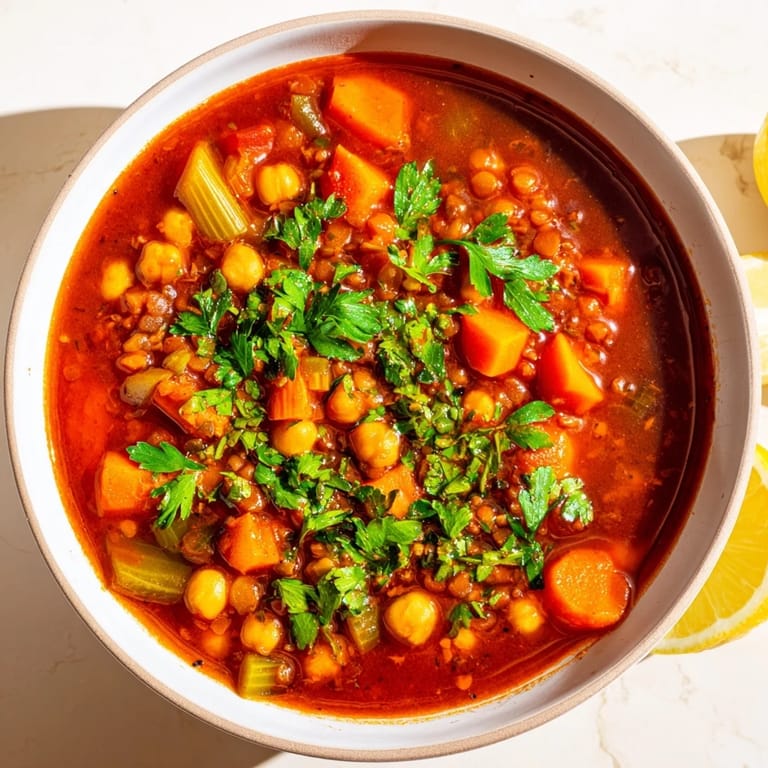
Save The first time I made harira, the smell of cinnamon and cumin rising from my pot transported me straight to a spice market I'd wandered through years ago. My kitchen suddenly felt warmer, smaller, more intentional. I wasn't just making soup that evening—I was recreating a feeling, a moment when food became a bridge between memory and the present. Now, whenever the seasons shift and the air turns crisp, this is the first thing I reach for.
I remember serving this to my partner on a gray November afternoon when neither of us had much energy for anything complicated. We sat at the kitchen table with two bowls, and somewhere between the second and third spoonful, the conversation that had been stuck for weeks finally unstuck itself. Food has that quiet power sometimes.
Ingredients
- Dried chickpeas (1 cup, soaked overnight) or canned (2 cups): These are your soup's backbone—they absorb all those warming spices and become creamy without falling apart. I learned early on that canned saves time without sacrificing anything real.
- Dried lentils (1/2 cup): They cook faster than chickpeas and add an earthy undertone that makes the sweetness of apricots sing.
- Olive oil (2 tbsp): Your foundation for building flavor; this is where everything starts.
- Onion, celery, and carrots (1 large onion, 2 celery stalks, 2 carrots): The holy trinity that makes every good soup possible, diced fine so they practically melt into the broth.
- Garlic (3 cloves, minced): Add this after your vegetables soften so it doesn't burn and turn bitter.
- Chopped tomatoes (1 can, 400 g): Fresh or canned works equally well; this is your acidic backbone.
- Tomato paste (2 tbsp): Concentrated tomato depth that rounds out the spices beautifully.
- Ground cumin (1 tsp): The spice that makes people say they can't quite name what they're tasting, but they know it's special.
- Ground cinnamon (1 tsp): The secret weapon that bridges sweet and savory without announcing itself.
- Ground ginger (1/2 tsp), turmeric (1/2 tsp), paprika (1/2 tsp): Together, these create warmth and complexity; don't skip any of them.
- Cayenne pepper (1/4 tsp, optional): Add this only if you want heat to announce itself; I usually do.
- Vegetable broth (6 cups): Quality matters here because this is your liquid canvas.
- Dried apricots (1/2 cup, chopped): They add sweetness and chew, and they soften into almost jammy texture as the soup simmers.
- Lemon juice (1 lemon, squeezed fresh): This arrives at the very end and brightens everything, making you taste each spice individually.
- Fresh cilantro and parsley (1/4 cup each, chopped): These go in at the last moment so their fragrance stays alive on your tongue.
- Salt and black pepper to taste: Taste as you go; this soup needs more seasoning than you'd initially guess.
Tired of Takeout? 🥡
Get 10 meals you can make faster than delivery arrives. Seriously.
One email. No spam. Unsubscribe anytime.
Instructions
- Start your flavor foundation:
- Heat olive oil in a large pot over medium heat and add your chopped onion, celery, and carrots. Let them sauté for 6 to 8 minutes, stirring occasionally, until they're soft and the onion turns translucent—this is when the kitchen starts to smell like something good is happening.
- Awaken the spices:
- Stir in all your spices: cumin, cinnamon, ginger, turmeric, paprika, and cayenne. Cook for just 1 minute, stirring constantly, so they don't scorch but instead release their oils and fragrance.
- Build the tomato base:
- Add your tomato paste and stir it into the spices, letting it cook for another minute to deepen the flavor. Then add the chopped tomatoes and mix everything together until it looks like a textured paste.
- Bring it all together:
- Add your drained chickpeas, rinsed lentils, and chopped dried apricots to the pot. Pour in your vegetable broth and stir well so nothing sticks to the bottom. Bring everything to a boil, then immediately lower the heat and let it simmer uncovered for 45 to 50 minutes, stirring occasionally, until the chickpeas are tender and the lentils have completely softened.
- Finish with brightness:
- Stir in your fresh cilantro, parsley, and lemon juice at the very end. Taste and adjust the salt and pepper until it feels right to you—this soup usually needs more salt than you'd expect.
- Make it heartier (optional):
- If you want a thicker, more substantial soup, cook some vermicelli pasta or rice separately and add it to individual bowls before ladling in the soup.
 Save
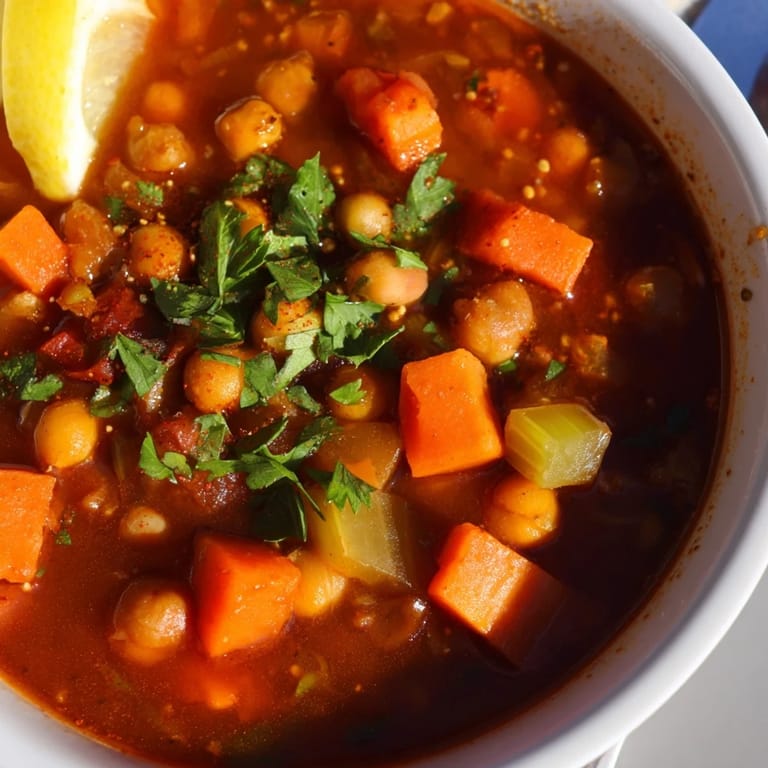
Save My grandmother used to say that harira was the soup you made when you wanted someone to know you'd been thinking about them. I've served it to friends moving away, to family getting through difficult weeks, and to myself on mornings when I needed proof that care still lived in my hands.
The Magic of Layered Warmth
This soup works because it doesn't rely on a single flavor to carry it. The spices build on each other—the cumin grounds everything, the cinnamon adds a whisper of sweetness, the ginger and turmeric bring earthiness, and the apricots add surprise bursts of chewiness and natural sugar. Each spoonful tastes different depending on what you catch, and that's intentional. I've found that harira teaches you to slow down and actually taste, rather than just eating to fill your stomach.
Timing and Texture Matters
The legumes are the heartbeat of this soup, and they need time to become tender without falling apart. If you're using canned chickpeas, you can reduce the simmering time to about 25 to 30 minutes—add them halfway through so they don't disintegrate. The lentils should still have a slight chew even when fully cooked; they'll soften a bit more as the soup sits. This is also why leftovers taste better—flavors marry overnight, and the broth becomes even richer.
Serving and Customization
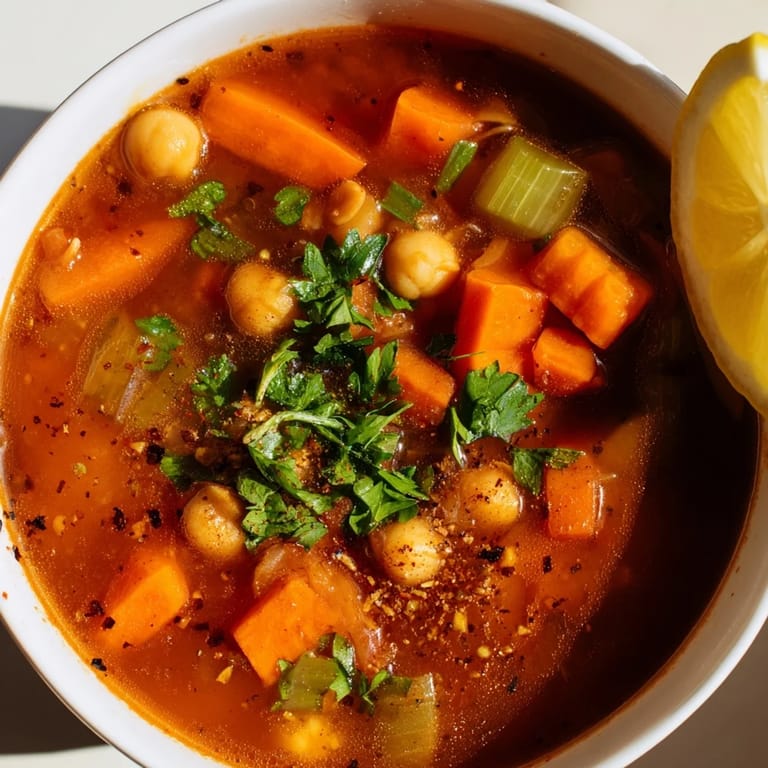
I've learned that how you serve harira changes how people experience it. Some mornings I serve it simple in a wide bowl with just a wedge of lemon and a sprig of cilantro. Other times, when I want it to feel more substantial, I add cooked vermicelli pasta or rice to the bowl first, letting people watch the broth transform each spoonful. You can also add a pinch of saffron if you want to elevate the flavor and have it on hand—it adds a floral note that makes people pause mid-conversation to ask what you did differently.
- Fresh lemon wedges served alongside let guests adjust brightness to their taste.
- Extra herbs scattered on top add freshness and make the presentation feel generous.
- A drizzle of your best olive oil over each bowl feels like a final act of care.
 Save
Save This soup has become my quiet ritual, the thing I turn to when I want to remember that nourishment can taste like spice and memory and warmth all at once. Make it, and you'll understand why.
Recipe FAQs
- → What legumes are used in this dish?
Chickpeas and lentils form the hearty base, providing texture and protein.
- → Which spices give the dish its distinctive flavor?
A blend of cumin, cinnamon, ginger, turmeric, paprika, and cayenne pepper creates a warm and aromatic profile.
- → Can I make this dish vegan?
Yes, using a plant-based broth ensures a vegan-friendly outcome without sacrificing flavor.
- → What fresh herbs are added at the end?
Chopped cilantro and parsley add a fresh, lively note when stirred in just before serving.
- → How is the sweetness balanced in this dish?
Dried apricots and a hint of lemon juice provide subtle sweetness and brightness to the savory tomato base.
- → Can I add grains for a heartier meal?
Cooked vermicelli or rice can be stirred in optionally to increase the dish’s filling quality.