 Save
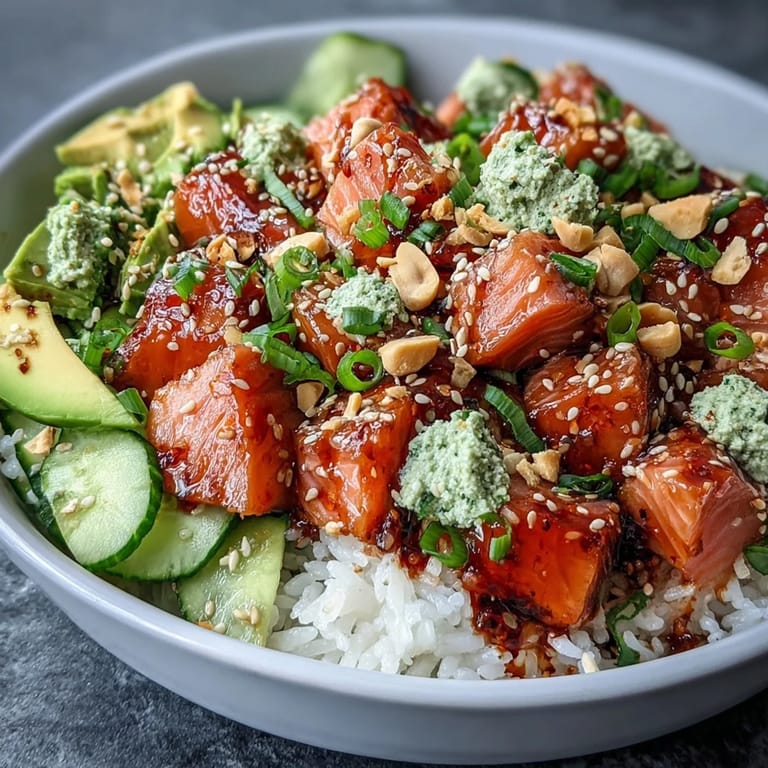
Save My kitchen smelled like toasted sesame oil the afternoon a friend dropped off fresh salmon from the farmer's market, and I suddenly had to decide what to do with it before dinner. I'd been craving something bright and uncomplicated, something that didn't require me to think too hard but still felt intentional. That's when I started layering—rice first, then the salmon I'd quickly marinated, then avocado, then everything else I could find that felt right. What emerged was this bowl that somehow felt both effortless and thoughtful, the kind of meal that tastes like you planned it for hours when really you just followed your instincts.
I remember making this for my partner when he was recovering from a cold and wanted something nourishing but not heavy. He was skeptical about the wasabi at first—thought it might be too sharp—but the way it played against the creamy avocado and rich salmon somehow made sense to him. He ate the entire bowl and asked for seconds, which for him is the highest compliment. That's when I realized this wasn't just a bowl I'd thrown together; it was becoming something I'd make again and again.
Ingredients
- Fresh salmon fillet, skinless and cubed: Look for sushi-grade or sashimi-grade if you can find it; the quality makes a difference in taste and texture, and this cut ensures even cooking or gentle marinating.
- Tamari sauce: Choose the low-sodium version if you're watching your salt intake, and it adds that umami depth that makes this bowl feel restaurant-quality.
- Toasted sesame oil: Don't skip the toasted variety; it has a nuttier, more complex flavor than regular sesame oil, and a little goes a long way.
- Rice vinegar: This mild acid brightens everything without being harsh; it's what keeps the bowl from feeling heavy.
- Honey or agave syrup: Just a touch balances the marinade and keeps the salmon from tasting one-note.
- Sushi rice: If you don't have a rice cooker, a saucepan works fine; the key is getting the rice slightly sticky so it holds together in the bowl.
- Ripe avocado: Wait until it yields to gentle pressure, and slice it just before serving so it doesn't brown.
- Roasted peanuts: The crunch is essential here; it's what makes each bite interesting and breaks up the creaminess of the avocado and salmon.
- Chili oil: This is your heat control; start with less if you're unsure, you can always add more at the table.
- Wasabi paste: A small dab goes far, so introduce it gradually unless you love the sinus-clearing intensity.
- Nori strips: These add a briny, oceanic note and a paper-thin crispness that contrasts beautifully with everything soft in the bowl.
- Cucumber and spring onions: They're your freshness and crunch, keeping the bowl from feeling rich or one-dimensional.
- Toasted sesame seeds: These scatter across the top and add another layer of nuttiness and visual appeal.
Tired of Takeout? 🥡
Get 10 meals you can make faster than delivery arrives. Seriously.
One email. No spam. Unsubscribe anytime.
Instructions
- Build your marinade:
- Whisk tamari, sesame oil, rice vinegar, and honey together in a medium bowl until the honey dissolves and everything looks glossy. It should smell warm and slightly sweet, like the beginning of something delicious.
- Marinate the salmon:
- Toss your salmon cubes into the marinade and let them sit in the refrigerator for 10 to 15 minutes—long enough to absorb flavor without the acid starting to cook them raw. Set a timer so you don't forget.
- Season your rice:
- Mix the warm sushi rice with rice vinegar, sugar, and a pinch of salt in a separate bowl, stirring gently so each grain gets coated but stays intact. The rice should taste slightly sweet and tangy, like a canvas for everything else.
- Prep everything else:
- Slice your avocado lengthwise around the pit, twist the halves apart, scoop out the flesh, and cut it into half-inch slices. Chop your peanuts roughly, slice your cucumber thin, cut your spring onions on the bias, and tear your nori into strips if using.
- Divide the rice:
- Spoon the seasoned rice evenly into two serving bowls, patting it down gently so you have a stable base for everything on top. This matters more than you'd think for the eating experience.
- Arrange your toppings:
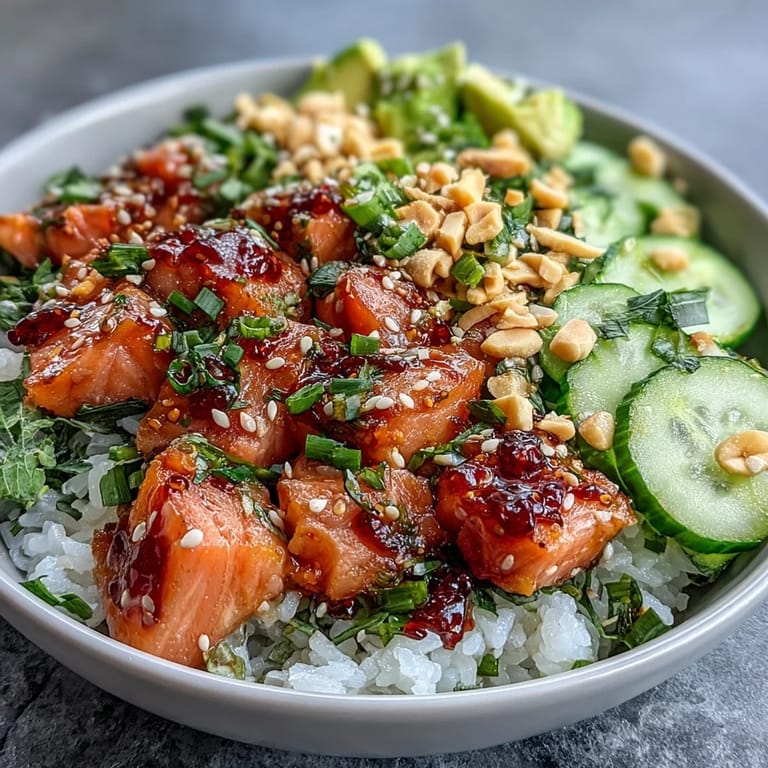
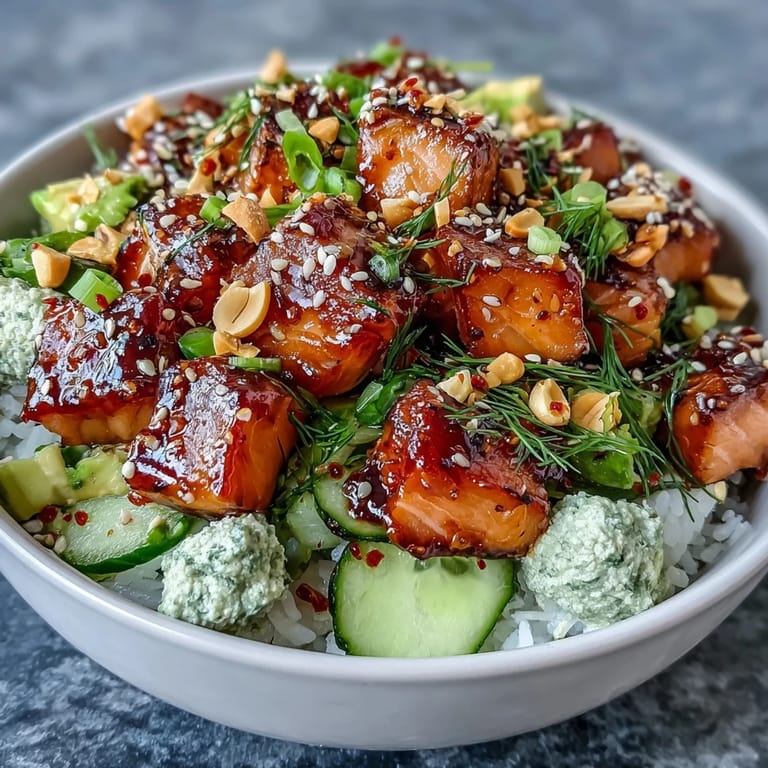
- Layer the marinated salmon across the rice, then fan out avocado slices, scatter cucumber, and sprinkle spring onions. Think of it as painting a picture where nothing should look rushed.
- Finish with heat and crunch:
- Drizzle chili oil over the top, dot with small amounts of wasabi (you can always add more), then scatter peanuts, sesame seeds, and nori strips everywhere. Garnish with cilantro or microgreens if you have them, and serve with lime wedges on the side so people can squeeze them over if they want extra brightness.
 Save
Save There's something quietly wonderful about watching someone taste this bowl for the first time and seeing their eyes light up at the combination of flavors happening all at once. It's spicy and cooling, creamy and crunchy, rich and bright—a conversation between textures and tastes that shouldn't work as well as it does but somehow always does.
Why This Bowl Works
The magic here isn't in any single ingredient; it's in the balance. The richness of salmon and avocado is cut by the acidity of rice vinegar and lime. The heat of chili oil and wasabi is tempered by cool, crisp cucumber. The soft components are anchored by roasted peanuts and nori. This is a bowl that teaches you something about how flavors actually work together, and once you understand that, you can start swapping things around without losing the essence of what makes it sing.
Customizing Your Bowl
The beautiful thing about this structure is that it invites improvisation. I've made it with cooked shrimp when salmon wasn't available, with marinated tofu when I wanted something lighter, with cashews instead of peanuts when someone had a preference. The tamari marinade works on anything, the seasoned rice is the constant, and from there you build based on what you have and what you're craving. I've added pickled ginger, edamame, sliced radish, or even a soft-boiled egg on days when I wanted extra richness. The bowl becomes a reflection of what your kitchen holds and what you're hungry for.
- For vegetarian versions, marinated tofu or tempeh absorb the flavors beautifully and provide the same satisfying protein.
- If peanuts aren't an option, cashews or sunflower seeds give you that crunch without the allergen concern.
- Adjust spice levels by tasting as you go; wasabi and chili oil are easy to add but impossible to remove once they're in.
Storage and Make-Ahead Tips
The rice can be made a few hours ahead and kept covered at room temperature, and the marinade for the salmon can be mixed the night before. What shouldn't be done in advance is assembling the full bowl or slicing the avocado; those need to happen right before eating so everything stays fresh and the avocado doesn't oxidize. If you're meal prepping, keep the components separate in containers and assemble when you're ready to eat.
Serving Suggestions
This bowl is complete on its own, but it pairs beautifully with a cold beer, a crisp white wine, or even a cup of green tea if you're in that kind of mood. The lime wedges at the side invite people to customize their own brightness level, and having everyone squeeze their own creates a little moment of participation. Serve it immediately so the temperature contrast between warm rice and cool avocado stays sharp and interesting.
- Set out extra chili oil and wasabi on the side so guests can adjust heat to their own tolerance.
- A squeeze of fresh lime over everything at the end ties all the flavors together and adds a final brightness.
- Offering pickled ginger or a small side of edamame lets people build their own experience of the bowl.
 Save
Save This bowl has become one of those recipes I turn to when I want to cook something that feels both nourishing and a little bit special, without spending my whole evening in the kitchen. It's the kind of meal that reminds you why cooking matters.
Recipe FAQs
- → Can I make this bowl ahead of time?
Prepare the rice and toppings up to a day in advance, storing them separately in the refrigerator. Marinate the salmon just before cooking for the best texture and flavor. Assemble everything right before serving to maintain freshness and prevent the rice from drying out.
- → What other proteins work well in this bowl?
Marinated tofu or tempeh make excellent vegetarian alternatives. You could also use seared tuna cubes, cooked shrimp, or even shredded chicken for different variations. Adjust the marinade time accordingly—fish needs less time while tofu benefits from longer marinating.
- → How do I adjust the spice level?
Start with a small amount of chili oil and wasabi, then taste and add more gradually. You can also omit the wasabi entirely for a milder version, or add fresh sliced chilies or sriracha if you prefer extra heat. The spice level is completely customizable to your preference.
- → Can I use regular rice instead of sushi rice?
While sushi rice provides the ideal sticky texture, you can substitute with short-grain white rice, brown rice, or even cauliflower rice for a lighter option. Just adjust the vinegar-sugar seasoning to taste and remember that different grains may require different cooking times and liquid ratios.
- → What if I'm allergic to peanuts?
Simply omit the peanuts or substitute with other crunchy elements like toasted cashews, sunflower seeds, pumpkin seeds, or crushed fried shallots. These alternatives maintain that satisfying texture while accommodating nut allergies. Always check ingredient labels carefully for potential cross-contamination.
- → How should I store leftovers?
Store components separately in airtight containers in the refrigerator for up to 2 days. Keep the rice, salmon, and toppings in separate containers to maintain texture. Reheat the rice gently and bring the salmon to room temperature before assembling. The avocado is best added fresh.