 Save
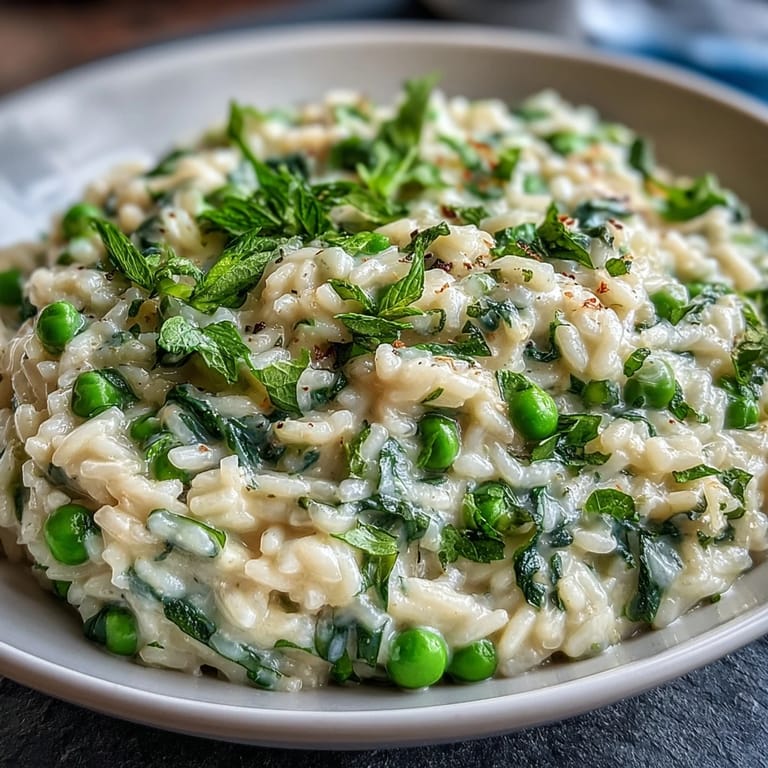
Save There's something about late spring that makes me crave risotto, though I didn't always understand the appeal. My neighbor once invited me over on a whim, and she stirred this creamy pot of rice with such intention that I couldn't look away—the way the mint released its perfume as she folded it in at the end made the whole kitchen smell like hope. That afternoon, I learned that risotto isn't fussy or pretentious; it's actually a conversation between you and the rice, and this one with spring peas and mint feels like catching up with an old friend.
I made this for a dinner party last April when my garden's mint plant had finally taken over half the yard, and I was desperately looking for ways to use it without making tea. My friend Sarah arrived early and actually watched me cook the whole thing, asking questions about why I kept stirring instead of walking away. By the time we sat down, she understood—that constant attention is what transforms simple rice into something silky and luxurious, and the peas added these little pockets of sweetness that made you forget you were eating something so straightforward.
Ingredients
- Fresh or frozen spring peas: Use frozen if you can't find fresh ones in spring; they're actually picked at peak ripeness and thawed gently, so they'll taste almost as bright.
- Arborio rice: This short-grain variety has enough starch to create creaminess without becoming mushy, which is the whole magic trick of risotto.
- Vegetable broth: Keep it warm in a separate pot the entire time; adding cold broth will shock the rice and interrupt the creamy texture you're building.
- Unsalted butter and Parmesan cheese: These are the final flourish that makes everything taste rich and intentional, so don't skip them or use low-quality versions.
- Fresh mint leaves: Tear or chop them just before adding so the oils are still active and the flavor hasn't faded into the background.
- Dry white wine: A wine you'd actually drink tastes better than cooking wine; the acidity helps cut through the richness.
Tired of Takeout? 🥡
Get 10 meals you can make faster than delivery arrives. Seriously.
One email. No spam. Unsubscribe anytime.
Instructions
- Warm your broth gently:
- Pour the vegetable broth into a medium saucepan and let it simmer quietly over low heat the whole time you're cooking. You want it warm but not boiling, so when you add it to the rice, it doesn't interrupt the cooking process.
- Build the flavor base:
- Heat the olive oil and 2 tablespoons of butter together in a large, heavy-bottomed skillet over medium heat. Add the finely chopped onion and let it soften and turn translucent, about 4 minutes—you'll know it's ready when the kitchen starts smelling sweet and mellow.
- Introduce the garlic:
- Stir in the minced garlic and cook for just 1 minute until it's fragrant but not brown. This quick step awakens the garlic without letting it burn and turn bitter.
- Toast the rice:
- Add the Arborio rice and stir constantly for 2 minutes, coating every grain in the oil and butter. You'll see the edges of some grains turn translucent and pearly—that's when you know they're ready for the liquid.
- Introduce the wine:
- Pour in the white wine and stir until it's almost completely absorbed, about 2 minutes. This adds acidity and a subtle depth that you'll taste in every bite.
- Add broth gradually with patience:
- This is the meditative part: add one ladleful of warm broth at a time, stirring frequently, and wait until each addition is mostly absorbed before adding the next. You're looking for about 18 to 20 minutes of this gentle rhythm, and yes, you do have to stay and stir—it's not neglect-friendly, but the attention pays off.
- Fold in the peas:
- When you have about 5 minutes of cooking left, stir in the fresh or frozen peas and let them warm through and soften slightly. They'll add a subtle sweetness and those little pops of color.
- Finish with the good stuff:
- Remove the pan from heat and stir in the remaining tablespoon of butter, grated Parmesan, heavy cream if you're using it, and the chopped fresh mint. Add the lemon zest if you want, then taste and adjust the salt and pepper—remember that Parmesan is salty, so go easy at first.
- Let it rest briefly:
- Let the risotto sit for 2 minutes off the heat, then serve immediately while it's still creamy and warm. You can garnish with extra mint leaves and a small handful of Parmesan shards.
 Save
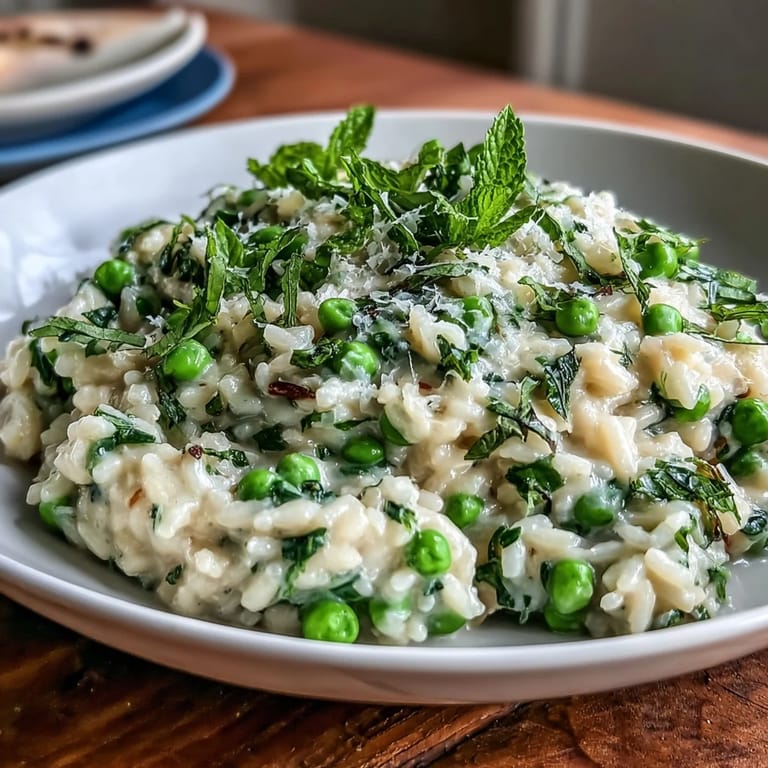
Save One Sunday morning I made this risotto and my roommate came down, stopped in the doorway, and just breathed in for a moment before asking what smelled like spring. That's when I realized this dish does something beyond filling your stomach—it brings a season into your kitchen and makes people want to linger at the table instead of hurrying away.
Why This Risotto Works in Spring
Spring vegetables like peas have a natural sweetness that doesn't need heavy treatment, and mint is at its peak right now, growing faster than you can use it. Risotto is the perfect vessel because the creamy rice supports these delicate flavors without overwhelming them, and the whole dish feels light even though it's genuinely satisfying. This is the kind of meal that celebrates what's in season without being fussy about it.
The Art of Not Walking Away
The biggest temptation with risotto is to leave it alone and let it do its thing, but that's actually when it stops improving. The constant stirring isn't punishment—it's how you coax the starch out of the rice and build that creamy texture that makes people think you've been cooking all day. I learned this the hard way by trying to cheat the process, and the risotto knew; it turned gluey and resentful.
Variations and Pairings
This risotto is a starting point rather than a strict rule, so feel free to adapt it based on what you find at the market or what's growing in your garden. A handful of baby spinach stirred in at the end adds earthiness, or try a scatter of toasted pine nuts across the top for textural contrast. If you want something vegan, swap the butter for olive oil or vegan butter, use a cashew-based cream, and add a quality nutritional yeast instead of Parmesan for that savory depth.
- Pair this with a crisp Sauvignon Blanc or a light Pinot Grigio to echo the fresh, herbaceous flavors on your plate.
- Make it a complete meal by serving alongside a simple green salad or roasted asparagus if you want something to cut through the richness.
- Leftover risotto can be pressed into patties, chilled, and pan-fried into crispy risotto cakes the next day—a completely different but delicious way to use what's left.
 Save
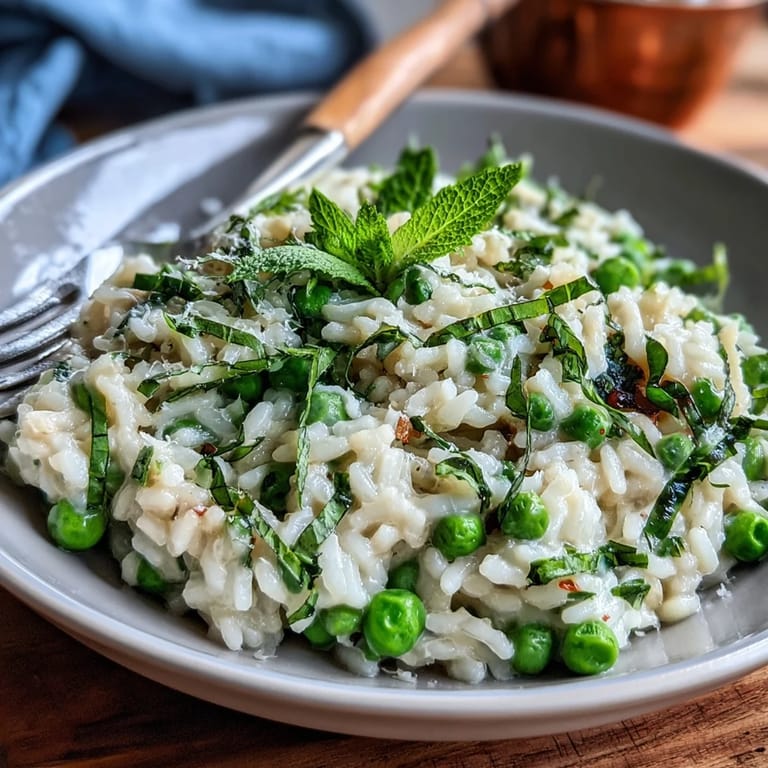
Save This risotto reminds me that sometimes the best meals are the ones that demand your attention and reward you with something creamy and alive. Make it when you have time to linger, stir with intention, and taste how spring actually tastes when you're paying attention.
Recipe FAQs
- → What type of rice is used for this dish?
Arborio rice is used for its high starch content, which creates the classic creamy texture essential to the dish.
- → Can I substitute fresh peas with frozen ones?
Yes, both fresh and frozen peas work well. Add them in the final minutes to retain their bright color and tenderness.
- → How do I ensure the risotto is creamy and not dry?
Stirring frequently while gradually adding warm broth allows the rice to release starch slowly, resulting in a creamy consistency.
- → Is there a way to add extra flavor to the risotto?
Ingredients like lemon zest and fresh mint leaves contribute brightness and freshness that enhance the overall taste.
- → Can this dish be made vegan?
Yes, by substituting butter and Parmesan with vegan alternatives and omitting the cream, you can create a plant-based version.