 Save
Save There's a particular quiet that settles over the kitchen when you're making risotto, the kind where the only sound is the gentle bubble and whisper of rice meeting broth. I discovered that magic one autumn evening when a friend brought me a small bottle of truffle oil, wrapped in brown paper like it was something precious. That night, I finally understood why risotto deserves its reputation—it's not fussy, it's just honest, and when you add those earthy mushrooms and that dark, fragrant drizzle at the end, something happens that feels almost ceremonial.
I made this for my partner on a Tuesday night when we both needed something more than takeout but didn't want to leave the house, and watching their face when they tasted that first spoonful—that moment of pause, then a small satisfied smile—made me realize risotto isn't really about impressing anyone. It's about taking time, about the meditation of stirring and adding broth slowly, about saying with every motion that this meal matters.
Ingredients
- Arborio rice, 1 ½ cups: The short, starchy grains are essential here because they release starch as they cook, which creates that signature creamy texture without any cream at all.
- Vegetable broth, 5 cups (kept warm): Warm broth absorbs into the rice faster and more evenly than cold, so keep it simmering gently in a separate pot—this is the secret many people skip.
- Mixed wild mushrooms, 12 oz: Cremini, shiitake, and oyster mushrooms each bring different earthiness, so using a mix deepens the flavor profile more than any single variety can.
- Unsalted butter, 4 tbsp total: Divided into two parts: the first for sautéing the aromatics, the second stirred in at the end to create that lush, silky finish.
- Olive oil, 2 tbsp: Keeps the butter from browning while you cook the shallots and mushrooms.
- Shallot, 1 medium (finely chopped): More refined than onion and sweeter, shallots dissolve into the rice and create a subtle backdrop for the mushroom flavors.
- Garlic, 2 cloves (minced): Add it after the shallot softens so it doesn't burn and turn bitter—timing matters more than quantity here.
- Parmesan cheese, ½ cup (freshly grated): Freshly grated melts into the rice like it was meant to be there, while pre-grated cheese gets grainy and separates.
- Dry white wine, ¼ cup: The acidity cuts through the richness and adds complexity that broth alone cannot provide.
- Salt and black pepper, to taste: Added in layers—a pinch with the mushrooms, more when seasoning at the end, which is always gentler than dumping it all in at once.
- Truffle oil, 1–2 tbsp: This is the finale, the thing that transforms a very good risotto into something memorable, so drizzle it just before serving when its fragrance is still alive.
- Fresh parsley, 2 tbsp (chopped, optional): A bright, grassy note that cuts through the richness and makes the whole dish feel less heavy.
Tired of Takeout? 🥡
Get 10 meals you can make faster than delivery arrives. Seriously.
One email. No spam. Unsubscribe anytime.
Instructions
- Heat your pan and soften the aromatics:
- In a large, heavy-bottomed skillet, warm the olive oil and 2 tablespoons of butter over medium heat until the butter foams slightly, then add your finely chopped shallot. Cook for 2 to 3 minutes, stirring occasionally, until the shallot is translucent and soft, then add the minced garlic and sauté for just 30 seconds more—you're building flavor, not browning.
- Cook the mushrooms until golden:
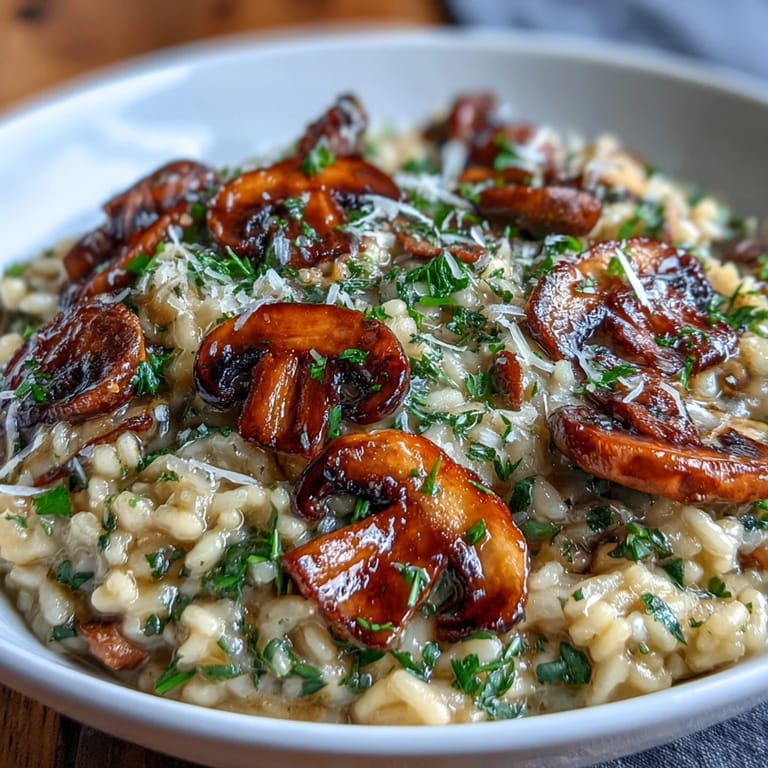
- Add your sliced wild mushrooms to the pan and cook for 6 to 8 minutes, stirring occasionally, until they release their liquid, reabsorb it, and turn golden at the edges. This is when your kitchen will smell absolutely unforgettable, so season them lightly with salt and pepper at this stage.
- Toast the rice:
- Stir the Arborio rice into the mushroom mixture and cook for 1 to 2 minutes, stirring constantly, until each grain is coated and the edges turn translucent and glassy—this toasting step is what gives risotto its structural integrity.
- Add the wine:
- Pour in the dry white wine and stir until it's almost completely absorbed, which usually takes a minute or two, and you'll notice the pan becoming fragrant again.
- Add broth gradually, stirring with intention:
- Add the warm vegetable broth one ladle at a time, stirring frequently, and wait until each addition is mostly absorbed before adding the next—this is the meditation part, and it takes about 18 to 22 minutes total. The rice will gradually soften and the liquid will turn creamy, and you'll know you're done when a grain breaks easily between your teeth but still has a tiny firm center.
- Finish with butter and cheese:
- Remove from heat and stir in the remaining 2 tablespoons of butter and the freshly grated Parmesan until the risotto becomes lush and creamy, then taste and adjust the seasoning with salt and pepper as needed.
- Plate and drizzle:
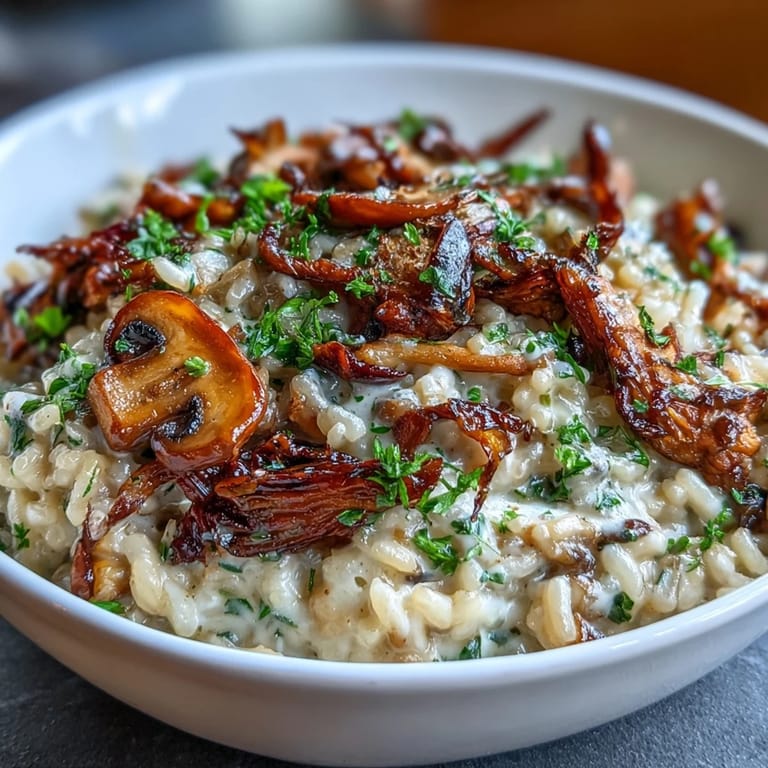
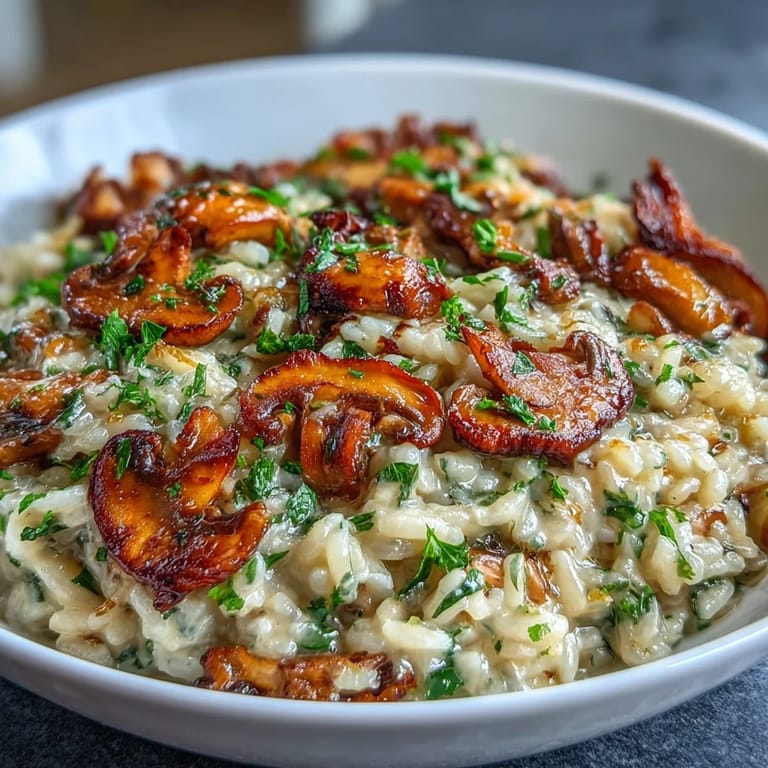
- Divide the risotto among bowls or shallow plates and drizzle each serving with truffle oil, then scatter with fresh parsley and extra Parmesan if you like.
 Save
Save I learned something unexpected the first time I made this dish: that slowing down doesn't feel like a burden when you're stirring something beautiful into existence. The risotto itself becomes a conversation between you and the ingredients, and somewhere between the third ladle of broth and the final stir of butter, you realize you've been smiling the whole time.
Choosing and Cleaning Your Mushrooms
Wild mushrooms have different textures and flavors, and mixing them gives you complexity that a single variety can't achieve—shiitake brings umami depth, cremini adds earthiness, and oyster mushrooms are delicate and slightly sweet. The key is cleaning them gently with a damp cloth or soft brush rather than rinsing them, because mushrooms are like tiny sponges and they'll absorb water and turn soggy in the pan. If you can only find one type of mushroom, that's fine, just use 12 ounces of whatever speaks to you.
Why Warm Broth Makes All the Difference
Cold broth hitting hot rice causes the temperature of the pan to drop, which stops the cooking process momentarily and breaks your rhythm. Warm broth integrates smoothly and keeps the rice cooking at a steady, gentle pace, which is what allows the starch to release gradually and create that creamy texture. Pour your vegetable broth into a separate pot and keep it at a low simmer on another burner—it's a small detail that separates mediocre risotto from the kind people remember.
The Art of Finishing
The last two steps—adding butter and cheese off the heat—are called mantecatura in Italian, and it's what transforms risotto from good to remarkable. The carryover heat melts the butter and cheese into the rice without any risk of the rice becoming mushy, and the result is a flowing, luxurious consistency that feels almost decadent on your tongue. Some cooks add a splash of cream here too, and while it's not traditional, it does make the dish even richer if that's the mood you're in.
- Stir the butter and cheese in with purpose and confidence—it should take just 30 seconds to transform the texture completely.
- If your risotto seems too thick, you can loosen it with a splash more warm broth, but remember it will firm up slightly as it cools.
- Truffle oil is precious, so buy a small bottle from a good source and store it in a cool, dark place to preserve its fragrance.
 Save
Save This risotto is the kind of dish that proves you don't need complicated techniques to create something extraordinary—you just need good ingredients, a little patience, and the willingness to stand at the stove and stir. Make it for someone you love, and watch their face light up when that truffle oil hits the plate.
Recipe FAQs
- → What types of mushrooms work best in this dish?
Mixed wild mushrooms like cremini, shiitake, and oyster offer the best balance of earthy flavors and textures, but chestnut or portobello can be used as alternatives.
- → How do I achieve a creamy texture in the risotto?
Gradually adding warm vegetable broth while stirring frequently helps the rice release starch and become creamy without overcooking.
- → Can truffle oil be substituted or omitted?
Truffle oil adds a distinctive aroma and richness; if unavailable, a drizzle of good quality olive oil can be used instead.
- → What type of wine pairs well with this dish?
A crisp, dry white wine such as Pinot Grigio complements the earthy mushrooms and creamy texture without overpowering the flavors.
- → Is there a tip to enhance the mushroom flavor further?
Lightly sautéing the mushrooms until golden and tender intensifies their flavor and adds depth to the entire dish.