 Save
Save There's something magical about the moment when you first realize a bowl of food can be both deeply satisfying and surprisingly simple to pull together. I discovered that truth on a sun-soaked afternoon when a friend brought over ingredients from a farmers market trip, and we started layering them without a real plan—just instinct and whatever looked good. That bowl changed how I thought about weeknight dinners, turning what could have been scattered snacking into something intentional and nourishing. Now, whenever I make this Mediterranean version, I'm transported back to that kitchen filled with afternoon light and the smell of cumin hitting hot olive oil.
I remember making this for a potluck where half the guests were suddenly vegetarian, and I watched people come back for thirds—not out of politeness, but genuine delight. One person asked if it was "healthy food that actually tastes good," and that's stuck with me ever since. That's exactly what this bowl is: food that nourishes you without pretending to be something it's not.
Ingredients
- Quinoa: Rinsing it first removes the bitter coating, and if you skip this step, you'll taste the difference immediately—I learned this the hard way.
- Zucchini: Cut into roughly the same size pieces so everything roasts evenly, and don't be shy with the seasoning since the heat will concentrate the flavors.
- Red bell pepper: The sweetness balances the tangy yogurt and salty olives perfectly, so it's worth using fresh rather than jarred.
- Red onion: Sliced thin enough that it softens in the oven but keeps a little bite, which adds texture you'll actually notice.
- Cherry tomatoes: Halved so they caramelize slightly and burst with sweetness, a detail that transforms the whole bowl.
- Olive oil: Use something you'd actually taste on its own, because it becomes a flavor anchor here, not just cooking medium.
- Oregano and cumin: These two work together to whisper Mediterranean warmth without shouting, creating depth that feels effortless.
- Chickpeas: Warming them through brings out their nuttiness and makes them feel more substantial than straight from the can.
- Kalamata olives: Pitted and halved for easy eating, and their brininess is what makes you keep reaching for another bite.
- Hummus: Acts as a creamy base that binds everything together and adds protein without heaviness.
- Greek yogurt: The tanginess is essential—it's the counterpoint that makes all the other flavors sing.
- Feta cheese: Crumbled so it distributes throughout rather than clumping, giving you a hit of saltiness in every spoonful.
- Fresh parsley: Chopped just before serving so it stays bright and acts as a palate cleanser between bites.
- Lemon wedges: Squeeze them over just before eating to lift all the flavors and remind you why citrus is the secret weapon of good cooking.
Tired of Takeout? 🥡
Get 10 meals you can make faster than delivery arrives. Seriously.
One email. No spam. Unsubscribe anytime.
Instructions
- Heat your oven and get vegetables ready:
- Preheat to 425°F while you chop everything on a cutting board—zucchini, bell pepper, red onion, and halved cherry tomatoes should all land on that one sheet pan, creating less cleanup and more even cooking from the shared heat.
- Season and roast:
- Drizzle with olive oil, scatter oregano and cumin over everything, then toss with your hands so every piece gets coated and seasoned. The oil will shimmer as they roast, and you'll smell the cumin toasting after about ten minutes—that's when you know it's working.
- Stir and watch for caramelization:
- Halfway through the 20–25 minute roast time, give everything a stir so the bottom pieces get their turn against the hot pan. You're looking for the edges to turn golden and the vegetables to soften enough that a fork sinks through without resistance.
- Cook quinoa the simple way:
- While vegetables roast, bring rinsed quinoa and water to a boil in a covered saucepan, then reduce heat and let it simmer for 15 minutes. Remove from heat, keep it covered for 5 more minutes so the grains fully absorb the water, then fluff with a fork—this resting step is what makes it fluffy rather than mushy.
- Warm the chickpeas gently:
- In a small skillet over medium heat, let them warm through for 2–3 minutes with a light sprinkle of salt, which awakens their flavor without drying them out.
- Assemble your bowls:
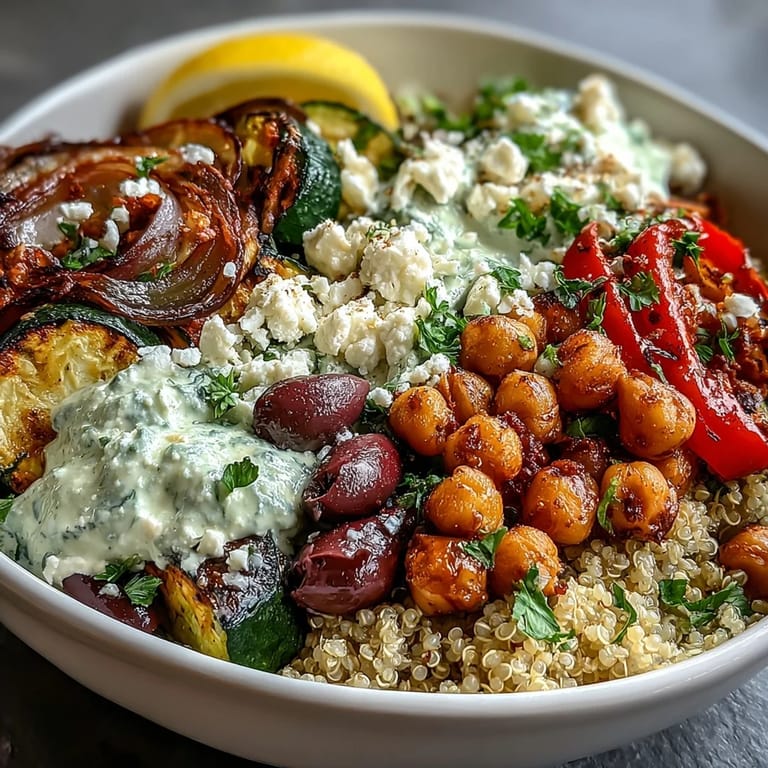
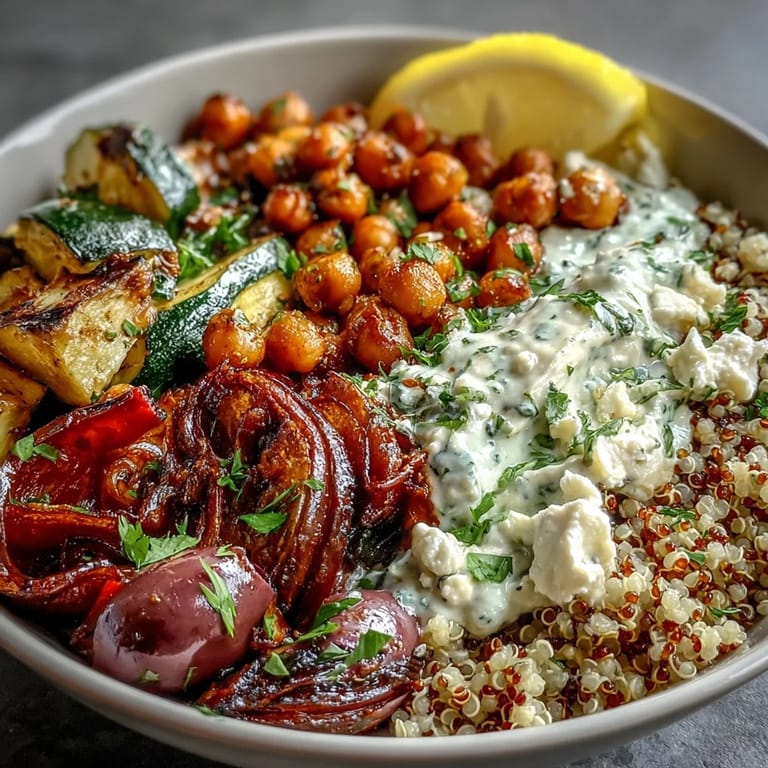
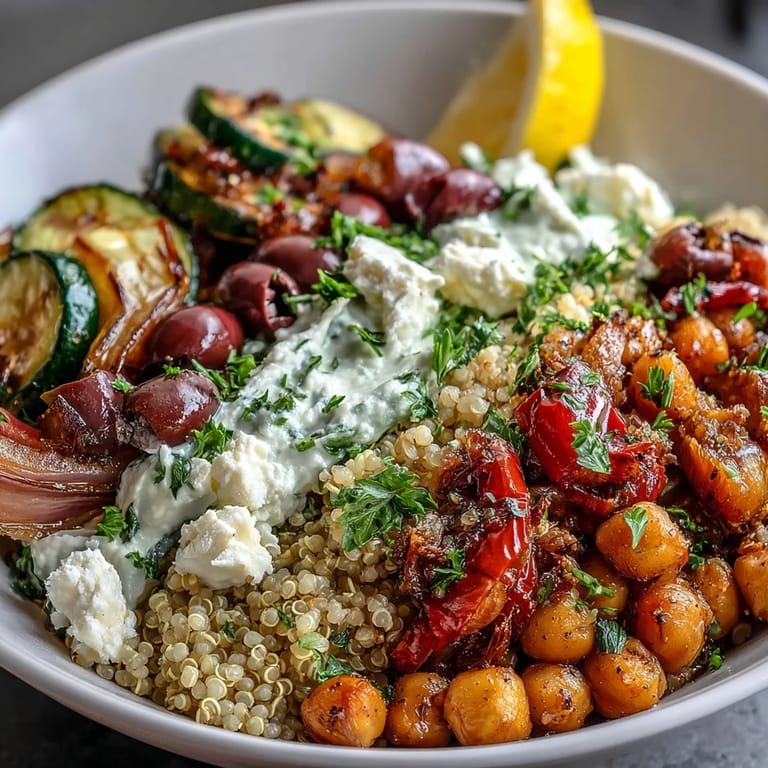
- Divide quinoa among four bowls as your base, then arrange roasted vegetables, warmed chickpeas, olives, hummus, Greek yogurt, and crumbled feta in sections around each bowl. This arrangement means every bite has a combination of textures and flavors, not just one component per spoonful.
- Finish with fresh herbs and citrus:
- Top with chopped parsley just before serving so it stays vibrant green, and set lemon wedges beside each bowl so people can squeeze to taste. That little bit of acidity right before eating is what transforms it from good to memorable.
 Save
Save I served this to my neighbor who'd been dealing with a tough week, and watching her close her eyes after the first bite—really tasting it—reminded me that food is about more than nutrition. It's about showing up for people with something made with care, even if that care takes less than an hour.
The Roasting Method Makes All the Difference
There's a reason I roast rather than raw: heat concentrates sweetness and creates little caramelized edges that add complexity a fresh salad can't match. When vegetables roast together on one pan, they share flavors and create this cohesive thing that tastes like more than the sum of its parts. I learned this after making the same bowl with raw vegetables and realizing I was missing something—not in the recipe, but in the technique.
Building Flavor Through Layering
This bowl works because every component brings something different: the warm earthiness of quinoa, the sweetness of roasted vegetables, the bright tang of yogurt, the salty punch of olives and feta. If you stir everything together, you lose those distinctions, so I always arrange components in sections. That way, your spoon naturally picks up multiple elements, and flavors hit you in intentional waves rather than blending into one note.
Make It Your Own Without Losing What Makes It Work
The beauty of this bowl is its flexibility—I've made it with grilled chicken, swapped farro for quinoa, added cucumber or artichoke hearts, even stirred in some preserved lemon for extra brightness. What matters is keeping the balance: something warm and substantial, something fresh and cool, something tangy, something salty, and something herbal at the end. That balance is the invisible architecture that makes it feel complete.
- For vegan versions, nutritional yeast adds a subtle savory note that mimics feta's umami without dairy.
- Make double batches of roasted vegetables and store them separately so you can assemble fresh bowls throughout the week without repetition fatigue.
- The lemon wedge is not optional—that final squeeze is what your palate has been waiting for.
 Save
Save This Mediterranean bowl has become my go-to when I want to feel grounded and nourished without fuss. It's the kind of meal that proves simple ingredients and intention are sometimes all you need.
Recipe FAQs
- → Can I prepare the components ahead of time?
Yes, cook quinoa and roast vegetables up to 3 days in advance. Store separately in airtight containers and assemble when ready to serve. Warm components slightly if desired.
- → What other grains work well in this bowl?
Farro, brown rice, or bulgur make excellent substitutes for quinoa. Adjust cooking times accordingly and ensure grains are fluffy before assembling.
- → How can I add more protein?
Grilled chicken breast, seasoned shrimp, or baked tofu pair beautifully. You can also increase chickpeas to two cans or add a hard-boiled egg.
- → Which vegetables roast best for this bowl?
Zucchini, bell peppers, red onion, and cherry tomatoes caramelize nicely. Eggplant, artichoke hearts, or roasted red peppers also complement the Mediterranean profile.
- → Is this bowl meal-prep friendly?
Absolutely. Portion quinoa, vegetables, and chickpeas into containers. Pack toppings separately and combine just before eating to maintain texture and freshness.
- → What dressing works best?
A simple lemon-herb vinaigrette or tzatziki enhances the Mediterranean flavors. The hummus and Greek yogurt also provide creamy elements that tie ingredients together.