 Save
Save I discovered black currant vinaigrette by accident one autumn afternoon when a friend brought a bottle of black currant juice to my kitchen, insisting it belonged in a salad dressing rather than a smoothie. Skeptical at first, I watched the deep purple liquid transform into something electric when whisked with vinegar and oil. That first taste over a bed of bitter greens and creamy goat cheese changed how I thought about dressings entirely. Now I make it constantly, always keeping a jar in my fridge like a small treasure.
Last winter I brought this dressing to a potluck where someone had made the most uninspired salad—iceberg lettuce, store-bought croutons, the works. I poured this vinaigrette over it and watched people actually go back for seconds, confused about why this particular salad was so good. My friend Sarah asked for the recipe, and now she makes it every week. That moment taught me that sometimes the smallest additions change everything.
Ingredients
- Black currant juice: This is the star that makes everything worth doing—buy unsweetened or you'll end up with candy dressing instead of something complex and grown-up.
- Red wine vinegar or apple cider vinegar: Either works beautifully, though I lean toward red wine vinegar when I want to feel fancier and apple cider when I'm in a casual mood.
- Fresh lemon juice: Bottled works in a pinch, but fresh juice adds a brightness that bottled versions somehow lose in the back of the fridge.
- Extra virgin olive oil: This is where you shouldn't cheap out—the oil carries all the flavor, so use something you'd actually taste on bread.
- Dijon mustard: A tiny amount acts like a glue that holds everything together and adds a subtle sophistication no one can quite name.
- Honey or maple syrup: Optional but smart if your black currant juice tastes particularly tart—just a teaspoon smooths everything out.
- Shallot: Minced fine, this adds a whisper of onion complexity that elevates the whole thing from simple to memorable.
- Sea salt and black pepper: Freshly ground pepper makes an actual difference here, something I only learned after tasting the difference side by side.
Tired of Takeout? 🥡
Get 10 meals you can make faster than delivery arrives. Seriously.
One email. No spam. Unsubscribe anytime.
Instructions
- Gather and prep your ingredients:
- Set everything in front of you before you start—it's a five-minute recipe, so scrambling halfway through ruins the rhythm. Mince your shallot as fine as you can manage and have your oils measured out.
- Whisk the base together:
- In a medium bowl, combine the black currant juice, vinegar, lemon juice, mustard, optional sweetener, shallot, salt, and pepper. Whisk until the mixture turns a beautiful deep purple and everything looks well combined—you'll know you've done it right when there are no streaks of liquid.
- Emulsify with oil:
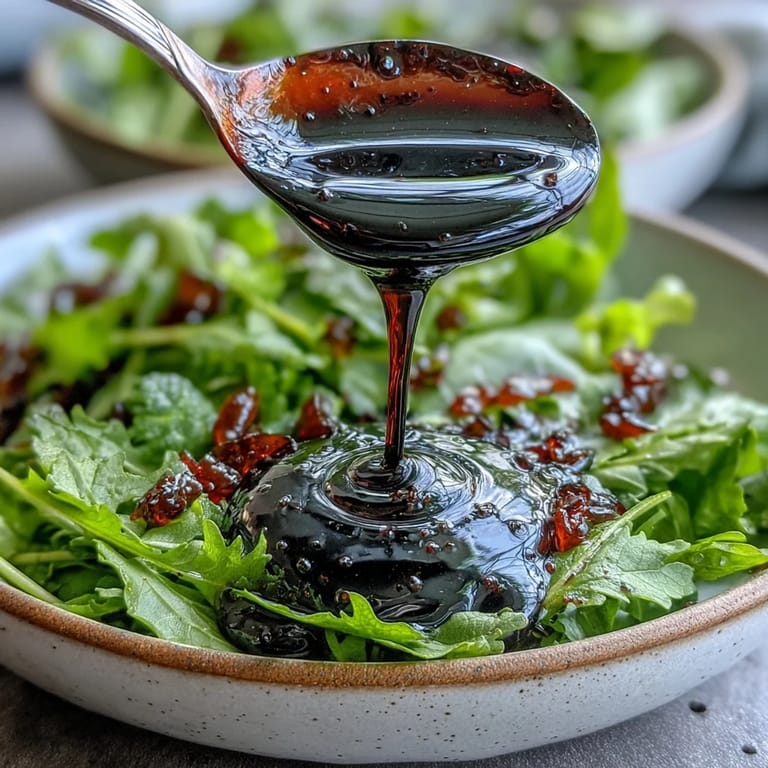
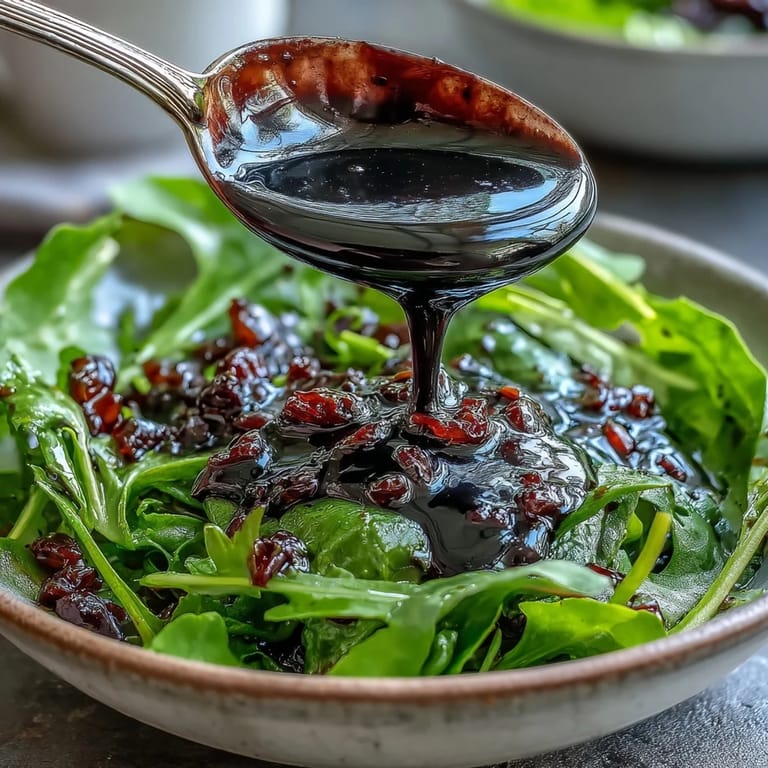
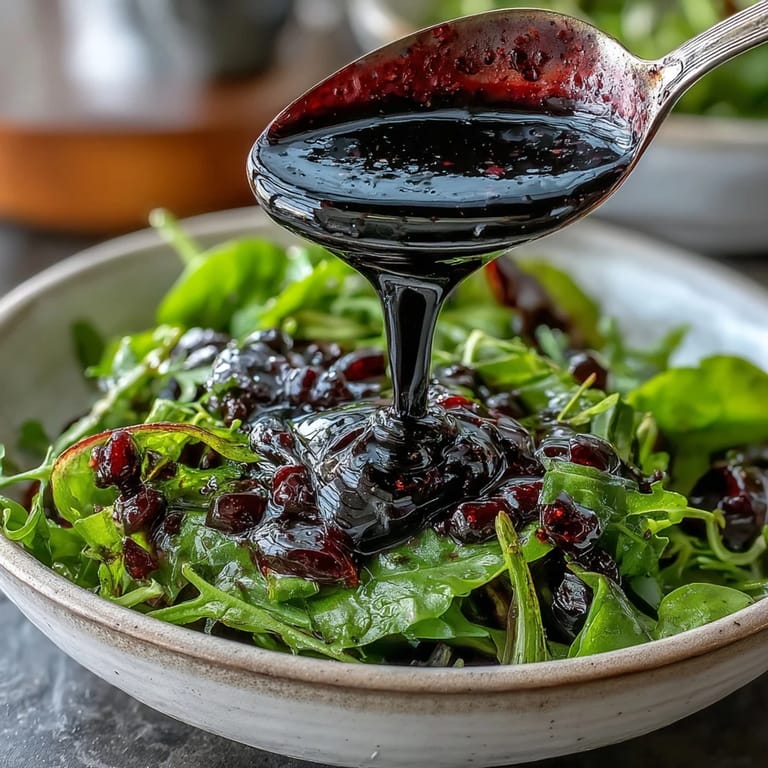
- This is the moment that feels almost magical—drizzle the olive oil in slowly, maybe a tablespoon at a time at first, while whisking constantly. The mixture will thicken and become glossy and cohesive, like it's becoming something more intentional than just random ingredients.
- Taste and adjust:
- Before you call it finished, taste it on a piece of lettuce if you have it, or straight off the spoon if you're being honest. Add more salt if it needs backbone, more pepper if it feels flat, or a tiny bit more honey if the tartness is too aggressive for your mood that day.
- Store or serve immediately:
- Use it right away over your salad, or transfer it to a jar and refrigerate for up to a week. Always shake it well before using because the oil and juice will naturally separate—that's not a failure, that's just what vinaigrettes do.
 Save
Save There's something quietly satisfying about making your own vinaigrette, something that feels both extravagant and practical at the same time. My partner once asked why I bothered when store-bought existed, and I realized I couldn't explain it in words—only in the look on his face when he actually tasted the difference.
When Black Currant Juice Is Hard to Find
Pomegranate juice and cranberry juice work as worthy substitutes, though they'll give you slightly different flavor profiles. Pomegranate leans more floral and sophisticated, while cranberry stays tart and almost medicinal in the best way. I've also experimented with cherry juice when I was desperate, and while it's not identical, it still makes a dressing worth eating. The black currant is special though—if you can find it, keep several bottles on hand because once you go purple, regular red vinaigrettes feel a little boring.
Salads That Deserve This Dressing
This vinaigrette has taught me that certain combinations are meant to exist together, like they were waiting for this exact dressing to come along. Bitter greens like arugula or endive suddenly make sense with this tartness, as do roasted beets which echo the earthiness of the currants. Goat cheese becomes absolutely essential—the tang balances the complexity beautifully. I've poured this over simple grain salads with farro, over roasted root vegetables still warm from the oven, and over delicate spinach with toasted nuts.
Beyond Salad
One evening I poured leftover vinaigrette over grilled salmon and discovered it does things for fish that seemed impossible from a bottle. The tartness cuts through richness, the shallot adds sophistication, and the black currant flavor feels like it was always meant to accompany protein. Since then I've used it as a glaze, a drizzle over roasted vegetables cooling on a plate, and even as a finishing touch on a plate of soft cheeses. This is the kind of recipe that becomes a permanent fixture in your cooking because it solves problems you didn't know you had.
- Try drizzling it over warm roasted vegetables right out of the oven—the heat brings out different flavor notes.
- Keep a jar in the fridge and use it as your default dressing for at least a week to discover all the ways it works.
- Remember that this recipe scales easily if you need more, just keep the same ratios and whisk with intention.
 Save
Save This dressing proved to me that sometimes the smallest recipes change the most about how you cook and eat. Every time I make it, I'm reminded that good food rarely requires complexity, just intention.
Recipe FAQs
- → What does black currant vinaigrette taste like?
The vinaigrette has a bold tart flavor with fruity notes from the black currant juice. The acidity from vinegar and lemon juice creates brightness, while olive oil adds richness. Optional honey balances the tartness, and shallots provide subtle savory depth.
- → How long does this vinaigrette keep?
Store in an airtight jar in the refrigerator for up to 1 week. The oil may solidify slightly when cold - simply let it sit at room temperature for a few minutes and shake well before using.
- → Can I use a different vinegar?
Red wine vinegar or apple cider vinegar work equally well. White wine vinegar or champagne vinegar are good substitutes for a milder flavor. Balsamic vinegar would add sweetness and darken the color.
- → What if I can't find black currant juice?
Pomegranate juice or cranberry juice make excellent substitutes with similar tart profiles. These alternatives will slightly change the flavor but still create a delicious vibrant dressing.
- → Why is my vinaigrette separating?
Separation is natural for oil-based dressings. The Dijon mustard acts as an emulsifier to help bind ingredients. Always shake well immediately before drizzling over your salad or vegetables.
- → Is this vinaigrette suitable for special diets?
This dressing is naturally vegetarian, vegan, and gluten-free. Always verify that your Dijon mustard is certified gluten-free if needed. The honey can be replaced with additional maple syrup for strict vegan diets.