 Save
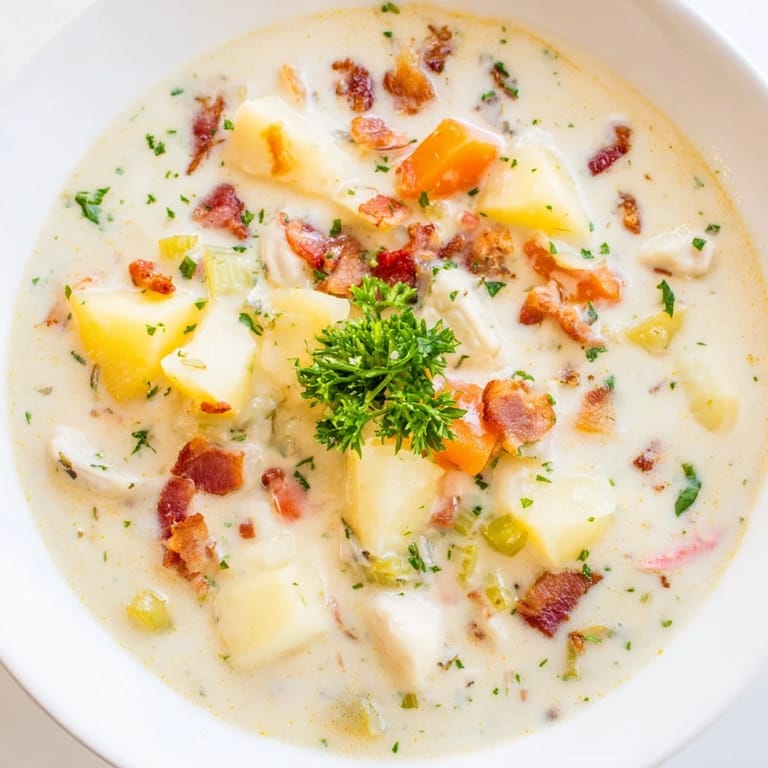
Save My first bowl of real New England clam chowder didn't come from a recipe book—it came from a weathered kitchen in a converted lighthouse keeper's cottage on the Maine coast, where my grandmother stood at the stove with flour dusting her cardigan, swirling cream into a pot like she was painting something precious. The smell of bacon fat mingling with sea brine and thyme filled that tiny space, and I watched her taste the broth with the kind of focus most people reserve for important decisions. She never told me the exact amounts of anything; she just knew when the roux had turned golden enough, when the potatoes had softened just right, and when the clams were tender but not rubbery. That afternoon, something clicked—this wasn't fancy cooking, it was honest cooking, the kind that tastes like home because it actually comes from someone's home.
I made this for my roommates one cold February evening when we'd all been stuck inside too long, and watching their faces light up the moment that steam hit them was worth every minute of prep work—someone actually said it tasted like the ocean, which might sound obvious for clam chowder but somehow felt like a real compliment. There's a particular magic in feeding people something that tastes like it belongs to a specific place, like you've brought a piece of the coast into their kitchen.
Ingredients
- Fresh littleneck clams (2 lbs): These are firmer and sweeter than smaller varieties—don't be tempted by cheaper options because the clams are honestly the whole point here, and good ones make all the difference.
- Clam juice (1 cup): Bottled clam juice is a reliable backup, but if your clams release plenty of liquid during steaming, use that instead—it's more flavorful and feels like you're honoring the clams themselves.
- Russet potatoes (2 medium): Their starch thickens the broth naturally and they break down to exactly the right texture if you don't overcook them.
- Yellow onion, celery, and carrot (1 each, prepped small): This is your classic mirepoix base—the supporting cast that makes everything taste right without announcing itself.
- Garlic (2 cloves, minced): A whisper of garlic, nothing more; you're building layers, not drowning things out.
- Heavy cream and whole milk (1½ cups and 1 cup): This exact ratio keeps the soup luxurious but still lets you taste the clams and broth underneath.
- Unsalted butter (2 tbsp): Use the good stuff if you have it—this is where its flavor actually matters because it's not being masked by anything else.
- All-purpose flour (2 tbsp): This makes your roux, the backbone that keeps everything silky instead of watery.
- Bacon (2 slices, diced): Crispy bits at the end add textural surprise and a salty note that makes every spoonful more interesting.
- Bay leaf and dried thyme (1 each): Don't skip these—they're quiet workers that add depth you won't be able to identify but will definitely miss if they're gone.
Tired of Takeout? 🥡
Get 10 meals you can make faster than delivery arrives. Seriously.
One email. No spam. Unsubscribe anytime.
Instructions
- Start with the clams:
- Scrub them under cold running water until the shells feel clean and you've removed any sandy grit, then place them in a large pot with 2 cups of water. Bring to a boil, cover it, and let the steam do the work for about 5–7 minutes—you'll hear them popping open, and when most have cracked wide, they're done (discard any that stubbornly refuse). Strain the cooking liquid through cheesecloth or a fine sieve to catch any sand, then set both the clams and their liquid aside to cool.
- Prep the clams:
- Once they're cool enough to handle, pull the meat from the shells (this is a good time to put on music because it's meditative work, not complicated). Chop the meat into bite-sized pieces—not too small or they'll disappear into the chowder, not too large or they'll feel chewy.
- Render the bacon:
- Cut your bacon into small dice and cook it in a large Dutch oven over medium heat until it's crisp and the fat is golden, about 5–7 minutes. Pull it out with a slotted spoon and set it aside, leaving all that flavorful rendered fat behind because that's going to be your cooking base.
- Build the flavor foundation:
- Add butter to the bacon fat, then scatter in your diced onion, celery, carrot, and minced garlic. Stir occasionally and let them soften together for about 5 minutes—you're looking for them to lose their raw edge without taking on color, which means you keep the heat at medium and stay patient.
- Make the roux:
- Sprinkle flour over the softened vegetables and stir constantly for about 1 minute—this cooks out the raw flour taste and creates a paste that will thicken your broth. It should smell nutty and look like wet sand.
- Build the broth:
- Slowly pour in your reserved clam cooking liquid while stirring constantly to avoid lumps, then add the bottled clam juice. Scrape the bottom of the pot as you go to lift up all those browned, flavorful bits that are clinging there—that's liquid gold in terms of taste.
- Cook the potatoes:
- Add your diced potatoes along with the bay leaf and thyme, then bring everything to a simmer. Let this bubble gently for 10–12 minutes until the potatoes are completely tender when you pierce them with a fork—this is when the soup starts to feel whole.
- Finish gently:
- Lower the heat, stir in the chopped clams, bacon, cream, and milk all together, and let this simmer very gently (never hard boil, because that breaks the cream's emulsion and makes it look broken) for 5–10 minutes, stirring every couple of minutes. You're just warming everything through and letting the flavors marry.
- Season and serve:
- Taste it, then add salt and pepper until it tastes like something you actually want to eat—not salty, just balanced. Remove the bay leaf, ladle into bowls, shower with fresh parsley, and pass oyster crackers to anyone who wants them.
 Save
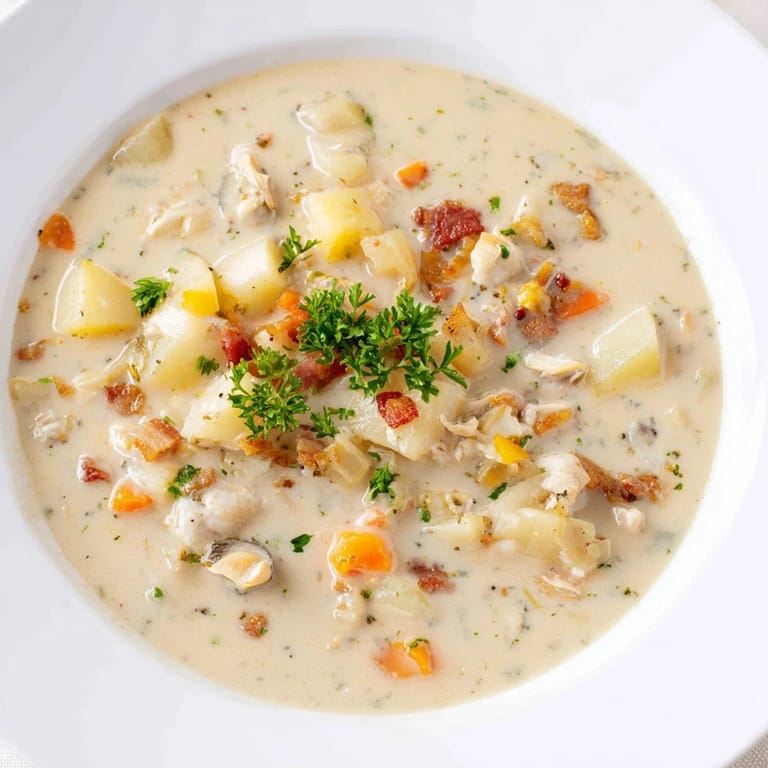
Save There's a moment near the end of making this soup, right after you stir in the cream and watch it cloud and lighten the broth, when it stops being ingredients and becomes something alive. That's the moment you know you're going to be okay, that feeding people something that tastes this good is worth the small effort it took.
Why Fresh Clams Matter
Bottled clam juice exists for a reason—convenience—but there's no substitute for the briny, mineral flavor of clams you've steamed yourself. The moment you taste a spoonful of broth loaded with clam flavor you'll understand why this soup became a coastal tradition instead of just another creamy soup. If you can't find littleneck clams or they're wildly expensive, ask the fishmonger what's freshest that day and work with that, but commit to fresh over frozen or canned every time.
The Roux Is Your Friend
That moment when flour and fat meet over heat is where magic happens—the starch gelatinizes and becomes a thickener that's way better than cornstarch or cream alone. Too many people skip this step or rush it, which is how you end up with soup that's either gluey or too thin. Give it a full minute of stirring and let it smell toasty, and your soup will have the exact silky texture that makes you feel like you did something real.
Variations and Adjustments
Once you've made this traditional version and it clicks, you've earned the right to play around—some people mash a few potatoes in the pot before adding cream to make it thicker and more substantial, and that's a good move if you like your chowder to feel almost stewlike. Others swap heavy cream for half-and-half to lighten things up, which still tastes wonderful and makes you feel a tiny bit less guilty about seconds. If you want heat or smoke, a dash of hot sauce or smoked paprika stirred in at the end transforms this into something new while still honoring what it is.
- A white wine like Sauvignon Blanc is the perfect companion—the acidity cuts through the richness beautifully.
- Oyster crackers are traditional, but crusty bread torn into pieces works just as well and adds a comforting carb element.
- Make this a day ahead if you have time; the flavors deepen overnight and reheating gently the next day makes it taste even better.
 Save
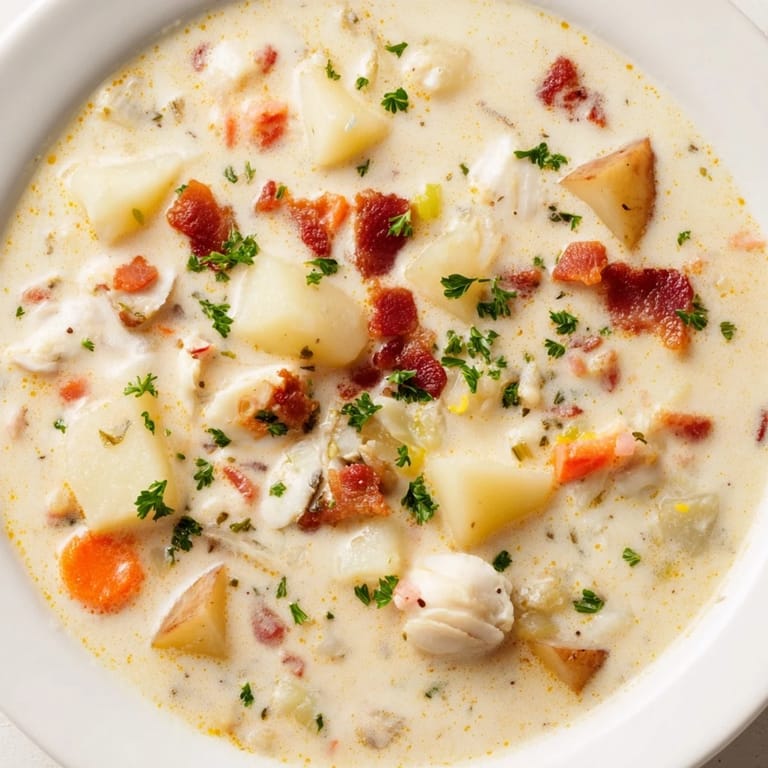
Save This chowder tastes like it belongs to someone else's family history, but once you make it, it becomes part of yours—the kind of recipe you'll make when you want to feel grounded and feed people something real. Pass it on when you can.
Recipe FAQs
- → What kind of clams are best for this dish?
Fresh littleneck clams are ideal due to their tender texture and sweet flavor that complements the creamy base.
- → Can I make the chowder thicker?
Mashing a few of the cooked potatoes before adding cream will naturally thicken the chowder.
- → Is bacon necessary for flavor?
Bacon provides a smoky, savory depth, but can be omitted or substituted for dietary preferences.
- → How long should clams be steamed?
Clams should be steamed 5–7 minutes until they open, discarding any that remain closed.
- → Can I use clam juice instead of steaming clams?
Yes, bottled clam juice can be used along with reserved cooking liquid to build a flavorful broth base.