 Save
Save There's something almost meditative about the way labneh comes together, which I discovered quite by accident when a friend left a container of yogurt draining in my fridge overnight. I'd meant to make something else entirely, but by morning, the transformation was undeniable—the whey had pooled beneath a silky, tangy mass that tasted like comfort and salt and possibility. Now, whenever I make it intentionally, I'm transported back to that surprised moment, that happy accident that became one of my most-reached-for recipes. It's the kind of cheese that doesn't demand much of you, just patience and good yogurt, which somehow makes it feel more generous than dishes that require constant attention.
I remember serving this at a small dinner party and watching people's faces light up when they tasted it for the first time—that moment when something so simple suddenly makes sense to them. One guest asked if I'd bought it from a fancy shop, and I loved having to say no, just yogurt and time and a kitchen towel. Since then, I've made it countless times, and it's become my go-to when I want to feel like I've made something special without the stress.
Ingredients
- Full-fat plain yogurt (1 kg / about 4 cups): The better your yogurt, the better your labneh, so don't skip on quality here—Greek or already-strained yogurt will give you a creamier result with less time required.
- Fine sea salt (½ tsp): This seasons the yogurt as it drains and brings out its natural tang without overpowering it.
- Extra-virgin olive oil (2 tbsp): A good olive oil isn't just garnish; it's essential, carrying flavor and protecting the cheese if you're storing it.
- Dried mint or zaatar (1 tsp, optional): These aren't just decorative—they add brightness and a hint of herbs that somehow make labneh taste even more like itself.
- Aleppo pepper or sumac (pinch, optional): Either one adds a whisper of color and complexity that surprises people who taste it.
Tired of Takeout? 🥡
Get 10 meals you can make faster than delivery arrives. Seriously.
One email. No spam. Unsubscribe anytime.
Instructions
- Combine the yogurt and salt:
- Stir the salt into the yogurt evenly, making sure every spoonful is seasoned the same way. This salt isn't just flavor; it helps draw the whey out.
- Set up your strainer:
- Double-line a sieve with cheesecloth or a clean kitchen towel and position it over a bowl deep enough to catch what pools beneath. The double layer matters—it keeps even the finest yogurt particles from slipping through.
- Add the yogurt and wait:
- Pour the salted yogurt into the lined sieve and gather the cloth gently over the top. You're not squeezing; you're just letting gravity and time do the work while it sits in your refrigerator.
- Check the clock (and your patience):
- Twelve hours will give you something soft and spreadable; twenty-four hours yields a firmer cheese that holds its shape. I usually peek after eight hours just to see how it's progressing, though this isn't necessary.
- Transfer and dress it up:
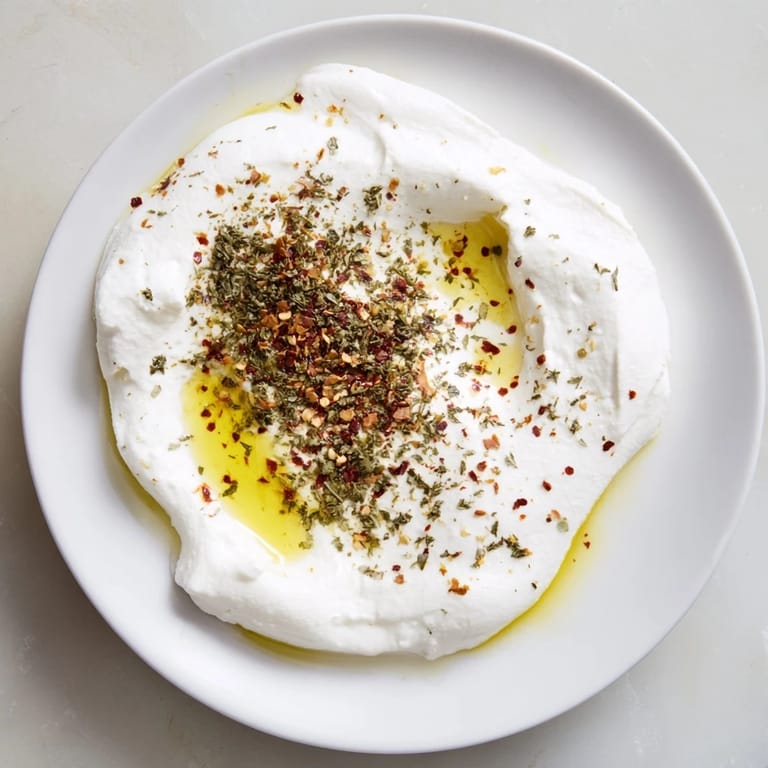
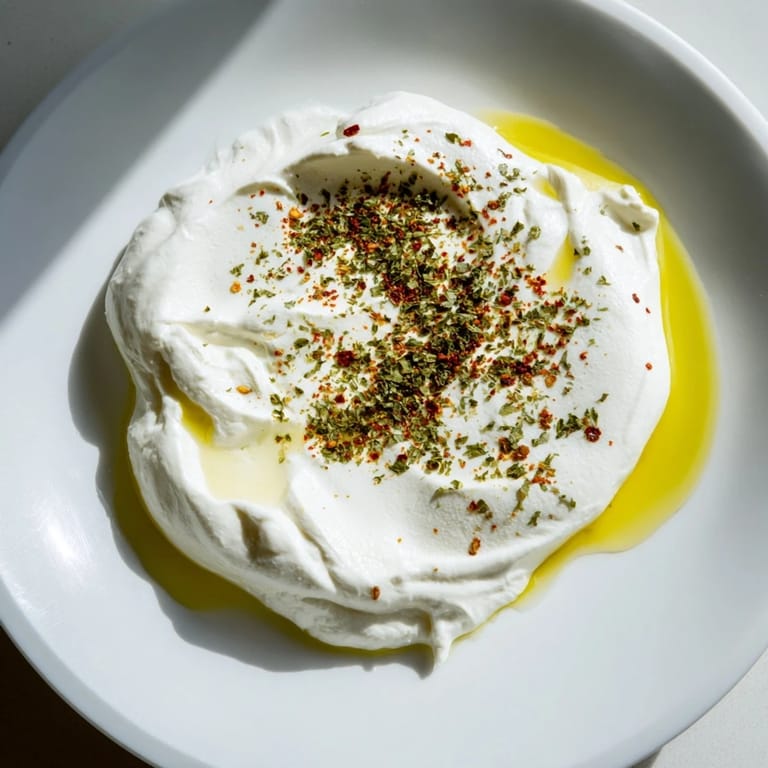
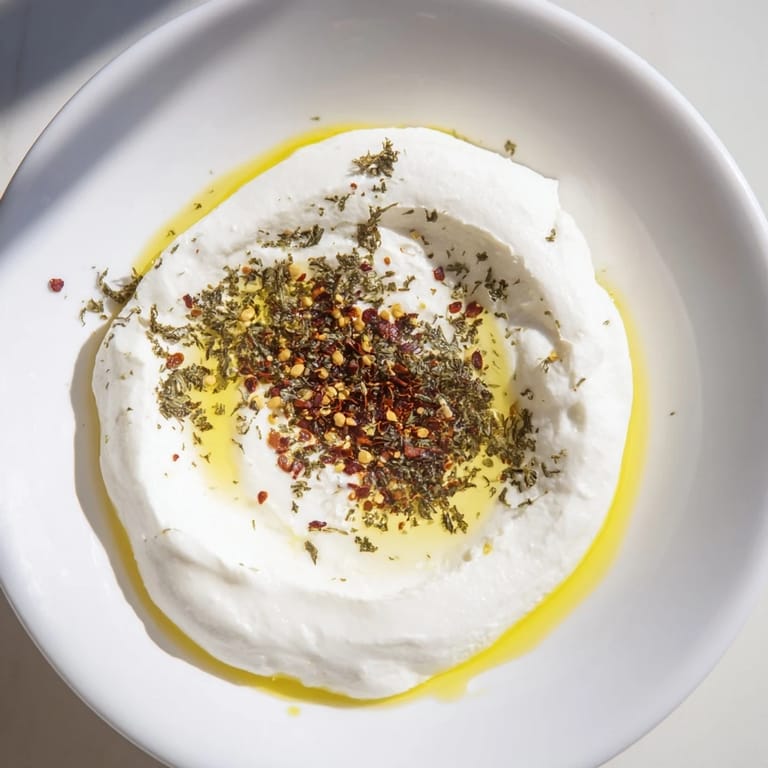
- Once your labneh has reached the texture you want, scoop it into a serving dish and create a shallow well in the center. Pour olive oil into that well and scatter your choice of herbs or spices across the top—it should look intentional and inviting.
- Serve with warmth and company:
- Bring it to the table chilled, alongside warm pita bread, fresh vegetables, or as part of a mezze spread. Watch as people discover that something this simple can taste this good.
 Save
Save There's a moment when labneh stops being yogurt and becomes something else entirely, and you can feel it by touch, by the way it clings to the spoon differently. That moment taught me to trust my senses more than a timer, because every yogurt is a little different and every kitchen has its own rhythm.
Why This Cheese Changed Everything
Before I made labneh, I always assumed that special cheese had to come from a shop or require ingredients I couldn't pronounce. Learning that I could create something this creamy and complex with only yogurt and patience gave me a kind of quiet confidence in the kitchen. It's become my proof that sometimes the most elegant solutions are the simplest ones, and that transformation doesn't always require complexity.
The Stories Labneh Tells
Every culture that borders the Mediterranean seems to have their own version of this cheese, which means every family has their own story about how they make it or what they serve it with. I've learned labneh from Lebanese friends who roll it into balls and preserve it in olive oil with herbs, creating little gems that last for weeks. Some people swear by cheesecloth; others use coffee filters or even clean linens passed down in families. There's something beautiful about a recipe that's flexible enough to belong to everyone who makes it.
Storage and Variations to Try
Once your labneh is made, it deserves the right home—a covered container in the refrigerator will keep it fresh for up to five days, and the olive oil both flavors it and protects it from drying out. I've experimented with rolling extra-firm labneh into walnut-sized balls and storing them in a jar of olive oil infused with herbs and whole spices, creating something that feels almost like luxury preserved in glass.
- For a vegan version, use a thick, high-protein plant-based yogurt and follow the same straining method.
- Try mixing in finely chopped fresh herbs like parsley or dill before serving for a fresher take.
- Layer it in glasses with roasted red peppers and olives for an elegant appetizer that looks like you spent much more effort than you did.
 Save
Save Labneh taught me that some of the most memorable dishes are born not from effort, but from giving simple ingredients time to become something beautiful. Once you make it, you'll find yourself reaching for it again and again, always discovering new ways to share it with the people around your table.
Recipe FAQs
- → What type of yogurt is best for labneh?
Full-fat plain yogurt, preferably Greek or already strained, yields the best creamy and tangy texture.
- → How long should labneh be strained?
Typically between 12 to 24 hours. Twelve hours produces a soft, spreadable texture, while 24 hours results in a firmer cheese.
- → Can labneh be stored after preparation?
Yes, labneh can be refrigerated and kept fresh for up to five days.
- → What garnishes complement labneh?
Extra-virgin olive oil, dried mint, zaatar, Aleppo pepper, or sumac add aromatic and flavorful touches.
- → Is there a plant-based alternative for labneh?
Yes, using thick plant-based yogurt allows for a vegan-friendly version with a similar texture.
- → How is labneh typically served?
Chilled and drizzled with olive oil, labneh is often accompanied by warm pita, fresh vegetables, or integrated into mezze platters.