 Save
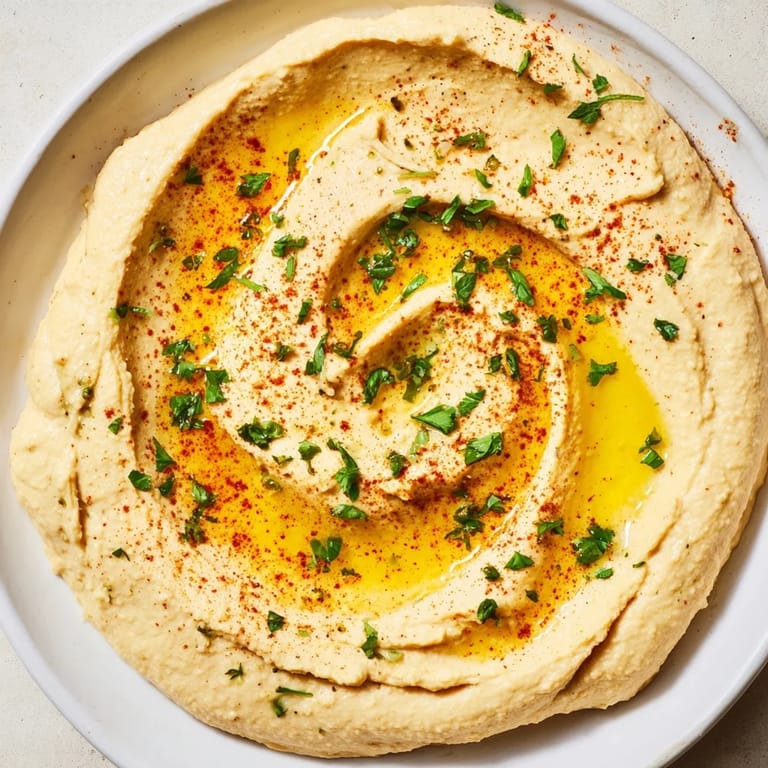
Save There's something about watching hummus transform in a food processor that never gets old—one moment you're dropping in a can of chickpeas and a spoonful of tahini, and the next, you're staring at the most luxurious, cloud-like spread. I learned to make this version during a particularly slow afternoon when a friend mentioned she'd been buying the stuff from a container at the market, and I realized I could do better in fifteen minutes flat. The secret turned out to be simpler than I expected: good tahini, fresh lemon, and patience while the blade does its work.
My cousin made this for a late-night gathering once, and I watched people keep circling back to the hummus plate like it held the answers to something. She'd drizzled the olive oil in this perfect swirl, and the paprika caught the light just right—it became the centerpiece without trying. That's when I understood hummus isn't really about the ingredient list; it's about the moment you set it down and people start reaching.
Ingredients
- Chickpeas: Use canned and rinsed for convenience, or cook dried ones if you have time—the texture is slightly creamier either way, and it makes the whole thing taste like home cooking.
- Tahini: This is where you'll notice the difference; buy the best sesame paste you can find, because it's the backbone of everything, and a good one tastes nutty and alive.
- Lemon juice: Always fresh—bottled will leave you wondering why it tastes flat, and you'll never go back once you squeeze it yourself.
- Garlic: Just one small clove; this isn't a vampire repellent, it's a whisper of sharpness that wakes up your palate.
- Cold water: Keep it nearby; you'll be adding it gradually, watching the texture shift from clay to silk.
- Cumin: Ground, warm, and earthy—the one spice that makes people ask what that flavor is.
- Sea salt: Fine salt dissolves better and tastes cleaner than the chunky kind.
- Olive oil: Extra virgin, the good stuff; it's your final statement, so don't skimp here.
- Paprika or sumac: Choose paprika if you want gentle sweetness, or sumac if you want brightness and tang.
- Fresh parsley: The green that catches your eye and says this was made with care.
Tired of Takeout? 🥡
Get 10 meals you can make faster than delivery arrives. Seriously.
One email. No spam. Unsubscribe anytime.
Instructions
- Gather and measure:
- Set everything out before you start—chickpeas drained and sitting in a bowl, tahini opened and ready, lemon already cut. It takes thirty seconds and saves you from hunting through the kitchen mid-blend.
- Combine and blend:
- Put chickpeas, tahini, lemon juice, garlic, water, cumin, and salt into the food processor. Pulse first, then let it run, watching as the mixture goes from chunky to creamy to impossibly smooth, scraping the sides every few seconds so nothing hides at the bottom.
- Adjust the texture:
- If it's still too thick, add water one tablespoon at a time—the hummus will keep getting airier and lighter, almost cloud-like if you're patient. Taste as you go; this is your chance to make it exactly what you want.
- Season to taste:
- A pinch more salt or another squeeze of lemon can change everything; trust yourself here, you know what you like better than any recipe does.
- Plate it beautifully:
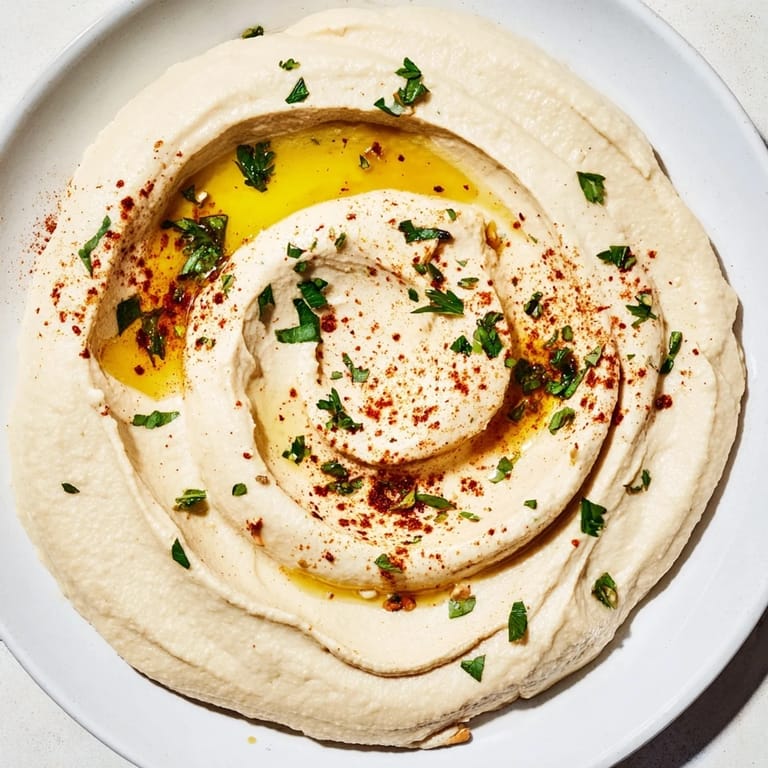
- Spread the hummus into a shallow dish, then use the back of a spoon to create a small well in the center, swirling the surface just enough to make it look intentional and inviting.
- Finish and serve:
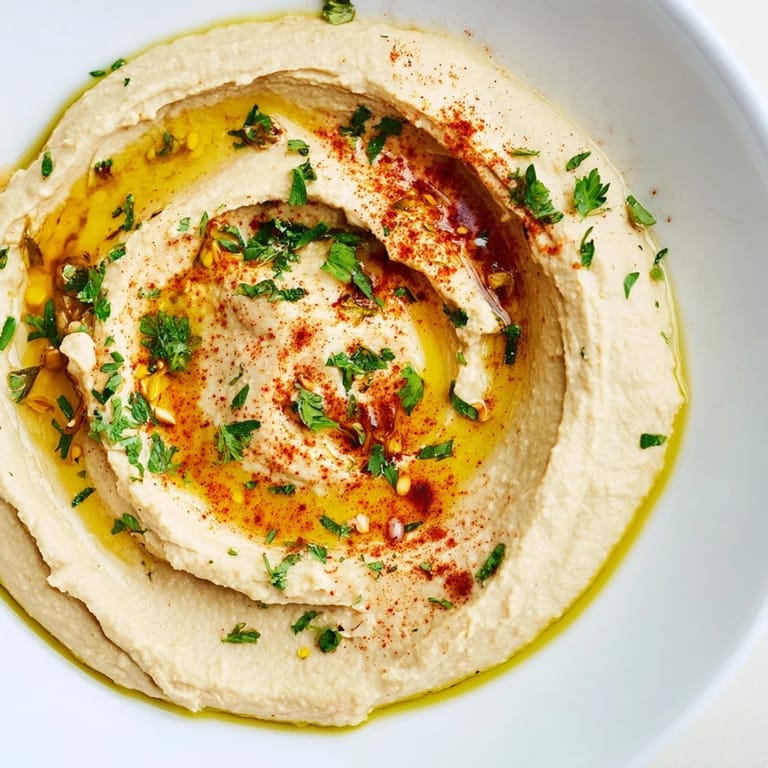
- Drizzle olive oil into that well and across the surface, sprinkle your paprika or sumac, scatter parsley over top, and serve immediately while it's still cool and fresh.
 Save
Save There was a Tuesday when I made this hummus and my neighbor stopped by just as I was finishing the swirl, and she asked if I'd made it myself like she couldn't quite believe it. That moment—when something homemade stops looking homemade and starts looking like art—that's the whole reason this recipe matters.
The Levantine Way
Hummus in the Levant isn't really a recipe you follow; it's a technique you learn by watching someone's hands. The ratio of tahini to lemon juice is almost a feel, a balance point where the sesame richness and citric brightness dance together. I've eaten hummus in kitchens where grandmothers taste it once and add a sprinkle of something invisible, and the whole thing shifts into another dimension, and that's the tradition this comes from—not precision, but intuition.
Serving and Pairing
Warm pita, cold vegetables, or as part of a mezze spread—hummus is the opening act that sets the mood for everything else. I've served it alongside olives, roasted eggplant, and fresh cheese, and each time it plays a different role, adapting to what's around it. The best part is watching people build their own bites, layering flavors and textures in whatever way feels right to them.
Variations and Custom Touches
Once you've made the basic version, the door opens to endless possibilities. Add a pinch of cayenne if you want heat creeping in at the end, or roast your cumin in a dry pan first for deeper warmth. Some days I blend in a roasted red pepper, other times I leave it pure and let the tahini shine, and there's no wrong choice here—just your preference, shifting with the season and your mood. Try it with different garnishes: pomegranate molasses drizzled over the olive oil, toasted pine nuts for crunch, or a sprinkle of sumac for bright acidity instead of paprika's gentle sweetness.
 Save
Save Hummus is one of those dishes that tastes better when it's made with your own hands, in your own kitchen, with ingredients you've chosen. Make it once and you'll stop wondering why yours doesn't taste like the restaurant version—it will taste better, because it's yours.
Recipe FAQs
- → How can I achieve a smoother texture?
Peeling the chickpeas before blending removes skins and results in an ultra-creamy consistency.
- → What variations can enhance the flavor?
Adding a pinch of cayenne or swapping paprika for sumac adds a subtle heat or tangy note.
- → How should I store leftovers?
Keep covered in an airtight container in the fridge for up to four days to maintain freshness.
- → What dishes pair well with this spread?
Serve with warm pita bread, crisp cucumber slices, or carrot sticks for a balanced snack or appetizer.
- → Is this suitable for dietary restrictions?
Yes, it is naturally vegan and gluten-free, containing sesame from the tahini.