 Save
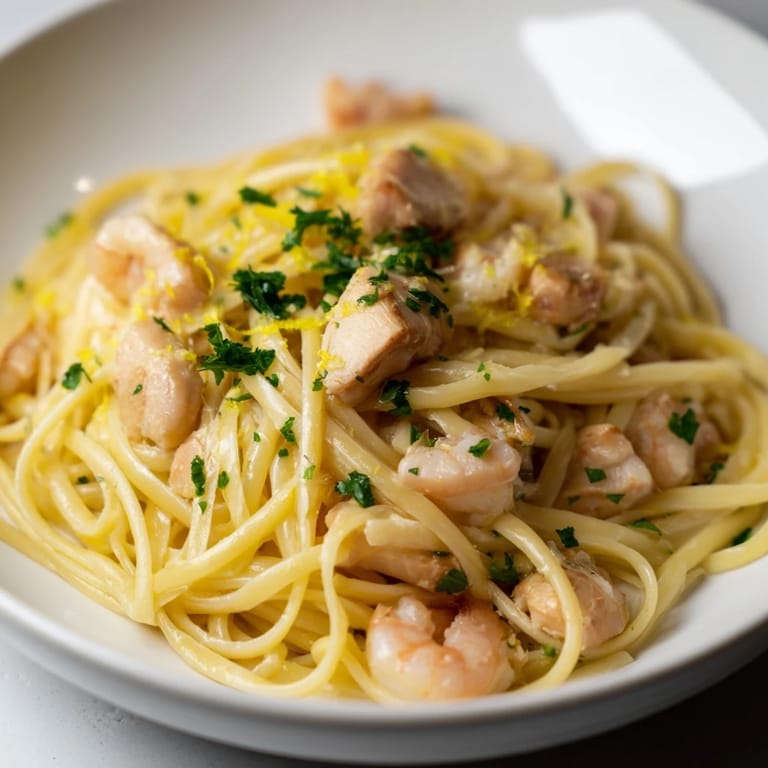
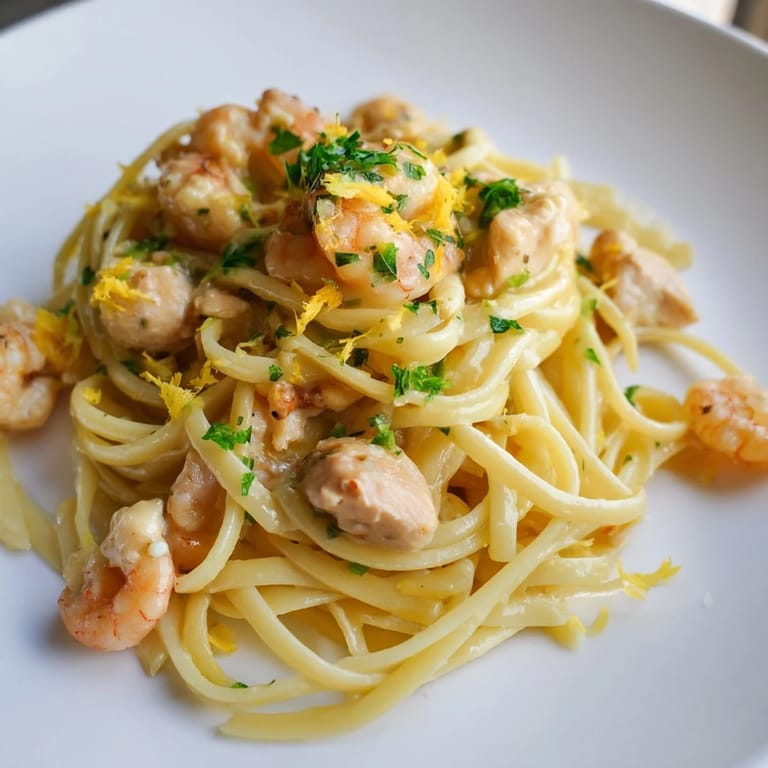
Save The first plate I made disappeared in minutes. My sister sat across from me, twirling linguine around her fork, and said nothing until the shrimp were gone. Then she looked up and asked if I could make it again tomorrow. That's when I knew this wasn't just dinner. It was the kind of dish that turns a Tuesday into something worth remembering.
I made this for my parents' anniversary once, plating it with extra parsley and lemon wedges like I'd seen in magazines. My dad, who usually eats in silence, paused halfway through and said it reminded him of a place they went on their honeymoon. I didn't plan for that. I just wanted them to enjoy dinner. But that's what this dish does, it surprises you.
Ingredients
- Large shrimp, peeled and deveined (225 g): Look for shrimp that smell like the ocean, not fishy, and pat them completely dry or they'll steam instead of sear.
- Boneless, skinless chicken breast, cut into bite-sized pieces (225 g): Keep the pieces uniform so they cook evenly, and don't skip the seasoning or they'll taste bland next to the shrimp.
- Linguine or spaghetti (340 g): Linguine holds the sauce better than thicker noodles, and always salt your pasta water like the sea.
- Garlic, minced (4 cloves): Fresh garlic is non-negotiable here, the jarred stuff just doesn't bloom the same way in hot butter.
- Shallot, finely chopped (1 small): Shallots add a sweet, mellow depth that raw onion can't match, and they soften fast.
- Lemon zest and juice (1 lemon): Zest first, then juice, and use a microplane for the zest so you avoid the bitter white pith.
- Fresh parsley, chopped (2 tbsp): It brightens everything at the end, don't skip it or substitute dried.
- Unsalted butter, divided (4 tbsp): Unsalted lets you control the salt level, and butter is what makes the sauce silky.
- Olive oil (2 tbsp): It keeps the butter from burning when you sear the proteins.
- Dry white wine (60 ml, optional): Use something you'd actually drink, not cooking wine, it adds acidity and complexity.
- Low-sodium chicken broth (60 ml): Low-sodium keeps you in control, and it loosens the sauce just enough.
- Salt, black pepper, red pepper flakes: Season in layers, taste as you go, and the red pepper flakes are optional but I always add them.
- Lemon wedges and extra parsley for garnish: A squeeze of fresh lemon at the table makes each bite feel alive.
Tired of Takeout? 🥡
Get 10 meals you can make faster than delivery arrives. Seriously.
One email. No spam. Unsubscribe anytime.
Instructions
- Boil the pasta:
- Cook your linguine in heavily salted boiling water until it still has a little bite, what Italians call al dente. Before you drain it, scoop out half a cup of that starchy pasta water, it's liquid gold for finishing the sauce.
- Prep your proteins:
- Pat the shrimp and chicken completely dry with paper towels, then season both sides with salt and pepper. Wet protein won't brown, it'll just steam and turn grey.
- Sear the chicken:
- Heat a large skillet over medium-high with a tablespoon each of olive oil and butter, then add the chicken in a single layer. Let it sit undisturbed for a few minutes so it gets golden, then flip and cook until no pink remains, about 4 to 5 minutes total.
- Cook the shrimp:
- Add another tablespoon of olive oil to the same skillet and toss in the shrimp. They cook fast, just a minute or two per side until they curl and turn pink.
- Build the sauce base:
- Lower the heat to medium and melt the remaining 2 tablespoons of butter, then add your shallot and garlic. Stir them around until the kitchen smells incredible, about a minute or two.
- Deglaze and simmer:
- Pour in the white wine if you're using it and let it bubble and reduce for a minute, scraping up any browned bits from the pan. Add the chicken broth, lemon zest, and juice, then let it simmer gently for 2 minutes.
- Bring it all together:
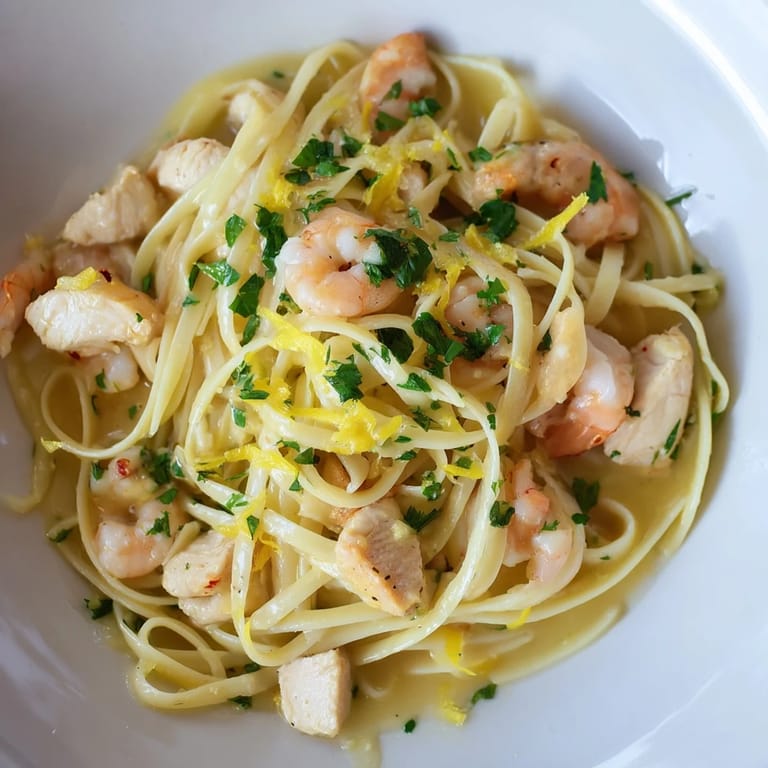
- Return the chicken and shrimp to the skillet along with the drained pasta. Toss everything together, adding splashes of reserved pasta water until the sauce coats every strand without pooling at the bottom.
- Finish and taste:
- Stir in the parsley and red pepper flakes if you like a little heat, then taste and adjust the salt and pepper. The balance should be bright, buttery, and just a little sharp from the lemon.
- Plate and serve:
- Divide the pasta among bowls and garnish with lemon wedges and extra parsley. Serve it hot, and tell everyone to squeeze fresh lemon over their portion.
 Save
Save One night I made this after a long week, the kind where nothing went right. I wasn't expecting much, just something warm and quick. But standing at the stove, smelling garlic and lemon, watching the butter melt into glossy sauce, I realized I was smiling. That's the thing about this dish, it doesn't just feed you, it resets you.
How to Make It Creamier
If you want a richer, silkier sauce, stir in 2 tablespoons of heavy cream when you add the chicken broth. It mellows the lemon just a touch and coats the pasta like velvet. I do this when I'm making it for guests who expect something indulgent. Just don't boil it hard after adding the cream or it might separate.
What to Serve Alongside
A simple arugula salad with olive oil and shaved Parmesan is perfect, it cuts through the richness without competing. Garlic bread is always a hit, especially if you let people mop up the extra sauce. And if you're pouring wine, go for something crisp and citrusy like Sauvignon Blanc or Pinot Grigio, it mirrors the lemon in the dish and keeps everything bright.
Storage and Reheating
Leftovers keep in an airtight container in the fridge for up to 2 days. Reheat gently in a skillet over low heat with a splash of chicken broth or water to loosen the sauce, the microwave works but the pasta can get gummy. I've found that adding a tiny pat of butter when reheating brings the sauce back to life. If the shrimp seem overdone after reheating, toss them in at the very end next time so they stay tender.
- Store in a shallow container so it cools quickly and evenly.
- Add a squeeze of fresh lemon after reheating to wake up the flavors.
- Don't freeze this, shrimp and pasta don't thaw well together.
 Save
Save This is the dish I make when I want to feel like I have my life together, even if I don't. It's quick, it's satisfying, and it tastes like you tried harder than you actually did.
Recipe FAQs
- → Can I use frozen shrimp and chicken?
Yes, frozen proteins work well. Thaw them completely and pat dry before cooking to ensure proper browning and even cooking.
- → What's the best way to avoid rubbery shrimp?
Cook shrimp for only 1-2 minutes per side. It should turn pink and opaque. Overcooked shrimp becomes tough, so monitor it closely while cooking.
- → Can I substitute the white wine?
Yes, the wine is optional. You can omit it entirely or replace it with an equal amount of chicken broth or a splash of lemon juice for acidity.
- → How do I store leftovers?
Store cooled pasta in an airtight container in the refrigerator for up to 3 days. Reheat gently on the stovetop with a splash of broth or water to refresh the sauce.
- → What pasta shapes work best?
Linguine and spaghetti are traditional choices, but fettuccine, pappardelle, or even gluten-free varieties work beautifully to catch the lemon-garlic sauce.
- → Can I make this dairy-free?
Substitute the butter with olive oil or dairy-free butter alternative. The sauce will be lighter but still flavorful with the lemon juice and white wine reduction.