 Save
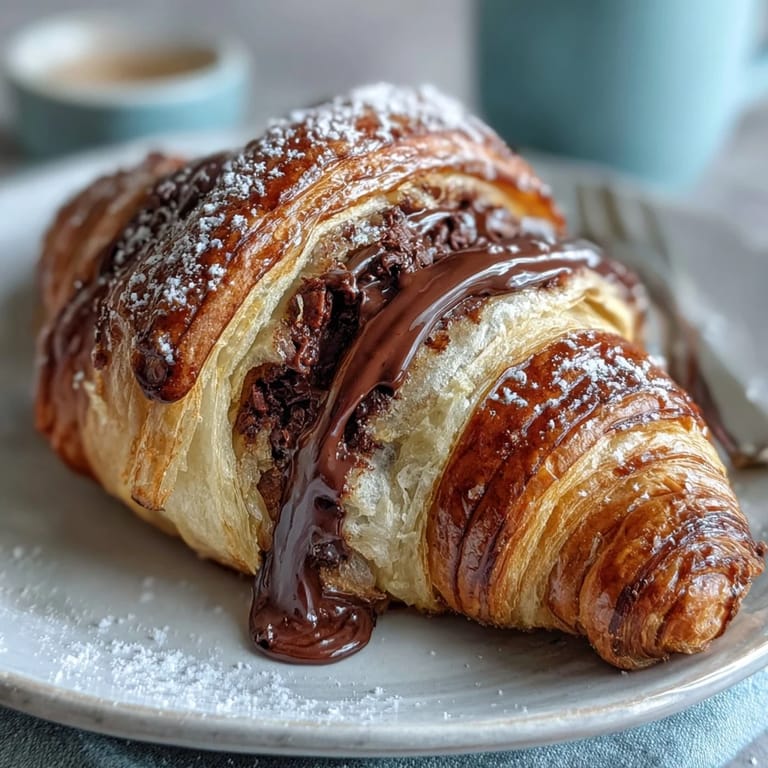
Save There's something almost meditative about the rhythm of laminating croissant dough, fold after fold, watching butter and flour transform into hundreds of delicate layers. My first attempt at sourdough croissants came on a grey March morning when I decided—perhaps foolishly—to combine two techniques I'd only read about. The kitchen smelled like fermented rye and caramelizing butter for nearly twelve hours straight, and somehow, miraculously, they turned out. Now, whenever I make them, I chase that same magic: the snap of the pastry, the way dark chocolate melts into the tender crumb, that perfect balance of tang from the sourdough and richness from the lamination.
I'll never forget the Saturday I brought a batch to my neighbor who'd just moved in, still surrounded by cardboard boxes. She took one bite, closed her eyes, and said nothing for a full minute—which somehow said everything. That's when I realized these croissants had graduated from just something I made to something that actually meant something to people. Now they're my go-to gift, my apology, my celebration, all wrapped up in buttery, flaky layers.
Ingredients
- Bread flour (500 g): The protein content gives structure to support all those butter layers without collapsing, so don't swap this for cake flour or you'll regret it halfway through lamination.
- Active sourdough starter (100 g at 100% hydration): This is your flavor engine—use one that's been fed within the last few hours so it's bubbly and alive, not sluggish.
- Cold whole milk (220 ml): Cold milk slows fermentation slightly, giving you more control over timing and better flavor development.
- Granulated sugar (60 g): Just enough to feed the sourdough and balance the saltiness without making these sweet pastries.
- Fine sea salt (10 g): Don't skimp here—salt strengthens gluten and brings out the sourdough's tangy notes beautifully.
- Unsalted softened butter (30 g for dough): This enriches the base dough and helps with extensibility during lamination.
- European-style butter (250 g, cold): The higher fat content creates those coveted thousands of paper-thin layers; American butter won't laminate quite as crisply.
- High-quality dark chocolate (120 g, 60% cocoa or higher): Cheap chocolate will taste waxy and muddy once baked, so invest here and taste the difference immediately.
- Large egg (1, for egg wash): Creates that signature glossy, golden-brown finish that makes them look professionally done.
Tired of Takeout? 🥡
Get 10 meals you can make faster than delivery arrives. Seriously.
One email. No spam. Unsubscribe anytime.
Instructions
- Mix and Rest Your Base Dough:
- Combine your flour, starter, cold milk, sugar, salt, and softened butter—either in a stand mixer or by hand—until you have a shaggy, rough dough. Knead for about 4-5 minutes until the dough feels smooth and slightly elastic; it won't be silky yet, and that's exactly right. Let it rest, covered, at room temperature for 30 minutes while you grab a coffee and mentally prepare for the lamination ahead.
- Build Flavor with Bulk Fermentation:
- Transfer your dough to an oiled bowl, cover it loosely, and let it sit at room temperature for 2-3 hours, performing two gentle stretch-and-folds at the 1-hour mark and again at the 2-hour mark. These folds build strength without aggressive kneading; imagine you're coaxing the dough to develop, not punishing it. After the bulk fermentation, cover everything tightly and refrigerate for 8-12 hours—overnight is ideal because cold dough is much easier to laminate.
- Engineer Your Butter Block:
- Place your cold butter between two sheets of parchment paper and pound it gently but firmly with a rolling pin until it becomes pliable, then roll it into a 20 x 20 cm (8 x 8 inch) square. The butter should be cold but flexible enough to fold without cracking—think of the consistency of cold cream cheese. Refrigerate until firm again.
- Execute the Lamination (First Turn):
- On a lightly floured surface, roll your cold dough into a 30 x 30 cm (12 x 12 inch) square, working gently so you don't tear the dough. Place your butter block in the center, fold the four corners of dough over it like an envelope, then roll the whole thing into a 60 x 20 cm (24 x 8 inch) rectangle. Fold this rectangle into thirds (like folding a letter), cover, and chill for 30 minutes.
- Repeat Lamination Turns:
- Give your dough two more rolling and folding cycles, chilling for 30 minutes between each turn—this creates the hundreds of layers that make croissants sing. On the third turn, roll your dough to 60 x 30 cm (24 x 12 inch), about 4 mm thick, and you're ready to shape.
- Shape with Chocolate:
- Cut your laminated dough into 12 long triangles with a base about 10 cm wide, then place a chocolate baton at the wide end of each triangle. Roll each one tightly toward the tip, stretching slightly as you go, then place them on parchment-lined baking sheets with the tip tucked underneath to keep them from unrolling.
- Final Proof Until Puffy:
- Cover your shaped croissants loosely and let them proof at room temperature for 4-5 hours; they should roughly double in size and feel light and airy when you gently poke one. If your kitchen is cold, find a slightly warm, draft-free spot—a turned-off oven with the light on works beautifully.
- Bake to Golden Perfection:
- Preheat your oven to 200°C (400°F), whisk your egg with 1 tablespoon of water, and brush the mixture gently over each croissant—not too much or they'll slide on the pan. Bake for 18-22 minutes until they're deep golden brown and the kitchen smells like a Parisian bakery, then transfer them to a wire rack to cool for at least 15 minutes before you eat one (I know it's hard).
 Save
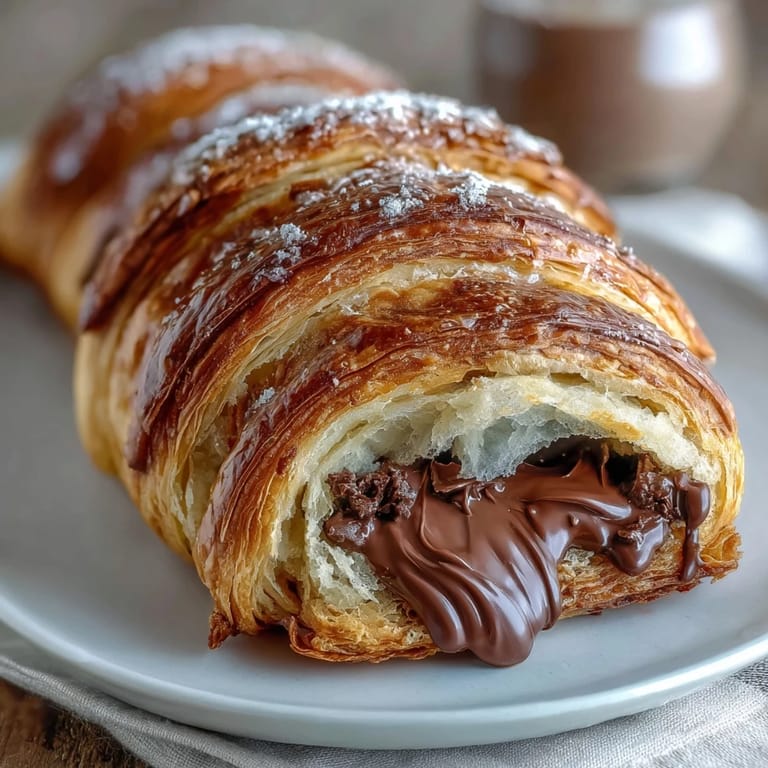
Save I learned the hard way that serving these croissants warm, within an hour or two of baking, is when they're truly transcendent—the chocolate still pools slightly, and the layers actually snap instead of compress. That moment when someone's face lights up as they take their first bite never gets old, no matter how many times you've baked them.
The Sourdough Advantage
Regular croissants are wonderful, but sourdough ones have this subtle complexity that comes from the fermentation—a slight tanginess that plays beautifully against the sweetness of the chocolate and the buttery richness. The starter also strengthens the gluten naturally, making the lamination more forgiving and the final crumb more tender. It's one of those happy accidents where combining two techniques ends up being better than either one alone.
Timing and Temperature Reality
The timeline I've given you is a guide, not gospel, because every kitchen is different. A warm, humid summer kitchen might proof your croissants in 3 hours while a cool basement kitchen might take 6, and both will be delicious. Watch the dough, not the clock—you're looking for them to roughly double in size and feel light when you gently touch them, not for a specific time to pass. Temperature control during lamination is genuinely important, so if your kitchen is warm, work quickly and chill frequently.
Storage, Revival, and Flavor Variations
These croissants taste best the day they're baked, but they'll keep in an airtight container for 2-3 days and can be gently reheated in a 160°C (320°F) oven for about 5 minutes to restore their crispness. If you're feeling adventurous, add the zest of one orange to the base dough for a subtle citrus note, or sprinkle flaky sea salt on top just before baking to create a sweet-salty contrast that's absolutely addictive. You can also experiment with different chocolate percentages—I sometimes use 70% for a more bitter edge, especially if someone at my table prefers less sweetness.
- Orange zest in the dough creates a subtle brightness that pairs beautifully with dark chocolate, elevating the whole thing.
- A light sprinkle of flaky sea salt on top before baking creates an unexpected contrast that feels elegant and modern.
- These freeze beautifully after shaping but before proofing—bake them straight from frozen, adding a few extra minutes to the bake time.
 Save
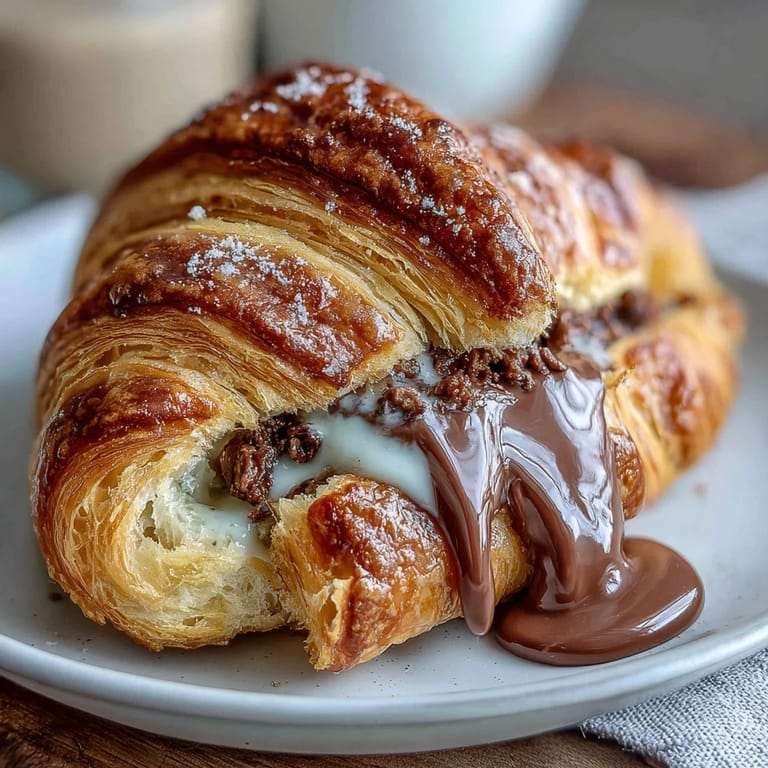
Save Making sourdough croissants asks you to slow down and be present for each fold, each rest, each rise—and that patience is exactly what makes them so rewarding. Once you've made them once, you'll understand why people get so excited about these laminated treasures.
Recipe FAQs
- → How do I achieve flaky layers in sourdough croissants?
Flaky layers result from laminating cold butter within the dough through repeated rolling and folding, creating thin alternating layers of dough and butter.
- → What is the role of the sourdough starter in the dough?
The sourdough starter provides natural fermentation which imparts a tangy flavor and improves dough texture and shelf life.
- → Can I use other types of chocolate for the filling?
Yes, but high-quality dark chocolate with at least 60% cocoa ensures the best flavor and melting properties within the croissant.
- → Why is chilling the dough important during preparation?
Chilling solidifies the butter layers, prevents melting, and helps develop tender, flaky texture by controlling fermentation speed.
- → How should I store croissants to preserve freshness?
Store croissants in an airtight container at room temperature and gently reheat in the oven to restore crispness.