 Save
Save My sister called me three days before Easter, slightly panicked because she'd promised her kids homemade cookies and had completely forgotten. I found myself at her kitchen table at 9 PM, flour dusting my jeans, watching her youngest press bunny cutters into dough while soft jazz played on the radio. That night taught me that Easter sugar cookies aren't really about perfection—they're about the mess, the laughter, and those pastel-colored moments when everything feels a little more hopeful. These buttery, tender cookies have since become our family tradition, and decorating them together has become as important as eating them.
I'll never forget watching my neighbor's four-year-old carefully pipe yellow icing onto an egg-shaped cookie, her tongue poking out in concentration. When she finally finished, she held it up like it was a masterpiece—and honestly, it was. That's when I realized these cookies aren't just dessert; they're a little creative outlet that happens to taste incredible. Sharing them transformed a simple baked good into something that brought actual joy to people.
Ingredients
- All-purpose flour: The foundation of these cookies—make sure it's measured by weight if you have a scale, because scooping and leveling can pack it down and make your cookies dense.
- Baking powder: Just a touch is all you need to give them a subtle lift without making them cakey.
- Salt: This tiny amount amplifies the butter flavor and keeps them from tasting one-dimensional.
- Unsalted butter, softened: Room temperature butter is non-negotiable here—it creams beautifully with sugar and creates that tender crumb you're after.
- Granulated sugar: This is what makes them crisp around the edges while staying soft in the middle.
- Large egg: Binds everything together and adds richness without overwhelming the vanilla.
- Pure vanilla extract: Don't skip quality here; cheap vanilla tastes plasticky when you're eating a simple, delicate cookie.
- Milk: Just enough to bring the dough together without making it sticky—I learned this the hard way when I added too much once.
- Powdered sugar and meringue powder: Together they create that smooth, glossy royal icing that sets up perfectly for decorating.
- Gel food coloring in pastel shades: Gel colors don't thin out your icing like liquid dyes do, and pastel shades photograph beautifully and feel festive without being garish.
Tired of Takeout? 🥡
Get 10 meals you can make faster than delivery arrives. Seriously.
One email. No spam. Unsubscribe anytime.
Instructions
- Mix your dry ingredients:
- Whisk together the flour, baking powder, and salt in a medium bowl and set it aside—this ensures even distribution of the leavening agent.
- Cream butter and sugar:
- Beat them together for about 2 to 3 minutes until the mixture is pale and fluffy, almost like thick frosting. This is where the magic starts; you're incorporating air that makes the cookies tender.
- Add egg and vanilla:
- Mix them in completely, scraping down the sides of the bowl as you go to make sure everything is evenly combined.
- Bring the dough together:
- Gradually add your dry ingredients on low speed, then add the milk and mix just until the dough comes together—overmixing at this point develops gluten and makes cookies tough.
- Chill the dough:
- Divide it into two discs, wrap them tightly in plastic, and refrigerate for at least an hour so the butter stays firm and the flavors mellow. You can actually do this step the day before.
- Preheat and prep:
- Get your oven to 350°F and line your baking sheets with parchment paper while the dough chills.
- Roll and cut:
- Work on a lightly floured surface, rolling one disc at a time to about 1/4 inch thickness—this gives you cookies that are tender but still hold their shape. Use your Easter cutters and space them about an inch apart on the sheet.
- Bake until golden:
- Watch for the moment when the edges just start turning golden, which is usually 8 to 10 minutes depending on your oven. The middles should still look slightly underbaked when you pull them out.
- Cool properly:
- Leave them on the baking sheet for 5 minutes so they firm up, then transfer to wire racks. Cooling on the sheet any longer makes them tough.
- Make the royal icing:
- Combine powdered sugar and meringue powder, add warm water gradually, and beat on low until smooth, then on high speed for 3 to 4 minutes until you get stiff peaks. The meringue powder is key because it keeps the icing stable without raw eggs.
- Color and decorate:
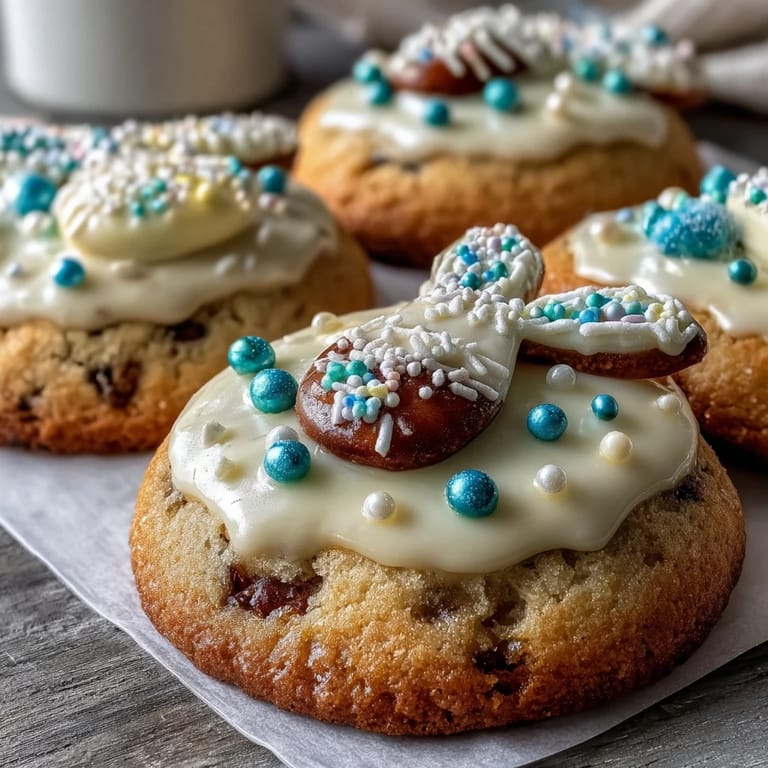
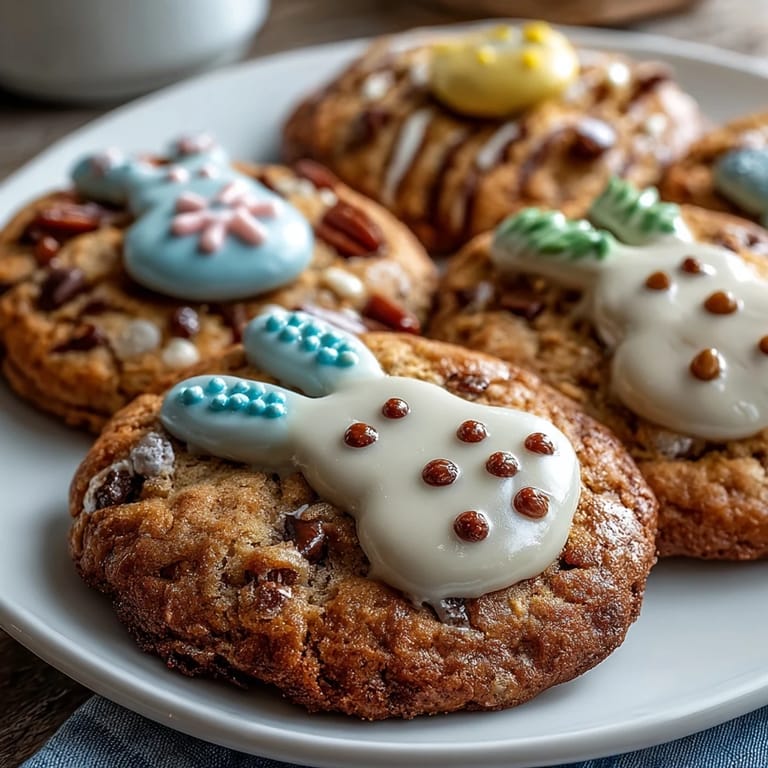
- Divide your icing among bowls and add just a tiny dab of gel coloring to each, stirring gently until you reach that soft pastel shade you want. Transfer to piping bags and decorate with confidence—remember, imperfect is charming.
- Let it set:
- Give the icing at least a couple of hours to dry completely before you stack or serve them, or the decorations will smudge.
 Save
Save My mom keeps a tin of these in her freezer year-round now, thawing them out whenever she needs a little boost of joy or something pretty to put on a dessert table. That detail matters to me because it means I created something that transcends a single holiday and became part of how she shows love to the people around her.
The Secret Behind Tender Cookies
The difference between cookies that shatter in your teeth and ones that have that perfect tender crumb comes down to three things: not overmixing the dough, pulling them out of the oven when they're still slightly soft in the middle, and using enough fat relative to flour. I spent an entire winter baking variations of this recipe before I understood that less mixing time actually gives better results than being thorough. Once I stopped trying to knead the dough into submission, everything changed.
Why Royal Icing Works Better Than You Think
Royal icing intimidates a lot of people because it sounds technical, but it's actually just three ingredients beating together until they turn into something magical. The meringue powder does the heavy lifting by stabilizing everything without requiring raw eggs, and the warm water helps the sugar dissolve so you get a smooth consistency instead of gritty icing. Once you've made it once, you'll never be scared of it again, and you'll start experimenting with different colors and piping techniques because it's actually fun.
Making Them Your Own
The beauty of this recipe is that it's a canvas waiting for your personal touch—flavor variations, different shapes, unique color combinations, whatever calls to you. I've made them with almond extract instead of vanilla, with lemon zest mixed into the dough, and with colors that shift from soft pastels to jewel tones depending on the occasion. The point is to make them feel like yours, not like a copy of someone else's creation.
- Try adding a quarter teaspoon of almond or lemon extract to the dough for a subtle flavor shift that feels special.
- If your icing is too thick, add water one drop at a time; too thin, add more powdered sugar slowly while beating.
- These cookies freeze beautifully for up to three months, either plain or decorated, so you can get ahead on holiday baking without stress.
 Save
Save These cookies have become my answer to almost any spring occasion—Easter, bridal showers, just because someone could use a little happiness. They're proof that sometimes the most meaningful things we can do in the kitchen have nothing to do with technique and everything to do with intention.
Recipe FAQs
- → How do I keep the cookies soft?
To maintain softness, avoid overbaking and ensure the cookies are removed once edges turn lightly golden but centers remain tender.
- → Can I use different colors for the icing?
Yes, pastel gel food colors allow you to customize the royal icing with a variety of soft shades for festive decoration.
- → What’s the best way to decorate the cookies?
Use piping bags or squeeze bottles to apply the royal icing smoothly, allowing each layer to set before adding details.
- → How long should the dough chill before baking?
Chill the dough for at least 1 hour to help with rolling and to maintain shape during baking.
- → Are there any ingredient substitutions for flavor?
Adding lemon or almond extract to the dough can enhance the flavor profile with subtle citrus or nutty notes.
- → How should decorated cookies be stored?
Keep them in an airtight container at room temperature for up to one week to retain freshness and decoration quality.