 Save
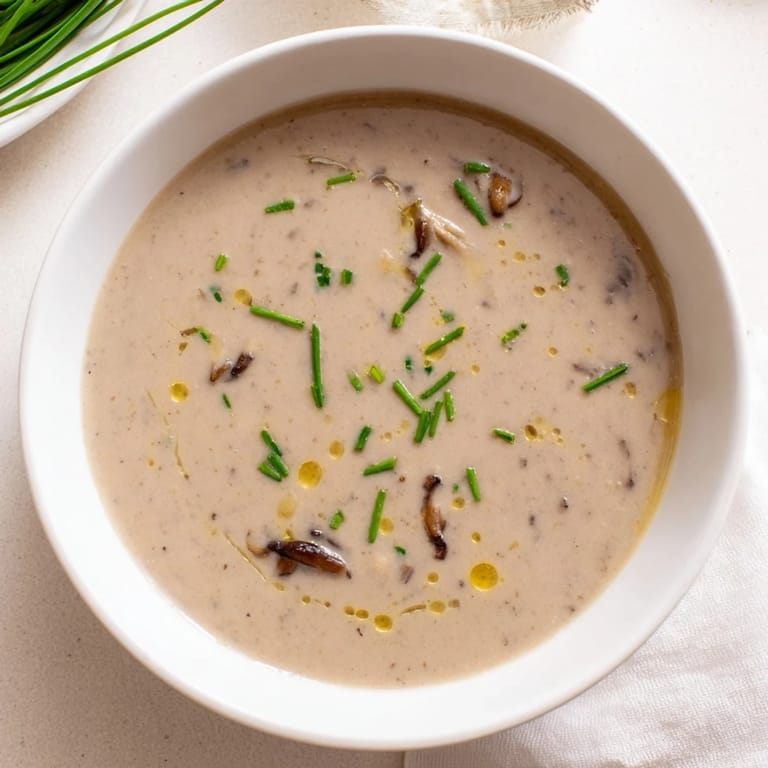
Save There's a particular October afternoon I keep coming back to, when my neighbor dropped off a basket of wild mushrooms from a farmers market she'd visited upstate. I stood in my kitchen holding them—chanterelles still dusted with forest soil—and suddenly remembered my grandmother's kitchen in Lyon, where cream-based soups were treated like liquid gold. That single basket sparked an obsession with crafting the perfect mushroom bisque, one where every element feels essential rather than decorative.
I made this for my sister's book club once, and someone asked if I'd gone to culinary school. I hadn't—I'd just burned three pots of mushroom soup before landing on the gentle technique that makes this one sing. Watching them pass their bowls back for seconds while debating their mystery novel was one of those small kitchen victories that stays with you.
Ingredients
- Mixed wild mushrooms (500 g / 1 lb): Chanterelles, cremini, and shiitake create a layered depth that single-mushroom versions can't touch—clean them gently with a damp cloth rather than rinsing, as they absorb water like sponges.
- Unsalted butter (2 tbsp): This is your foundation for flavor; it needs to be real butter, not a substitute, to carry the umami properly.
- Yellow onion (1 medium): Finely chopped onion dissolves into the soup, creating body and sweetness without announcing itself.
- Garlic (2 cloves): Minced fine so it softens into the aromatics rather than leaving sharp little pieces behind.
- Leek, white part only (1 small): The pale interior is milder and creamier-tasting than the green tops, which would muddy the color.
- Vegetable or chicken stock (750 ml / 3 cups): Choose stock you'd drink on its own; it matters more than you'd think in something this simple.
- Dry white wine (120 ml / ½ cup): The acidity brightens everything and prevents the soup from tasting one-dimensional.
- Heavy cream (240 ml / 1 cup): For a vegan version, unsweetened plant-based cream works, though the texture differs slightly.
- Fresh thyme leaves (1 tsp, or ½ tsp dried): Thyme is the only herb that won't get lost in the blending—it belongs here completely.
- Sea salt, black pepper, nutmeg (pinch of each): The nutmeg is barely detectable, but remove it entirely and something feels absent.
Tired of Takeout? 🥡
Get 10 meals you can make faster than delivery arrives. Seriously.
One email. No spam. Unsubscribe anytime.
Instructions
- Melt and aromatize:
- Warm the butter over medium heat until it foams gently. Add your onion, leek, and garlic, stirring occasionally. Watch for that moment—around 5 minutes—when the kitchen suddenly smells completely different, when everything turns translucent and soft. This is when you know they're ready; stop before they brown.
- Introduce the mushrooms:
- Add your sliced mushrooms and thyme, stirring regularly. The mushrooms will seem dry at first, then release their own liquid as they cook, creating a dark, glossy base. This takes about 8–10 minutes. You'll know it's right when the mixture smells deeply savory and earthy.
- Deglaze with wine:
- Pour in the white wine and let it bubble gently for 2–3 minutes, scraping the bottom of the pot with your spoon. Those browned bits aren't burnt—they're concentrated flavor, and they belong in your soup.
- Simmer and season:
- Add the stock, salt, pepper, and nutmeg. Bring everything to a boil, then drop the heat low and leave it uncovered for 20 minutes. The soup will deepen in color slightly, and the flavors will begin marrying together.
- Blend into velvet:
- Remove from heat and use an immersion blender directly in the pot, moving it slowly through the soup until you reach complete smoothness. The moment it becomes uniformly creamy is oddly satisfying; if you're using a standard blender, work in batches and let the hot soup cool slightly first.
- Finish with cream:
- Return the soup to low heat and stir in the cream slowly, stirring constantly. Keep the heat gentle—if it boils, the cream can separate slightly and lose its silkiness. Taste as you go and adjust salt or pepper.
- Serve with intention:
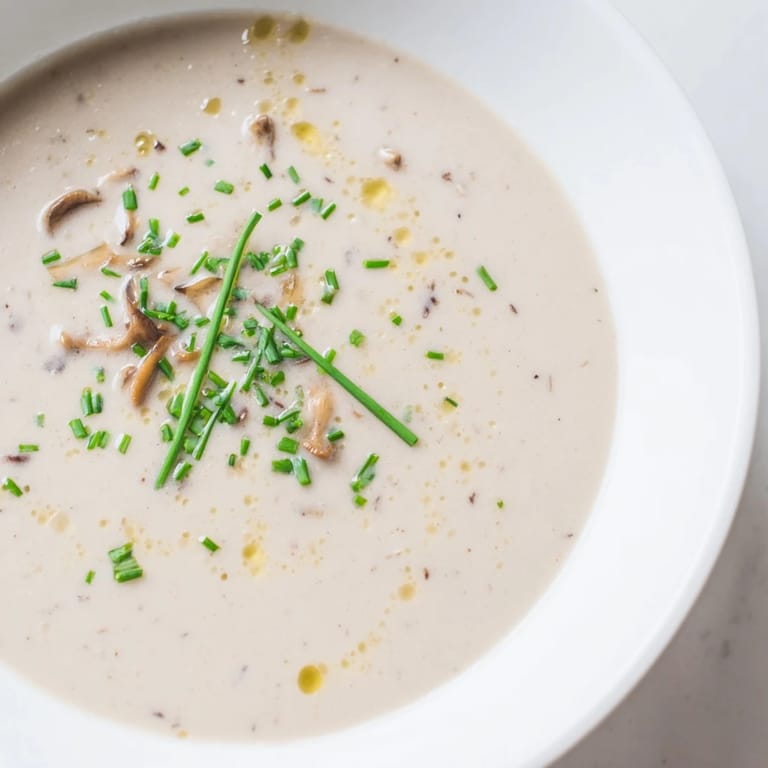
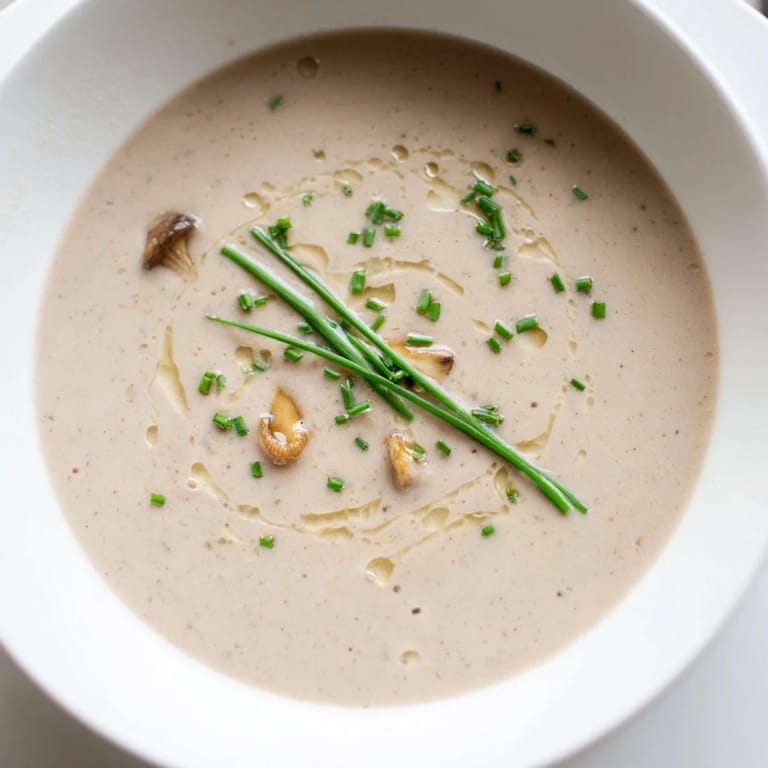
- Ladle into warm bowls, scatter fresh chives or parsley on top, and drizzle with truffle oil if you have it. Serve immediately.
 Save
Save There's something almost meditative about eating this soup on a cool evening, letting the warmth spread through you in a way that feels less like eating and more like taking care of yourself. It became the dish I make when I need comfort, or when I want to remind someone they matter.
The Mushroom Question
I spent years thinking you had to use expensive wild mushrooms to make this special, until a chef friend pointed out that cremini mushrooms alone—the humble brown ones—can be absolutely stunning. The mix is ideal because it layers flavors, but if your market has only creminis, they'll still create something beautiful. The proportions matter less than using mushrooms that smell earthy and fresh, with no slimy spots or strange odors.
Building Depth Without Complexity
This recipe teaches you something important about cooking: that a silky texture and careful technique can make a simple ingredient list feel luxurious. There's no cream of mushroom soup packet, no shortcut, just good butter, time, and the patient blending that turns distinct vegetables into something unified. That restraint is actually what makes it impressive.
Beyond the Bowl
Once you've made this soup, you'll find yourself reaching for the technique again—with roasted cauliflower, with butternut squash, with anything that benefits from becoming creamy and elegant. It's a foundation worth understanding. Here are the moments that turn a bowl into something memorable.
- Serve in smaller portions as an appetizer rather than a main course, and suddenly you're hosting a proper dinner.
- If you want to add protein without changing the character, a single large scallop seared in butter and placed in the center of each bowl looks restaurant-quality.
- Make it the day before and reheat gently; the flavors deepen and the soup tastes even better.
 Save
Save This soup is proof that simple ingredients and patience create something that feels significant. Make it when you want to feel capable in the kitchen, or when you want someone to know they're worth the time.