 Save
Save There's something about October afternoons that makes me want to roast vegetables until the kitchen smells like caramel and earth. I discovered this butternut squash soup by accident, really—I had bought a squash at the farmers market with vague intentions, then found myself standing in front of the oven with nothing but olive oil and a craving for something warm. What emerged was this silky, comforting soup that tastes like it took hours but actually comes together in about an hour. It's become my go-to when I need something that feels both simple and a little bit special.
I remember making this for my sister when she showed up unexpectedly on a cold evening, asking if I had anything warm to eat. I threw it together while we talked by the kitchen window, and by the time she was halfway through her bowl, she was already asking for the recipe. There's something about handing someone a warm spoon of soup that tastes like you actually know what you're doing in the kitchen—even if you're just following your instincts.
Ingredients
- 1 large butternut squash (about 2.5 lbs), peeled, seeded, and cubed: The roasting is what makes this whole thing work, so don't skip it or rush it—those caramelized edges are non-negotiable.
- 1 medium yellow onion, chopped: This builds a savory base that keeps the soup from tasting too one-note sweet.
- 2 cloves garlic, minced: Just enough to add depth without making itself known.
- 4 cups vegetable broth: Use something you actually like drinking; the broth flavor carries through.
- 2 tbsp olive oil: Split between roasting the squash and sautéing the aromatics.
- 1 tsp sea salt: You'll probably adjust this at the end, so taste as you go.
- 1/4 tsp ground black pepper: A gentle hand here keeps it balanced.
- 1/2 tsp ground nutmeg: This is the secret ingredient that makes people ask what you put in it—don't skip it.
- 1 tsp dried sage or 1 tbsp fresh sage, chopped: Fresh sage is worth hunting down if you can; it makes the soup taste like autumn in a spoon.
- 1/4 cup heavy cream or coconut milk for swirling, plus roasted pumpkin seeds and fresh sage for garnish: These aren't mandatory, but they turn a simple bowl into something that feels like you really tried.
Tired of Takeout? 🥡
Get 10 meals you can make faster than delivery arrives. Seriously.
One email. No spam. Unsubscribe anytime.
Instructions
- Get your oven ready:
- Preheat to 400°F. This temperature is hot enough to caramelize the squash without burning it, which is where the magic happens.
- Prepare and season your squash:
- Toss your cubed squash with 1 tablespoon olive oil, 1/2 teaspoon salt, and a pinch of pepper. Spread it out on a parchment-lined baking sheet in a single layer so the pieces can actually touch the heat and get golden.
- Roast until it's caramelized:
- Roast for 30 to 35 minutes, stirring halfway through so everything browns evenly. The squash is done when it's very tender and the edges have started to turn deep golden brown—this is where all the flavor comes from.
- Build your aromatics:
- While the squash roasts, heat the remaining 1 tablespoon olive oil in a large pot over medium heat. Sauté your chopped onion for about 4 to 5 minutes until it turns translucent and soft, then add your minced garlic and cook for just 1 minute more.
- Combine and season:
- Add your roasted squash to the pot with the onions. Stir in the sage and nutmeg—you'll smell them bloom as you stir, and that's when you know it's working. Pour in all 4 cups of vegetable broth, bring it to a boil, then lower the heat and let it simmer gently for about 10 minutes.
- Blend until silky:
- Remove the pot from heat. If you have an immersion blender, use it right in the pot until the soup is completely smooth—this takes about 2 to 3 minutes and feels a little meditative. If you're using a countertop blender, work in batches and be careful with the hot liquid.
- Taste and adjust:
- Give it a taste. Add more salt and pepper if it needs it—you're looking for flavor that feels balanced between the sweetness of the squash and the warm spices.
- Serve and garnish:
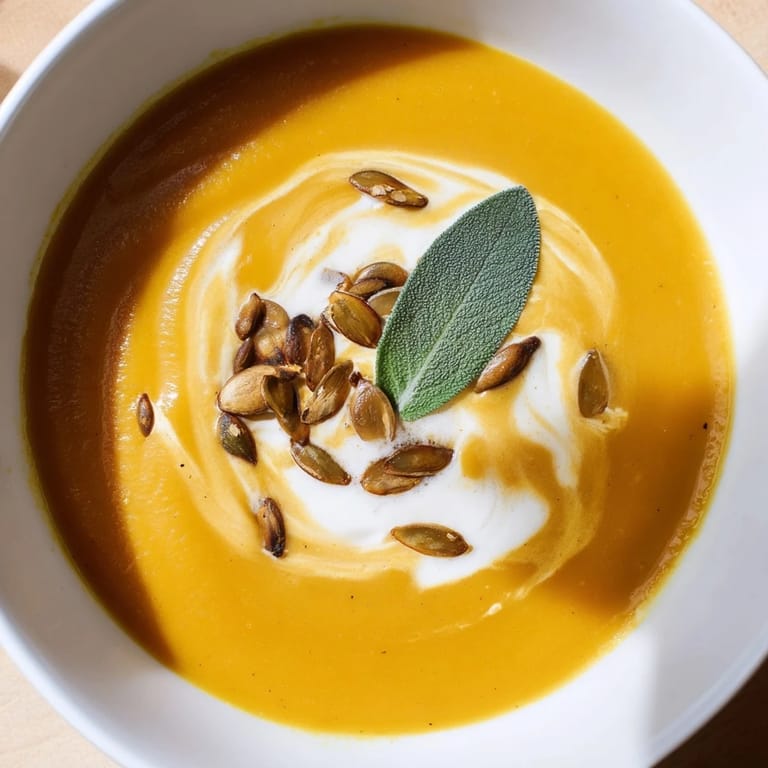
- Ladle into bowls and swirl a little cream or coconut milk on top if you want. Scatter with roasted pumpkin seeds and a fresh sage leaf, and you're done.
 Save
Save I made this soup for the first time on a day when everything felt a little too much, and I remember how the simple act of roasting something, watching it transform, then blending it smooth felt like the kitchen was solving a problem I didn't know how to fix. It became this thing I reach for when I need to feel like myself again.
Why This Soup Works Year-Round
Even though it tastes like October, this soup is forgiving enough to make whenever you want something warm and grounding. In spring, I make it lighter with extra broth and skip the cream. In winter, I load it with cream and serve it with the crustiest bread I can find. The bones of the recipe stay the same, but you can shift it depending on your mood and what's happening outside your window.
The Roasting Secret
The difference between a good butternut squash soup and a great one really does come down to that roasting step. When you roast the squash first instead of boiling it, the natural sugars concentrate and caramelize, which means your soup tastes like you spent way more time on it than you actually did. It's one of those small kitchen moves that feels a bit like cheating because it makes such a big difference.
Serving Suggestions and Variations
This soup is beautiful on its own, but it also plays well with others. I serve it with crusty bread for soaking, or alongside a simple green salad to balance the richness. Some nights I add a pinch of cayenne if I'm feeling like something with a little warmth, and other nights I keep it pure and comforting. If you're cooking for someone vegan, the coconut milk swap is seamless—honestly, it tastes just as good, maybe even better depending on the coconut milk you use.
- Pair with a crisp white wine like Sauvignon Blanc if you want to get a little fancy.
- A drizzle of sage brown butter instead of cream takes it up another level entirely.
- Leftover soup keeps in the fridge for about four days and freezes beautifully for up to three months.
 Save
Save This soup reminds me that sometimes the warmest, most satisfying meals come from the simplest ingredients treated with a little care and patience. Make it once and it becomes yours.
Recipe FAQs
- → What is the best way to roast butternut squash for this dish?
Peel, seed, and cube the squash before tossing it with olive oil, salt, and pepper. Roast at 400°F for 30–35 minutes until tender and caramelized.
- → Can I use fresh herbs instead of dried sage?
Yes, fresh sage can be used; typically 1 tablespoon chopped fresh sage replaces 1 teaspoon dried sage for a brighter flavor.
- → How can I make the soup creamy without dairy?
Substitute heavy cream with coconut milk for a smooth and rich texture while keeping it dairy-free.
- → What equipment is recommended for blending the soup?
An immersion blender is ideal for smooth results directly in the pot, but a countertop blender also works well in batches.
- → How can I adjust the seasoning to enhance the soup's flavor?
Taste after blending and add salt or pepper as needed. A pinch of cayenne can add gentle heat if desired.