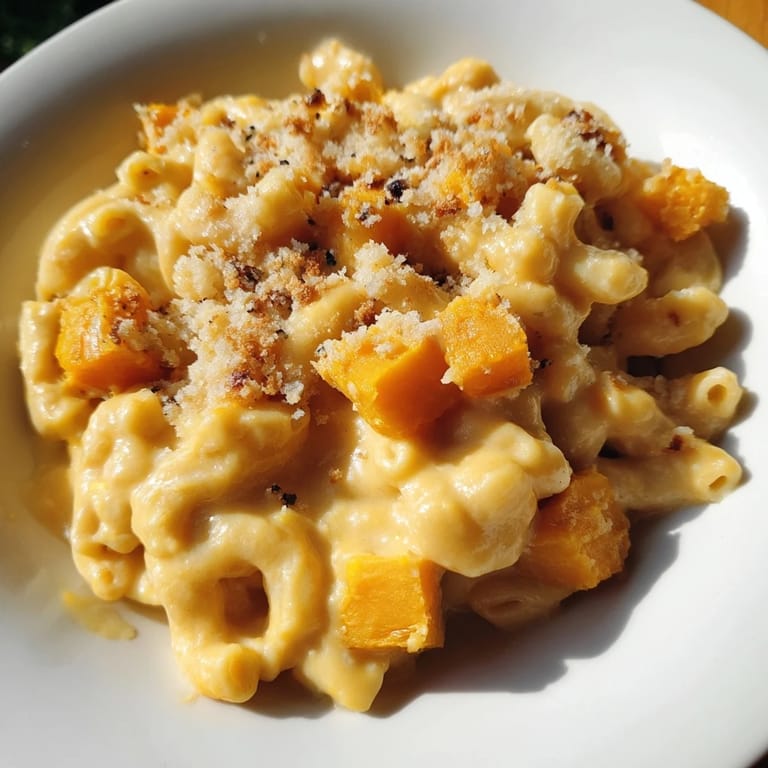
 Save
Save There's something almost magical about the moment butternut squash transforms in the oven—the kitchen fills with this warm, honeyed aroma that makes you forget it's technically still autumn and not some perpetual cozy season. I discovered this recipe completely by accident one October when I had extra squash and a box of pasta, wondering if I could make mac and cheese feel less heavy but somehow more interesting. That first bowl, with its silky orange sauce and the gentle sweetness threading through the sharp cheddar, became the thing I crave when the weather turns cool and I want comfort that doesn't feel predictable.
I remember making this for a dinner party when a guest mentioned she was tired of the same old recipes everyone brings, and something about the combination of roasted squash and Gruyère just clicked for her—she asked for the recipe before dessert even hit the table. That moment taught me that the most memorable dishes are often the ones that feel familiar enough to be comforting but unexpected enough to spark conversation.
Ingredients
- Elbow macaroni or small shells (340 g/12 oz): Small pasta shapes trap the creamy sauce better than large ones, and the slight firmness after cooking keeps everything from turning mushy when it sits.
- Butternut squash (500 g/1 lb), peeled and cubed: Cut pieces roughly the same size so they roast evenly—uneven pieces will either dry out or stay undercooked.
- Olive oil (1 tbsp), salt, and black pepper for squash: Good quality oil makes a difference here since it caramelizes the squash; don't skip seasoning before roasting.
- Unsalted butter (2 tbsp) and all-purpose flour (2 tbsp): This roux creates the base for a silky sauce—cook it just until pale gold, not brown, or the flavor turns bitter.
- Whole milk (480 ml/2 cups): Full-fat milk makes the sauce richer and more stable; lower-fat versions can sometimes break when you add the cheese.
- Sharp cheddar cheese (120 g/1 cup) and Gruyère or fontina (60 g/1/2 cup): The combination of sharp and nutty cheese gives complexity that single-cheese sauces lack—sharp cheddar alone would taste one-dimensional.
- Nutmeg (1/8 tsp) and Dijon mustard (1/2 tsp): These seem small, but they're the secret—nutmeg whispers warmth while mustard brightens the cheese without making it taste mustardy.
Tired of Takeout? 🥡
Get 10 meals you can make faster than delivery arrives. Seriously.
One email. No spam. Unsubscribe anytime.
Instructions
- Roast the squash until it's golden and tender:
- Toss your cubed squash with oil, salt, and pepper, then spread it in a single layer on the baking sheet. At 200°C (400°F), it'll take about 20–25 minutes—you're looking for the edges to turn slightly caramelized and the fork to slide through easily. The browned bits are the flavor you want.
- Get your pasta cooking while the squash roasts:
- Boil a large pot of well-salted water and cook the pasta according to the package time, but taste it a minute early—you want al dente, where there's still a tiny bit of resistance in the center. Drain it and set it aside.
- Blend the roasted squash into a smooth puree:
- In a blender or food processor, combine the roasted squash with about 1/2 cup of the milk and blend until completely smooth. If you see any fibrous bits, blend longer—a silky puree makes a silky sauce.
- Build your roux base slowly and patiently:
- Melt butter in a large saucepan over medium heat, then stir in the flour to make a paste. Let it cook for 1–2 minutes, stirring often—you'll smell it become toasty when it's ready. This prevents lumps later.
- Whisk in the milk to create the sauce foundation:
- Gradually pour in the remaining 1 1/2 cups of milk while whisking constantly to avoid lumps. Keep whisking until it thickens to the consistency of heavy cream, about 3–4 minutes. Patience here matters more than speed.
- Fold in the squash puree and cheese until silky:
- Add the squash puree to the sauce, stirring until smooth, then add the cheddar and Gruyère along with the nutmeg and mustard. Stir constantly until all the cheese melts and the sauce looks glossy and cohesive. Taste and adjust salt and pepper.
- Combine pasta and sauce in one gentle motion:
- Add the cooked pasta directly to the saucepan and stir until every noodle is coated in that creamy orange sauce. If it seems thick, add a splash of milk to loosen it slightly.
- Optional: crisp the top for texture contrast:
- Transfer to a lightly greased baking dish if you want a topping. Mix panko breadcrumbs with melted butter and parmesan, scatter over the top, and broil for 2–3 minutes until the breadcrumbs turn deep golden. Don't walk away—broilers are fast.
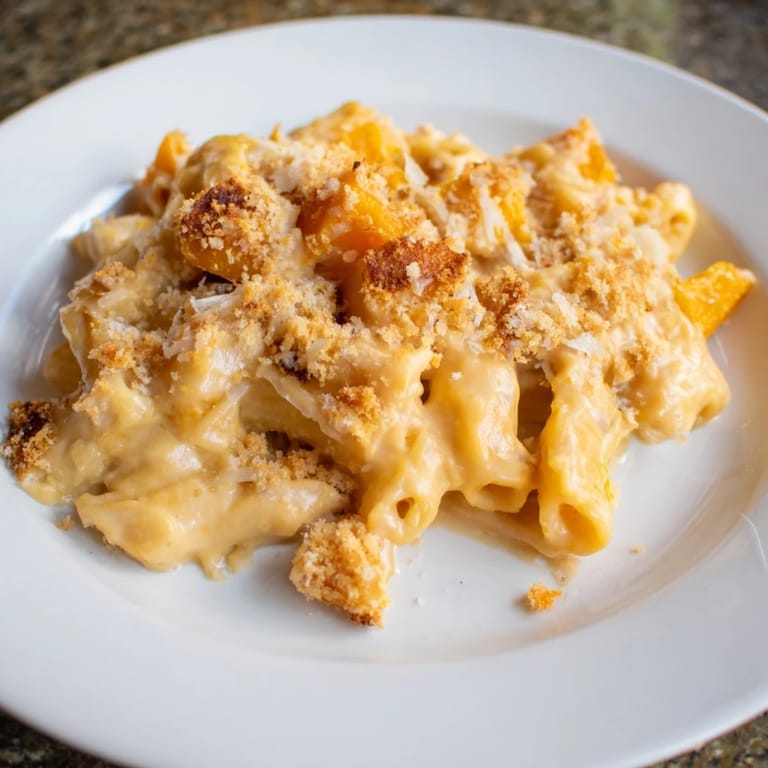 Save
Save The first time someone served me a bowl of this and said "my kid actually ate the butternut squash this way," I realized this recipe had become something beyond just food—it was permission to sneak vegetables into comfort in a way that felt natural instead of sneaky. That's when I knew I'd made something worth keeping.
Why Roasted Squash Changes Everything
Raw squash pureed directly would taste watery and pale, but roasting it first concentrates the natural sugars and brings out a subtle caramelization that adds depth. The heat transforms it from mild to almost nutty, which is why it pairs so perfectly with sharp cheese instead of fighting against it. That 20-minute roast is the invisible hand that makes the whole dish sing.
The Sauce Science Behind Silky Smoothness
The roux—that butter and flour mixture—is your insurance policy against lumpy sauce. It acts as an emulsifier, holding the milk and cheese together in perfect suspension so the sauce coats the pasta instead of pooling at the bottom of the bowl. Getting the roux the right color matters too; too pale and it won't thicken enough, too dark and it tastes bitter and breaks.
Playing with Flavors and Customizations
The beauty of this recipe is how forgiving it is—the base is strong enough that you can swap cheeses, add greens, or throw in cooked chicken without it falling apart. Some nights I use fontina instead of Gruyère for something milder, and other times I'll stir in kale that I've sautéed separately so it doesn't add moisture to the sauce. The seasonings stay the same and the dish still feels like itself.
- Try crispy bacon or pancetta stirred through for a smoky note that plays beautifully against the sweet squash.
- Swap in sage or thyme instead of just nutmeg if you want a more herbaceous autumn feel.
- Make it ahead and reheat gently with a splash of milk to loosen the sauce back up—it actually tastes better the next day once the flavors settle.
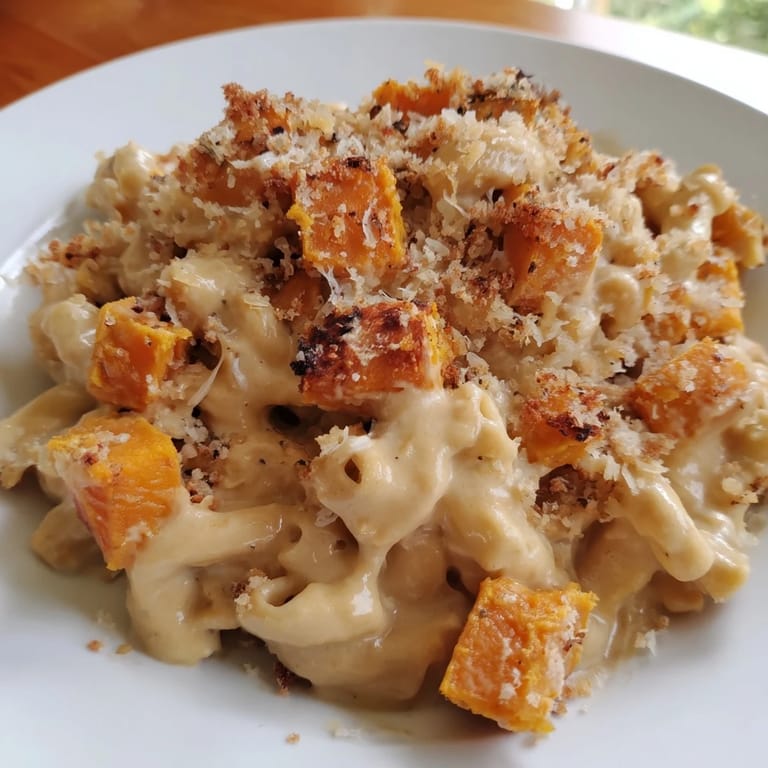 Save
Save This mac and cheese has become my answer to the question of what to make when I want something warm and reassuring but not ordinary. Every time I make it, the kitchen smells like autumn and comfort, and that never gets old.
Recipe FAQs
- → What type of pasta works best for this dish?
Elbow macaroni or small shell pasta hold the sauce well and complement the creamy texture perfectly.
- → Can I use different cheeses instead of Gruyère?
Yes, fontina or mozzarella work well as milder alternatives to Gruyère, adjusting the flavor profile.
- → How do I get a smooth, creamy sauce?
Puree the roasted butternut squash with some milk before adding to a roux-based cheese sauce to ensure creaminess.
- → Is the crispy topping necessary?
The panko breadcrumb topping adds a delightful crunch but can be omitted for a softer texture.
- → Can I add vegetables to this dish?
Sautéed spinach or kale are great additions for extra greens and flavor balance.