 Save
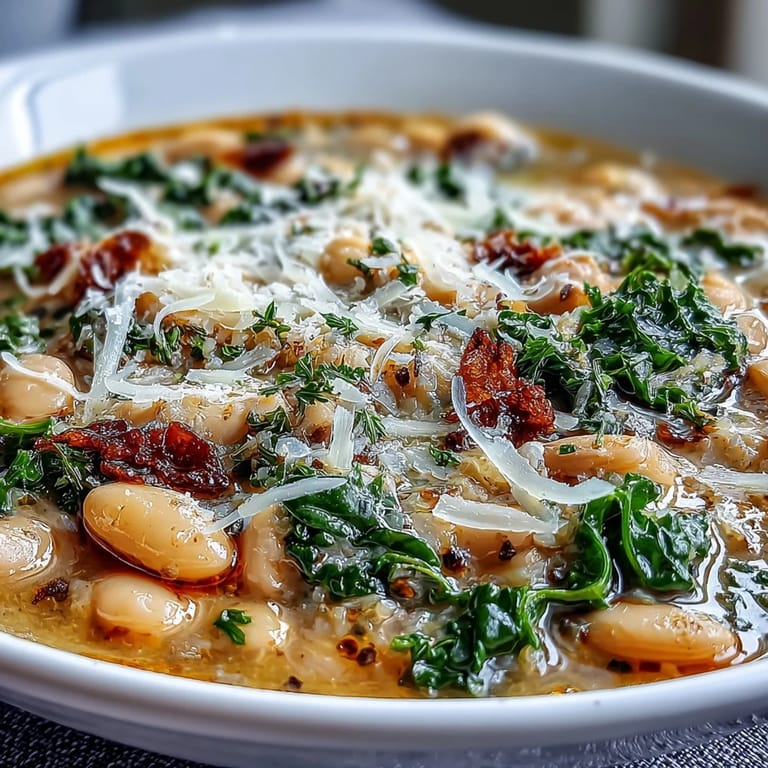
Save There's something about a pot of Tuscan white bean soup that transforms a tired afternoon into something purposeful. My neighbor Marco taught me this version years ago, standing in my kitchen with flour still on his apron from his bakery, insisting that the secret wasn't in fancy ingredients but in letting the vegetables soften properly before anything else went in the pot. I've made it countless times since, and it never fails to fill the house with that warm, herbaceous smell that makes everyone pause and ask what's cooking.
I made this soup for my dad during his first winter living alone after my mom passed, bringing a big container to his house and watching him carefully portion it into smaller containers for the freezer. He'd call me on random Tuesdays to say he'd reheated a bowl and it reminded him of simpler times, which was exactly what I hoped for. That's when I realized this soup does more than nourish your body, it somehow settles your mind.
Ingredients
- Olive oil: Use a good quality one for sautéing, and save an even better one for drizzling at the end, because that final touch matters more than you'd think.
- Yellow onion, carrots, and celery: This trio is the flavor foundation, so take your time chopping and let them soften completely before moving forward, which deepens everything that comes after.
- Garlic cloves: Mince them fine and add them after the softer vegetables so they stay fragrant without burning, which is the difference between a good soup and a bitter one.
- Kale: Remove those tough stems completely, they'll never soften no matter how long you cook, and use the tender leaves that will wilt into silky submission.
- Diced tomatoes: Drain them well so you control how much liquid goes in the pot, giving you a soup that's broth-based, not watery.
- Cannellini beans: Rinse canned beans thoroughly under cold water to wash away the starchy liquid that can make the soup feel heavy and murky.
- Vegetable broth and water: The combination of both prevents the soup from tasting one-dimensional, since pure broth can sometimes be too aggressive.
- Dried thyme and rosemary: These herbaceous notes are what make people think you've been cooking all day, even though you haven't.
- Bay leaf: It adds a subtle depth that sneaks up on you, so don't skip it even though you can't see what it does.
- Red pepper flakes: Optional, but keep them nearby in case your soup needs a quiet little wake-up call.
- Parmesan cheese: Freshly grate it just before serving, because pre-grated cheese has anti-caking agents that prevent it from melting into that creamy topping you're after.
Tired of Takeout? 🥡
Get 10 meals you can make faster than delivery arrives. Seriously.
One email. No spam. Unsubscribe anytime.
Instructions
- Build your flavor base:
- Warm the olive oil in your pot over medium heat, then add the diced onion, carrots, and celery, letting them soften for 5 to 6 minutes while you listen for that gentle sizzle that tells you everything's happening at the right pace. You're not looking for color yet, just tender vegetables that smell sweet and earthy.
- Invite the garlic:
- Stir in your minced garlic and let it cook for just one minute until it becomes fragrant, being careful not to rush past this moment or you'll end up with burnt garlic that tastes acrid. That one minute is all you need.
- Wilt the kale:
- Add your chopped kale to the pot and let it sauté for 2 to 3 minutes until it starts to shrink and soften, at which point it'll look less intimidating and more like it actually belongs in soup. You'll see the color deepen just slightly.
- Bring everything together:
- Pour in the drained tomatoes, rinsed beans, vegetable broth, water, and all your seasonings, stirring everything so nothing gets stuck to the bottom. This is when you switch from building flavors to letting them talk to each other.
- Simmer with patience:
- Bring the soup to a boil, then lower the heat and let it bubble gently for 25 minutes, stirring occasionally and breathing in the steam that rises up. The soup will darken slightly and taste noticeably more complex than it did at the start.
- Adjust the texture:
- Remove the bay leaf, then take a potato masher and press some of the beans against the side of the pot to release their creamy insides, which thickens the broth without any cream. Do this gently, you're not making bean paste, just encouraging some breakdown.
- Season to taste:
- Add salt and freshly ground black pepper, tasting as you go because salt levels depend on how salty your broth was to begin with. This is your moment to make it exactly right.
- Serve with ceremony:
- Ladle the soup into warm bowls, top each with a generous handful of freshly grated Parmesan, a drizzle of excellent olive oil, and fresh parsley if you have it. That topping isn't decoration, it's the moment the soup becomes something special.
 Save
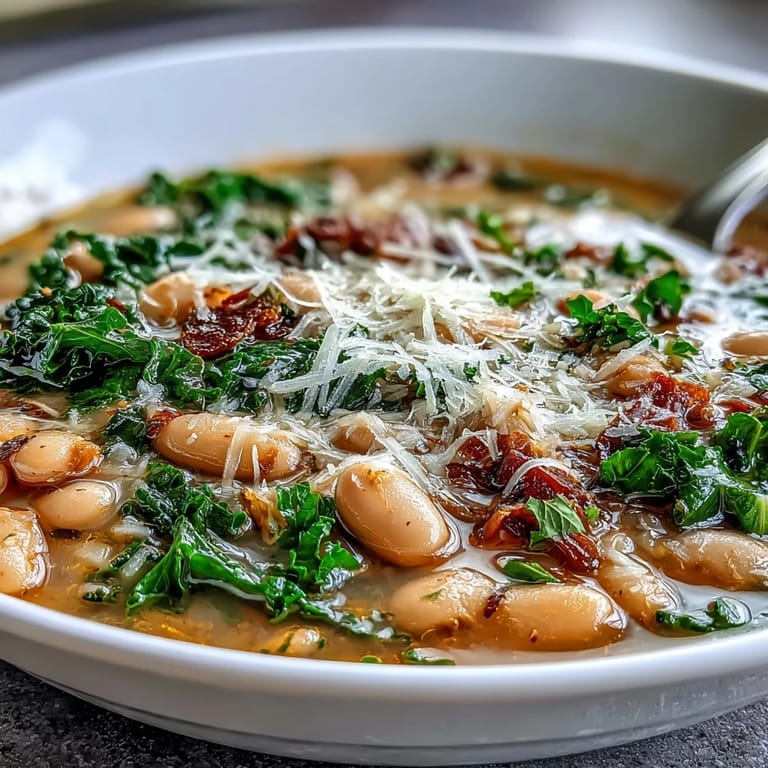
Save My daughter came home from college with a new vegetarian friend, and I made this soup almost out of nervous habit, unsure if it would feel substantial enough for a meat-eater's first impression. Watching them both ask for seconds and then carefully pack leftovers to take back to their dorm was the moment I stopped worrying about impressing people and started trusting my instincts.
The Magic of Simplicity
I've learned over the years that Tuscan cooking doesn't demand a long ingredient list or complicated techniques, it just asks you to respect each component and not overcomplicate things. The beauty of this soup is that every ingredient has a reason for being there, and when you add them in the right order and let them cook properly, they create something much larger than the sum of their parts. It's the opposite of fussy, which is probably why it's become my go-to for nights when I need comfort without complication.
Variations Worth Trying
Once you've made this soup a few times and it feels natural in your hands, you'll start noticing ways to make it your own. I've added cubed potatoes when I wanted something heartier, stirred in white wine in place of some of the water when I was feeling fancy, and even swapped the kale for spinach when that's what I had on hand. The structure is flexible enough to welcome your preferences without losing its essential character.
Serving Suggestions and Storage
This soup is naturally substantial, but it sings alongside crusty bread that you can use to push the creamy beans toward the edge of your bowl and capture every last spoonful of broth. It also freezes beautifully for up to three months, which means you can make a double batch without guilt and have comfort food waiting for a difficult day.
- Serve with thick slices of toasted bread rubbed with garlic and olive oil for a complete meal.
- Top with crispy croutons if you want texture, or extra Parmesan if you want richness.
- Store leftovers in the refrigerator for five days, or freeze in portions for months of future gratitude.
 Save
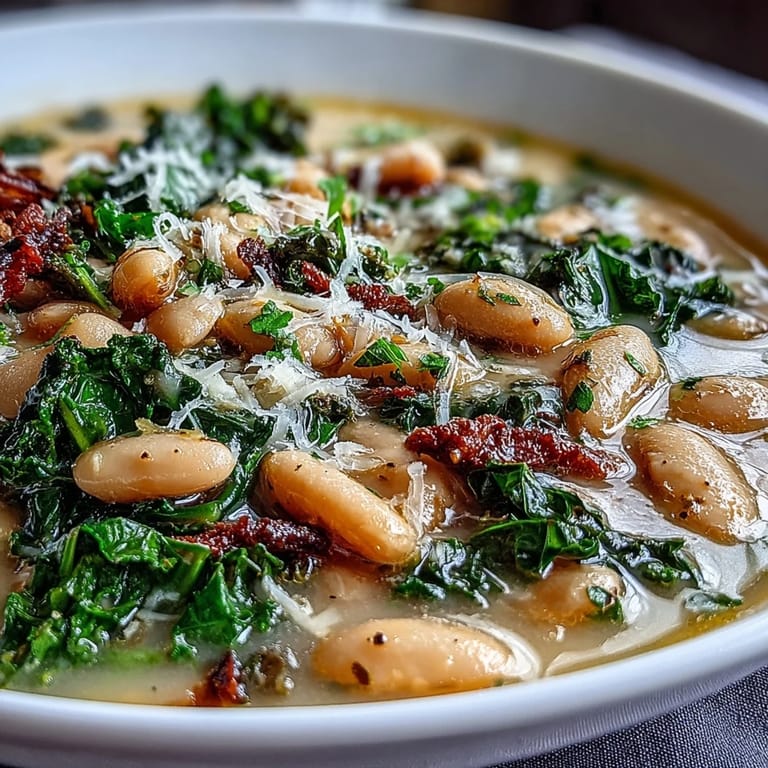
Save There's something deeply satisfying about a bowl of soup that tastes like someone's been taking care of you, even if that someone is just you, taking care of yourself. Make this when you need warmth, make it when you want to impress someone, or make it simply because an afternoon without soup planned feels like a missed opportunity.
Recipe FAQs
- → Can I substitute kale with another green?
Yes, spinach or Swiss chard work well as alternatives, offering a milder flavor and similar texture.
- → How can I make the soup creamier without dairy?
Mashing some cannellini beans into the broth adds natural creaminess while keeping it dairy-free.
- → What herbs complement the Tuscan flavors best?
Thyme and rosemary provide earthy, aromatic notes that enhance the soup’s Italian-inspired profile.
- → Can I prepare this soup in advance?
Yes, flavors deepen when refrigerated overnight. Reheat gently before serving, adding fresh parsley or olive oil as garnish.
- → What wines pair nicely with this dish?
Light-bodied whites like Pinot Grigio or Chianti reds complement the soup's herbaceous and savory qualities.