 Save
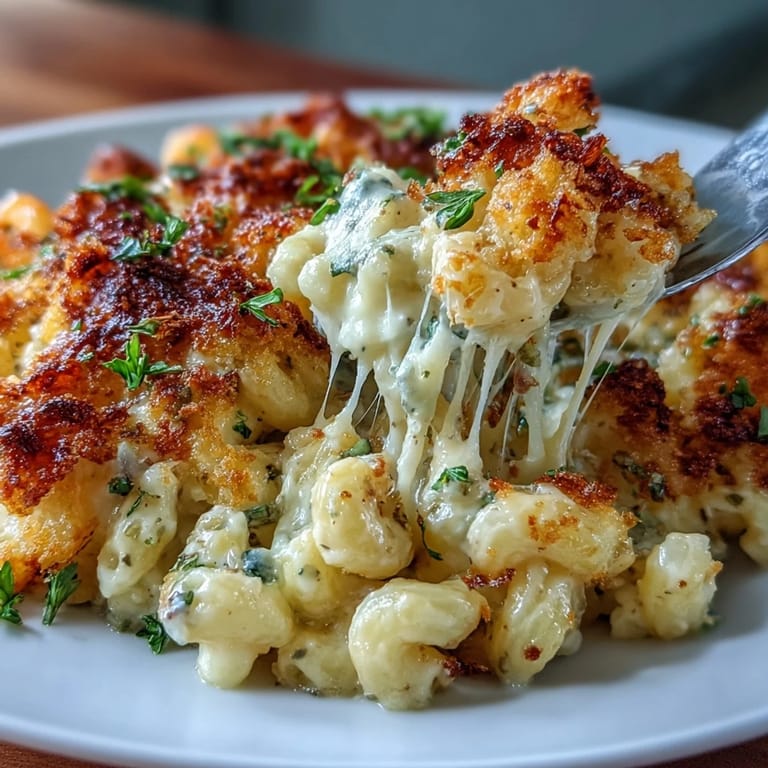
Save There's a particular kind of quiet that falls over a dinner table when someone takes their first bite of truffle mac and cheese—the kind where forks pause mid-air and eyes widen just slightly. I discovered this dish not in a fancy restaurant, but in my own kitchen on a Tuesday night when I had some leftover truffle oil staring at me from the back of a shelf, practically begging for a purpose. It felt ridiculous at first, elevating something so humble as mac and cheese, but that's exactly when magic happens—when you refuse to play it safe with comfort food.
I made this for my sister's boyfriend on their second visit to my apartment, and I watched him go completely silent after that first bite—not awkward silent, but the kind of silent where someone's tasting something they didn't expect to exist outside a restaurant. When he asked if I could teach him to make it, I knew I'd created something worth remembering. That moment shifted how I think about cooking; fancy doesn't have to mean complicated.
Ingredients
- 400 g elbow macaroni: Short, curved pasta that cradles sauce beautifully—don't use long pasta here, as the sauce won't cling the same way.
- 2 tbsp unsalted butter: The foundation of your roux; use real butter, not margarine, because you can taste the difference when everything else is this refined.
- 2 tbsp all-purpose flour: Creates structure for the sauce without adding noticeable flavor—just enough to transform milk into something silky.
- 500 ml whole milk: Full-fat matters here; lower fat versions won't create that velvety texture you're after, and you'll notice it.
- 120 g Gruyère cheese: Adds nutty complexity and melts into the sauce like silk—this is where half your sauce personality comes from.
- 120 g sharp cheddar cheese: The backbone of familiar flavor that grounds everything so it doesn't taste pretentious.
- 80 g Fontina cheese: Brings subtle sweetness and creaminess that modern recipes sometimes skip but absolutely shouldn't.
- 60 g Parmesan cheese: A sharp note that prevents the sauce from becoming one-dimensional.
- 1 tsp Dijon mustard: An invisible ingredient that heightens cheese flavor without announcing itself.
- Freshly ground black pepper, sea salt, nutmeg: These three create balance; skip the nutmeg and you'll immediately feel something's missing.
- 2 tbsp black truffle oil: The final flourish—apply it after baking so its fragrance stays present rather than cooking away.
- 20 g fresh black truffle: If your budget allows, use fresh and shave it yourself just before serving; the aroma transforms the entire experience.
- Panko breadcrumbs, melted butter, grated Parmesan: Creates the golden topping that catches the light and gives textural contrast.
Tired of Takeout? 🥡
Get 10 meals you can make faster than delivery arrives. Seriously.
One email. No spam. Unsubscribe anytime.
Instructions
- Set your stage:
- Preheat your oven to 200°C and grease your baking dish while you work on everything else—this way nothing's rushed at the end.
- Cook the pasta to al dente:
- Bring a pot of well-salted water to a rolling boil and cook your macaroni just until it has the slightest resistance when you bite it. The pasta will soften more in the oven, so resist the urge to fully cook it now.
- Build your roux foundation:
- Melt butter in a saucepan over medium heat, then add flour and whisk constantly for about a minute and a half until the mixture turns pale golden and smells slightly toasty. This is your roux, and it's doing all the work of thickening.
- Create the silk-like base:
- Pour in your milk slowly while whisking constantly to break up any lumps before they form—this step is where most people falter, but if you're patient and methodical, you'll end up with something like liquid velvet. Let it simmer gently for four or five minutes until visibly thickened.
- Melt the cheese into perfection:
- Add your four cheeses to the hot sauce off the heat, stirring gently until every piece disappears into the sauce and it becomes completely smooth. Stir in the Dijon mustard, pepper, salt, and a tiny pinch of nutmeg—that last ingredient wakes up all the cheese flavors without being detectible.
- Combine pasta and sauce:
- Fold your drained macaroni into the cheese sauce using a gentle hand, making sure every piece gets coated but you're not aggressively breaking anything.
- Transfer to baking dish:
- Pour the coated pasta into your prepared dish, spreading it so it's relatively even.
- Add the breadcrumb crown:
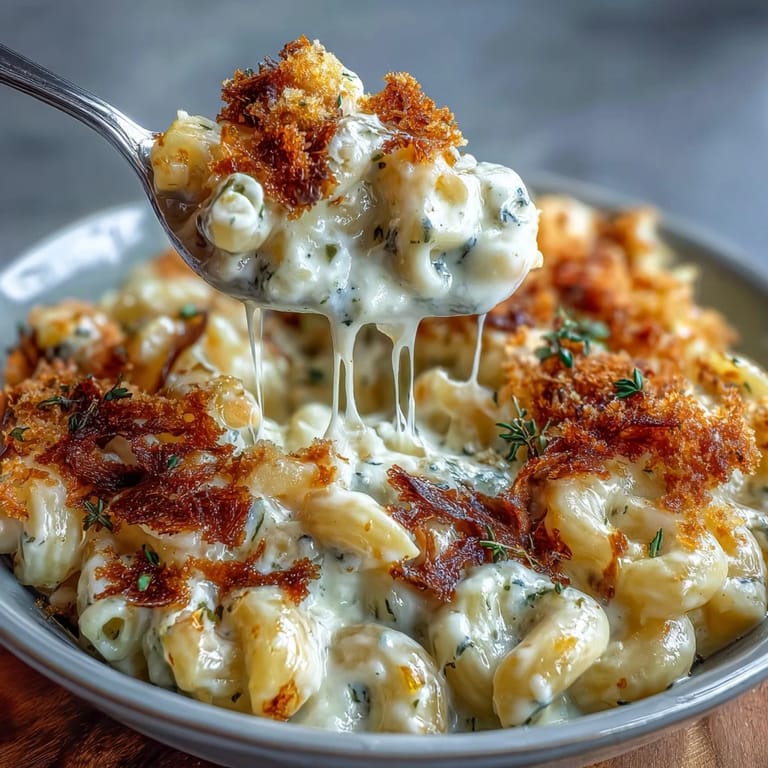
- Mix panko with melted butter and grated Parmesan in a small bowl, then scatter this mixture across the top of your pasta—this is what gives you that beautiful golden finish.
- Bake until golden:
- Place in the oven for fifteen to twenty minutes until the top is golden brown and the edges are bubbling. You'll smell it when it's ready, and that smell is honestly part of the experience.
- The truffle finale:
- Remove from the oven and let it rest for five minutes—this cooling moment helps everything set so you don't serve a soupy dish. Drizzle with your truffle oil and shave your fresh truffle directly over the top just before serving, then garnish with fresh chives if you have them.
 Save
Save There was a moment during one dinner party when my friend held up a forkful and actually closed her eyes before tasting it—not in an exaggerated way, just a genuine pause of anticipation. That's when I understood that food can be a small gift to people, a way of saying you think they're worth the extra steps. It's comfort elevated just enough to feel special.
The Art of Cheese Selection
Using four different cheeses instead of just one or two creates a sauce that tastes layered and sophisticated, where each cheese brings something different to the party. The Gruyère adds that warm, slightly sweet nuttiness that feels luxurious, the sharp cheddar keeps things grounded in familiarity, the Fontina provides creaminess, and the Parmesan cuts through with brightness. I learned this lesson through trial and error—and honestly, through some failures where I tried to save money by using just cheddar and ended up with a one-note sauce that felt flat no matter what I did.
Why Fresh Truffle Changes Everything
The difference between truffle oil alone and fresh shaved truffle is the difference between describing a smell and actually experiencing it. Fresh truffle has an intensity and ephemeral quality that oil simply can't replicate; it sits on top of the pasta in gossamer-thin slices and releases its perfume as you eat. If fresh truffle is outside your budget—and I'll be honest, it usually is for me—truffle paste works surprisingly well, and a sprinkle of truffle salt adds that whisper of earthiness without the investment.
Serving and Storage Wisdom
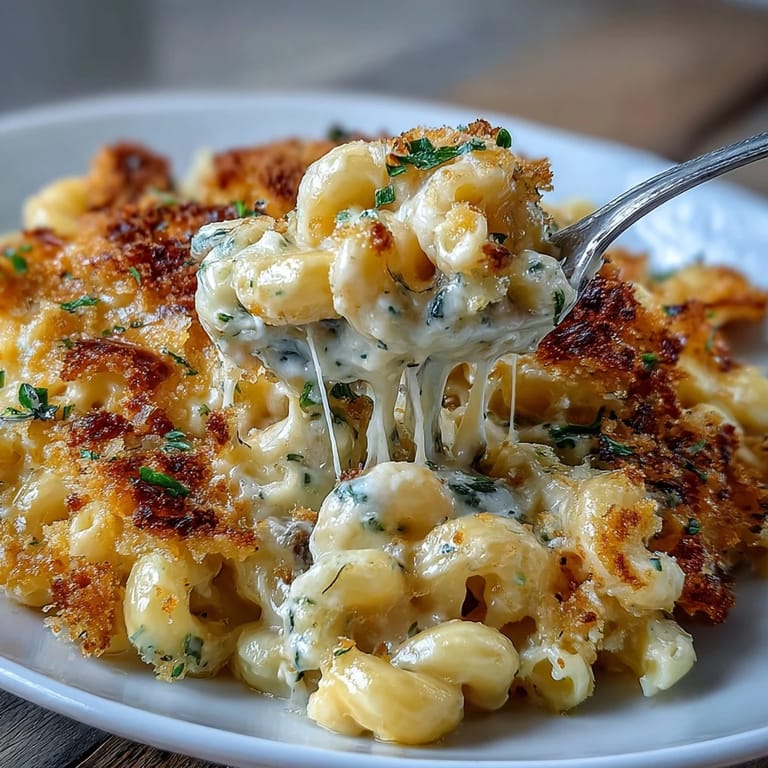
This dish is best served immediately after adding the truffle, when the sauce is still creamy and the panko topping hasn't softened from steam. Leftovers can be reheated gently in the oven at low temperature, though the magic diminishes slightly—which is why I always make enough for the moment rather than banking on next-day versions. If you're serving wine, a crisp white Burgundy or Champagne cuts through the richness and keeps your palate ready for another bite.
- Add a spoonful of mascarpone to the cheese sauce if you want even more indulgence and a slightly lighter mouthfeel.
- Don't skip the resting period after baking; it helps everything set so you get clean, intact spoonfuls instead of a slump.
- Fresh chives scattered on top at the very end add a bright, onion-like note that somehow makes the truffle taste even earthier by contrast.
 Save
Save Truffle mac and cheese sits at this beautiful intersection where comfort food and genuine luxury stop being separate categories. It's the kind of dish that reminds you why you bother cooking at all.
Recipe FAQs
- → How do I achieve a smooth cheese sauce?
Whisk constantly when adding milk to the roux and cook gently until thickened. Melt cheeses gradually for a creamy blend without lumps.
- → Can I use different pasta shapes?
Yes, short pasta like elbow macaroni works best as it holds the sauce well, but small shells or cavatappi are good alternatives.
- → What is the purpose of Dijon mustard in the sauce?
Dijon mustard adds subtle tanginess and depth of flavor, balancing the richness of the cheeses perfectly.
- → How should I bake the dish for perfect texture?
Bake until the topping turns golden and crispy, usually 15–20 minutes at 200°C (390°F), ensuring a crunchy crust and bubbling sauce underneath.
- → Is fresh truffle necessary for this dish?
While fresh shaved truffle adds intense aroma, high-quality truffle paste can be used as a flavorful substitute.