 Save
Save I'll never forget the first time I arranged a Star of David salad for my family's Hanukkah dinner. My grandmother watched from the kitchen doorway as I carefully positioned cucumber slices into those iconic overlapping triangles, and something magical happened—the platter transformed into more than just food. It became a centerpiece of celebration, a edible work of art that sparked conversation before anyone even took a bite. That night, I realized how the presentation of a dish can be just as nourishing as its taste.
I've learned that when you serve food arranged with intention and care, people eat more slowly, savor more deeply, and remember the meal long after the plates are cleared. This salad became my secret weapon for bringing people together, especially during the eight days of Hanukkah when gathering around the table means everything.
Ingredients
- Baby spinach and arugula (9 cups total): These tender greens form your foundation and absorb the dressing beautifully. Wash and dry them thoroughly—wet greens will make your star blur and slide around the platter.
- Cucumbers (2 large, thinly sliced): The structure of your star relies on these crisp slices. Slice them thin but not paper-thin, so they hold their shape when arranged. They're your geometric anchor.
- Cherry tomatoes (2 cups, halved): Their jewel-like color and natural sweetness fill the interior triangles with vibrancy. Halving them lets you nestle them snugly together.
- Bell peppers (1 yellow and 1 red, thinly sliced): These create the bold color blocks that make the star pop. Their sweetness balances any bitterness from the greens.
- Purple cabbage (1 cup, shredded): This adds an unexpected earthiness and creates the deepest color contrast. It stays crisp throughout serving, even if dressed early.
- Red onion (1/4 cup, optional): A little goes a long way—it adds sharpness and bite that wakes up each bite. Use sparingly unless you love that peppery kick.
- Feta cheese (1 cup, crumbled): The salty, tangy notes ground the salad. If you're keeping it vegan, cashew feta works surprisingly well and crumbles in the same way.
- Kalamata olives (1/3 cup, halved): These briny little gems are non-negotiable for Mediterranean character. Their dark color also helps define the star's edges.
- Capers (2 tablespoons, optional): Tiny flavor bombs that add a subtle brininess and textural interest in the star's points.
- Pine nuts (1/4 cup, toasted): Toast them yourself in a dry pan until golden and fragrant—this takes two minutes and transforms them from mild to nutty and rich. They're worth the step.
- Extra virgin olive oil (1/4 cup): The quality matters here since there's no cooking to develop other flavors. Use your good oil, the kind you actually enjoy tasting.
- Lemon juice (2 tablespoons): Freshly squeezed makes all the difference. Bottled juice tastes flat by comparison and will dull your vibrant salad.
- Red wine vinegar (1 tablespoon): This adds depth and slight sweetness. It's gentler than balsamic but more interesting than white vinegar.
- Honey or maple syrup (1 teaspoon): A tiny bit of sweetness rounds out the sharp vinegar and creates balance. Maple syrup makes it feel a little more special.
- Dijon mustard (1 teaspoon): This acts as an emulsifier, helping the dressing cling to the greens instead of sliding off.
- Kosher salt and freshly ground black pepper: Season to your taste. I learned the hard way that pre-ground pepper tastes like dust compared to freshly cracked.
Tired of Takeout? 🥡
Get 10 meals you can make faster than delivery arrives. Seriously.
One email. No spam. Unsubscribe anytime.
Instructions
- Set your stage:
- Choose a large, flat platter or tray—I use a white one to make the colors sing, but any neutral surface works. This is your canvas, and you want enough room to work without cramming.
- Create your green base:
- Scatter the washed, dried spinach and arugula in a thin, even layer covering the entire platter. Think of it like you're painting with greens. They should be visible but form a cohesive bed.
- Draw your first triangle:
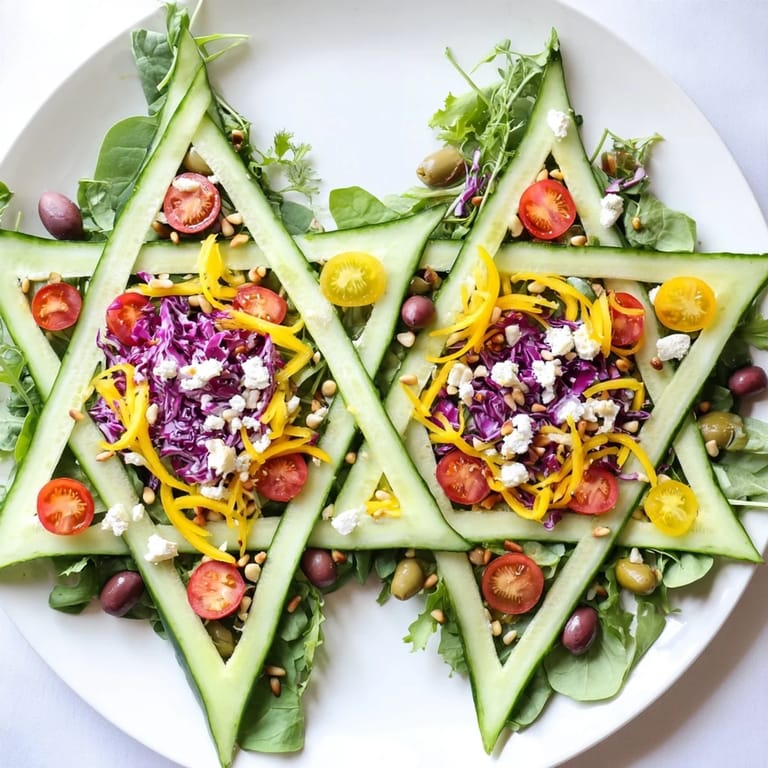
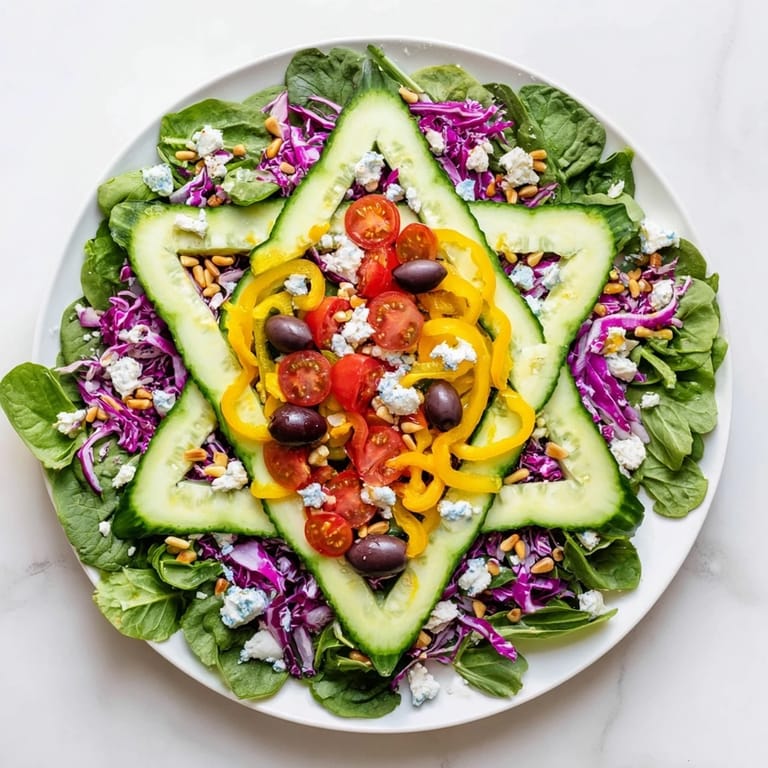
- Arrange cucumber slices in one diagonal line, angling from upper left to lower right. Take your time here—this line becomes one edge of your upward-pointing triangle. If cookie cutters aren't your style, use your eye and a ruler nearby as reference.
- Complete the star shape:
- Now arrange a second triangle pointing downward, overlapping the first to create that iconic six-pointed star. Step back and look. Adjust the angles until you feel that geometric balance. This is where the magic starts to feel real.
- Fill each point with color:
- Within each of the six triangular sections, arrange groups of cherry tomatoes, bell peppers, and purple cabbage. Let each section showcase different colors—it's like a stained glass window. Red peppers next to tomatoes next to cabbage next to yellow peppers. The contrast is what makes eyes widen.
- Dress the edges and points:
- Scatter crumbled feta, halved olives, capers, and toasted pine nuts around the edges and especially at the six points of the star. These become your jewels, catching the light and adding texture that invites people to dive in.
- Make the dressing:
- Whisk together the olive oil, lemon juice, red wine vinegar, honey, mustard, salt, and pepper in a small bowl. Watch it emulsify as you whisk—it should taste bright, balanced, neither too acidic nor too bland. Taste it and adjust. This dressing should make your mouth water.
- The final moment:
- Just before serving, drizzle the dressing evenly over the star. Or if you're worried about wilting or color bleeding, serve it on the side and let guests dress their own portions. Either way, bring it to the table immediately and let the oohs and ahhs begin.
 Save
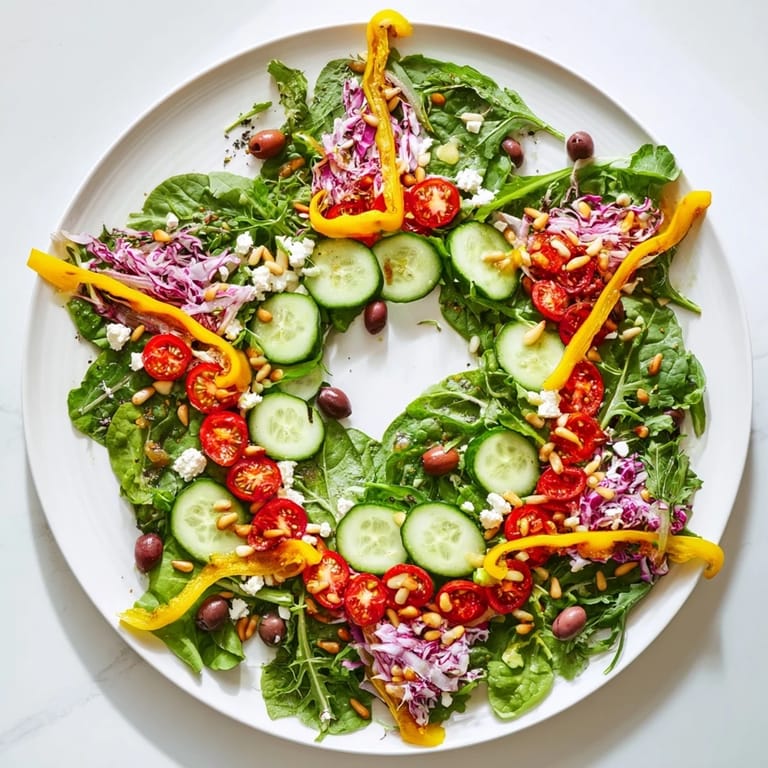
Save I remember my niece, who was seven at the time, refusing to eat her salad because it was 'too pretty to touch.' We laughed and told her she could look first, eat later. But that moment stayed with me—it reminded me that food arranged with care and intention carries a different kind of weight. It says, 'You're worth the effort.'
Building Your Star: Geometry Meets Flavor
The Star of David isn't just beautiful—it's a conversation starter. When people gather around this platter, they're not just eating a salad. They're participating in something with cultural meaning, visual drama, and genuine nourishment all at once. I've found that taking time to arrange food this way makes the meal feel like a celebration, not just dinner. Even on ordinary Tuesday nights, this star transforms an everyday meal into an occasion worth marking.
Variations and Adaptations
This recipe is endlessly flexible, and that's part of its magic. Add grilled chicken strips or roasted chickpeas for protein if you want substance without sacrificing vegetarian or vegan options. Swap out ingredients based on what's in season—fresh dill instead of capers, roasted beets instead of tomatoes, candied walnuts instead of pine nuts. The structure stays the same, but the flavors tell different stories depending on when and how you make it.
Serving and Storage Secrets
This salad shines the moment it's arranged, but it can handle a little patience too. Keep it uncovered in the refrigerator for up to four hours before dressing. When you're ready, bring it to room temperature for ten minutes—cold straight from the fridge tastes muted compared to a properly tempered salad. Serve with pita chips, matzo, or fresh bread on the side. If you have any remaining undressed greens and vegetables, they'll keep in an airtight container for two days, ready to be dressed for a quiet lunch when the celebration ends.
- Toast your pine nuts right before assembly so they're warm and fragrant.
- Slice all your vegetables within two hours of serving to maintain crispness and prevent browning.
- Remember that this salad tastes best when served with intention—take a moment to admire it before the first fork touches the plate.
 Save
Save Every time I make this salad, I'm reminded that cooking is about more than feeding people. It's about honoring traditions, creating beauty, and telling stories that last long after the meal is finished. This Star of David salad has become my way of saying, without words, that I'm glad you're here.
Recipe FAQs
- → How do you create the Star of David shape on the platter?
Arrange cucumber slices to outline two overlapping equilateral triangles forming the six-pointed star. Adjust angles carefully for clear geometric definition.
- → What dressing complements this salad arrangement?
A blend of extra virgin olive oil, lemon juice, red wine vinegar, honey or maple syrup, Dijon mustard, salt, and pepper brings a bright, tangy finish.
- → Can this platter be made vegan-friendly?
Yes, substitute crumbled feta with a vegan cheese alternative and omit optional ingredients like capers if desired.
- → What are good protein additions for this salad platter?
Cooked chickpeas or grilled chicken strips can be scattered within the star for added protein and texture.
- → Are there any common allergens in this salad?
This dish contains dairy from feta cheese and nuts from pine nuts. Alternatives can be used to accommodate allergies.
- → How should the dressing be served?
Drizzle the dressing evenly over the salad just before serving or present it on the side for guests to add as desired.