 Save
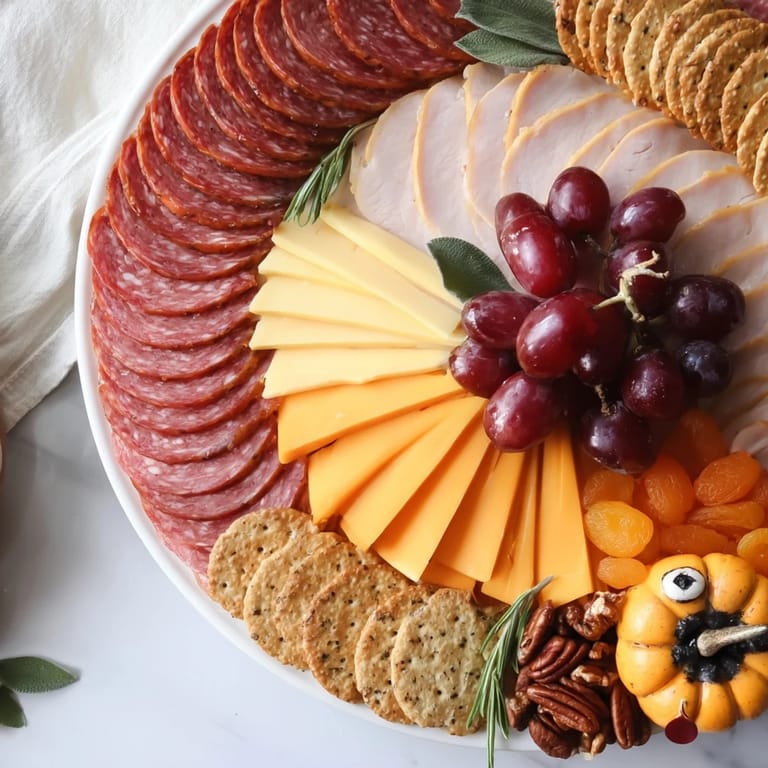
Save I'll never forget the Thanksgiving when my sister challenged me to create something that would make our guests gasp the moment they walked in. She wanted drama, color, and conversation on a board. That's when the Turkey Tail Fan was born—a charcuterie board so visually stunning that people actually applauded before eating a single bite. What started as a creative challenge became our signature Thanksgiving moment, the one thing everyone asks me to bring back year after year.
I remember standing in my kitchen at 4 PM on Thanksgiving, watching my hands arrange the first row of smoked turkey, and suddenly feeling this calm confidence wash over me. This wasn't complicated. It was just about knowing that when you arrange beautiful things with intention, magic happens. By the time guests arrived and saw that fanned turkey tail gleaming with all those jewel-toned fruits and glistening cheese, I knew this board would be the memory they talked about, not just the meal itself.
Ingredients
- Smoked turkey breast, thinly sliced (100 g): The elegant foundation of your tail feathers. Buy it freshly sliced at the deli counter if you can—it drapes better and tastes noticeably fresher than pre-packaged.
- Salami, thinly sliced (100 g): This adds richness and visual depth with its deep red color. The saltiness keeps guests reaching for more cheese and fruit.
- Prosciutto, thinly sliced (100 g): Delicate and salty-sweet, it catches the light beautifully and feels fancy without pretension.
- Sharp cheddar cheese, sliced (150 g): The bold anchor flavor that ties everything together. Its golden hue is essential to the warm tones of your tail.
- Swiss cheese, sliced (100 g): The pale holes catch light and add visual interest. Its mild flavor balances the stronger cheddar.
- Gouda cheese, sliced (100 g): Slightly sweet and buttery, it bridges the gap between the meats and fruits beautifully.
- Round butter crackers (1 cup): Classic for a reason—they hold toppings and don't overshadow the main ingredients.
- Whole wheat crackers (1 cup): They add rustic texture and nutritional interest without competing for attention.
- Seeded baguette slices (1 cup): Toast these lightly beforehand if you want them extra crisp, or serve as-is for softer elegance.
- Dried apricots (1/2 cup): The jewel tones here are non-negotiable for visual impact. They taste like concentrated sunshine.
- Red grapes (1/2 cup): These offer sweetness and moisture that crackers alone can't provide. They're the garnish that also refreshes your palate.
- Pecan halves (1/2 cup): Toasted pecans are better if you have time, but raw works perfectly. They add that essential nutty crunch.
- Fresh rosemary sprigs: Not just decoration—guests will nibble these for their aromatic brightness.
- Fresh sage leaves: These whisper of autumn and add authentic greenery that feels intentional.
- Small round cheese ball for the head: A creamy herb or pepper-crusted one works beautifully. This becomes the character of your turkey.
- Black peppercorns (2 whole): These are your turkey's expressive eyes. Don't skip them.
- Small piece of red bell pepper for the wattle: A tiny flash of red that says "I'm a turkey" instantly.
- Thin carrot slice for the beak: The finishing touch that brings personality to your bird.
Tired of Takeout? 🥡
Get 10 meals you can make faster than delivery arrives. Seriously.
One email. No spam. Unsubscribe anytime.
Instructions
- Choose your canvas:
- Select a large round or oval board—ideally 16 to 20 inches. The size matters because you need room for your tail to fan out dramatically. I use a wooden board because it photographs beautifully and feels warm and welcoming.
- Create the tail feathers:
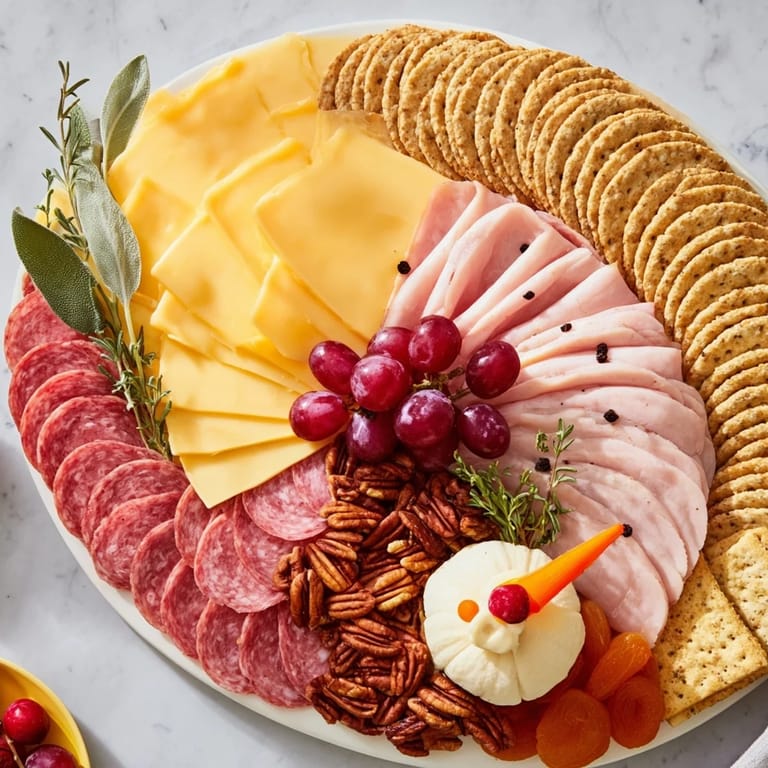
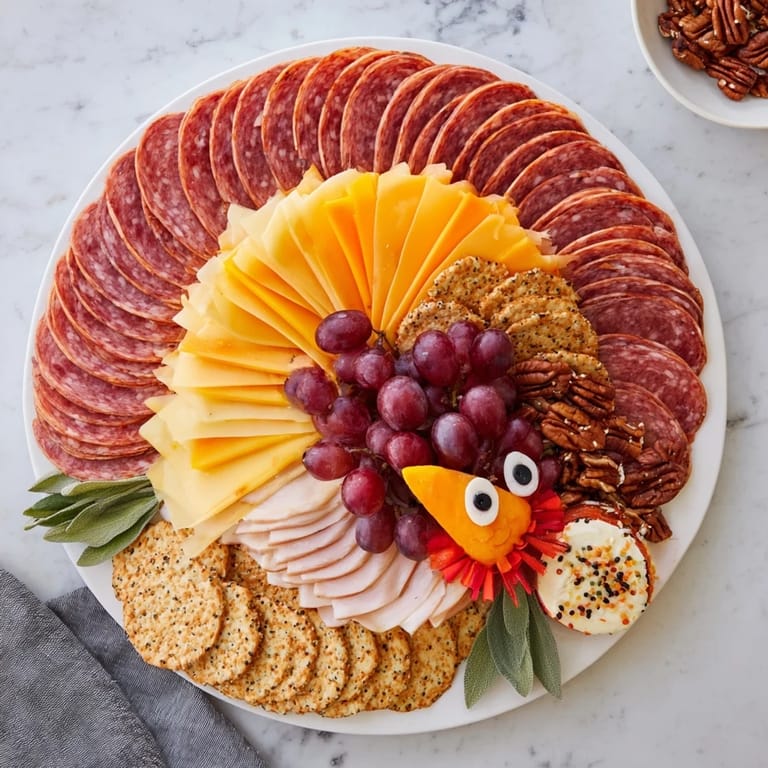
- Start at the top center of your board and begin layering the sliced meats—turkey, salami, and prosciutto—in overlapping rows that sweep outward and downward in a semicircle. Each piece should overlap the last like actual feathers. This is where you establish the whole composition, so take your time. Rotate your wrist as you go to maintain that graceful curve.
- Build the tail structure:
- Directly beneath your meats, create rows of crackers and cheese slices, maintaining that same sweeping curve. Alternate between butter crackers and whole wheat, between different cheeses. Think about color balance as you go—don't put all the white Swiss cheese in one spot.
- Add the jewels:
- Now scatter your dried apricots, grapes, and pecans in clusters around the cheese and crackers. This is where the board comes alive with color and texture. Place apricots where they catch the light, cluster grapes together for visual pop, and sprinkle pecans in the gaps.
- Season with greenery:
- Arrange fresh rosemary sprigs and sage leaves at the base of the tail, creating a nest-like foundation. These serve as both decoration and flavor—guests will appreciate the aromatic leaves.
- Sculpt the turkey head:
- Position your cheese ball at one end of the board, slightly off the main tail to suggest the turkey's body and head position.
- Give your turkey personality:
- Using the two peppercorns as eyes and pressing them gently into the cheese ball. Place a tiny piece of red bell pepper below as the wattle, and a thin carrot slice slightly angled as the beak. Step back and look at your creation—your turkey should seem to come alive.
- The final moment:
- Stand back and assess the whole board. Are there any gaps? Do the colors flow? Make small adjustments—move a grape here, a pecan there. Then serve immediately while everything looks its absolute best, ensuring your guests have easy access to all the components without reaching awkwardly across the tail.
 Save
Save Three years ago, my six-year-old nephew asked if the turkey on the board was real. That moment, watching his face as he realized it was edible art, reminded me that food is about more than sustenance. It's about creating wonder, about proving that presentation and care matter. That's when I understood why this board has become more than just an appetizer—it's become our family's way of saying we've thought about you, that we want to delight you.
The Art of Arrangement
Charcuterie board arranging is less about recipes and more about understanding visual rhythm. The turkey tail works because curves are naturally pleasing to the eye—they guide the viewer's gaze across the board in a satisfying way. When you layer meats and cheeses in that sweeping semicircle, you're not just making food, you're creating a landscape of flavors and textures that feels intentional. The height variation matters too. Meats are thinner, crackers add medium height, and nuts and fruit create little peaks of interest. This isn't complexity for its own sake—it's orchestration.
Timing and Temperature
Here's something I learned through trial and error: remove your meats and cheeses from the refrigerator about 15 minutes before assembly. Cold cheese is brittle and won't drape beautifully. Slightly cooler room-temperature cheese has more suppleness and allows you to create those elegant overlaps. The meats also taste better when they're not ice-cold—you actually taste the smokiness and salt instead of just coldness. Fresh fruits and vegetables should stay cool, though, so add them last. The moment you finish arranging, you can serve it, or cover it loosely with plastic wrap until guests arrive—but don't leave it sitting uncovered for more than an hour or the meats will begin to discolor.
Making it Your Own
The beauty of a turkey tail board is that it's endlessly adaptable. If you're feeding vegetarians, replace the meats with roasted vegetables arranged in the same fanned pattern—roasted beets, bell peppers, and zucchini create stunning color. For extra festive flair, add pomegranate seeds instead of or alongside grapes for jewel-like pops of color, or include fig slices for a more sophisticated edge. If you want to lean into the holiday theme further, add a small bowl of honey or fig jam nearby for dipping crackers. The structure is your guide, but your creativity is what makes it yours.
- Remember that dietary needs matter—always have gluten-free crackers available and label any items that contain common allergens
- Nuts can be swapped based on preference or allergies, but pecans' earthiness suits autumn perfectly
- Pair this board with something cold and slightly sweet like Sauvignon Blanc or sparkling apple cider to balance the salty, rich components
 Save
Save This turkey tail board has taught me that the best entertaining happens when you take something familiar and present it with thought and care. It's proof that hospitality isn't about complicated cooking—it's about generosity and creativity, and those two things together make people feel genuinely welcomed.
Recipe FAQs
- → What meats are ideal for the turkey tail arrangement?
Thinly sliced smoked turkey breast, salami, and prosciutto provide a flavorful and visually appealing meat selection.
- → Which cheeses work best for layering on the board?
Sharp cheddar, Swiss, and gouda cheeses sliced thinly complement the meats and add variety.
- → How do I achieve the turkey head decoration?
Use a small round cheese ball for the head, adding black peppercorns for eyes, a small red bell pepper piece for the wattle, and a thin carrot slice for the beak.
- → Can this board be adapted for dietary restrictions?
Yes, omit meats for a vegetarian version and select gluten-free crackers if needed to accommodate allergies.
- → What garnishes enhance the board's appearance?
Fresh rosemary sprigs and sage leaves add greenery and a fragrant finishing touch to the display.
- → What sides pair well with the board?
A light white wine like Sauvignon Blanc or sparkling apple cider complements the flavors beautifully.