 Save
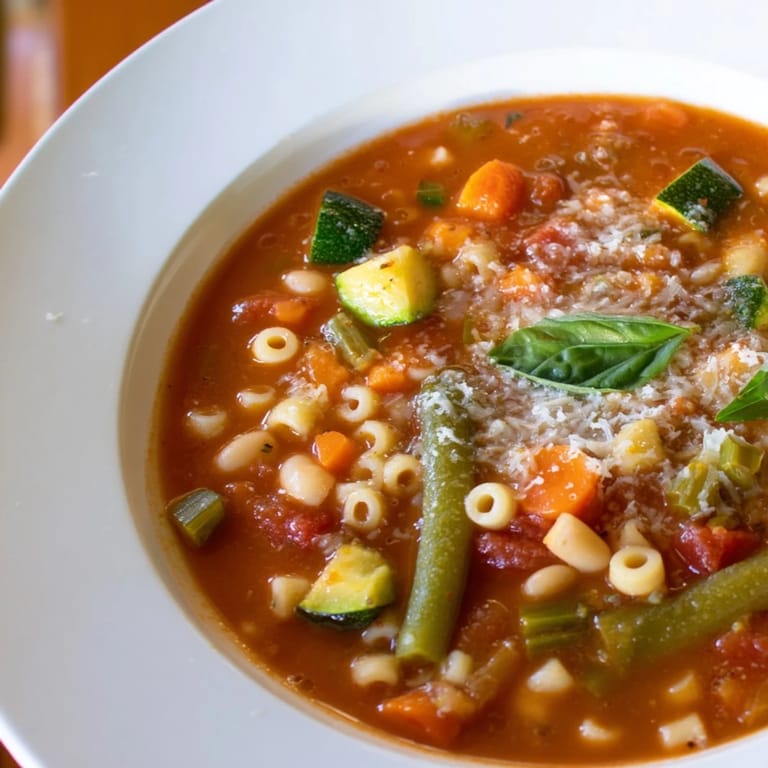
Save There's something about autumn that makes me crave this soup. I was standing in my kitchen on an unusually cool September evening, staring at a farmers market haul and wondering what would warm me up without feeling heavy. The basil was still vibrant, the tomatoes perfect, and I suddenly remembered my neighbor Maria casually mentioning how she makes minestrone when the seasons shift. That night, I threw together what felt right, and the smell that filled my kitchen was so inviting that I ended up calling friends over. What I loved most wasn't the complexity, but how simple it all felt once the pot was simmering.
I remember my partner watching me chop vegetables for this soup, saying it was too much prep for a weeknight dinner. But once that first spoonful hit their bowl and they tasted how the basil brightens everything up, they went quiet and just kept eating. Sometimes a meal doesnt need to be complicated to feel special.
Ingredients
- Olive oil: Use a good quality one here, not the fancy stuff but something you actually like tasting, because youll taste it when the vegetables first hit the pot.
- Onion, carrots, celery: This trio is the backbone of flavor, so dont skip chopping them small enough to soften nicely in those first few minutes.
- Garlic: Mince it fine so it disappears into the broth rather than sitting in chunks.
- Zucchini and green beans: These add texture and color, but green beans especially matter because they stay firm while everything else gets tender.
- Diced and crushed tomatoes: Use both, the diced keeps some structure while the crushed creates that silky base.
- Vegetable broth: This is where the soul lives, so taste your broth first and adjust salt accordingly.
- Oregano and thyme: Dried herbs work perfectly here, they bloom in the hot broth and you dont need fresh at this stage.
- Tomato paste: This concentrate deepens everything, bringing richness that makes people ask what your secret ingredient is.
- Small pasta: Ditalini or elbow macaroni work best because they nestle into the broth and dont overpower it.
- Cannellini beans: They add creaminess and protein without needing meat, and they stay whole through simmering.
- Fresh basil and parsley: Add these at the very end so they keep their bright, peppery quality.
- Parmesan cheese: Optional but magical when you want richness, though this soup stands proudly on its own.
Tired of Takeout? 🥡
Get 10 meals you can make faster than delivery arrives. Seriously.
One email. No spam. Unsubscribe anytime.
Instructions
- Build Your Base:
- Heat the olive oil in your pot over medium heat and watch it shimmer slightly before adding the onion, carrots, and celery. Sauté these for about five minutes, stirring occasionally, until they soften and the edges of the onion turn translucent. Youll know its ready when your kitchen starts smelling like the foundation of something delicious.
- Layer In Green Flavors:
- Add your minced garlic, zucchini, and green beans to the softened vegetables. Cook for three minutes just until the garlic becomes fragrant and the raw edge comes off the zucchini. Dont walk away during this part because garlic can turn bitter fast.
- Create Your Broth:
- Pour in both your diced and crushed tomatoes, the vegetable broth, oregano, thyme, salt, pepper, red pepper flakes if you like heat, and that important tomato paste. Stir everything together until the tomato paste dissolves completely into the liquid, then turn up the heat and let it come to a boil. This is where all those individual ingredients start becoming one cohesive soup.
- Simmer and Develop:
- Once its boiling, reduce the heat to a gentle simmer and let it bubble quietly for fifteen minutes uncovered. This time allows the flavors to marry and deepen without any of the vegetables turning to mush. You should be able to hear the soft sizzle but not an aggressive boil.
- Add Pasta and Beans:
- Stir in your small pasta and the drained cannellini beans, then simmer for another ten to twelve minutes until the pasta is tender but still has a slight bite to it. Stir occasionally so nothing sticks to the bottom, and taste a piece of pasta to know exactly when its ready. The pasta will continue absorbing broth even after you turn off the heat, so slightly underdone is better than mushy.
- Finish With Fresh Herbs:
- Tear or chop your fresh basil and parsley and stir them in right at the end, saving a small handful for garnish if you want to be fancy. Taste the soup now and adjust salt and pepper to your preference, because this is your last chance to get the seasoning where you want it.
 Save
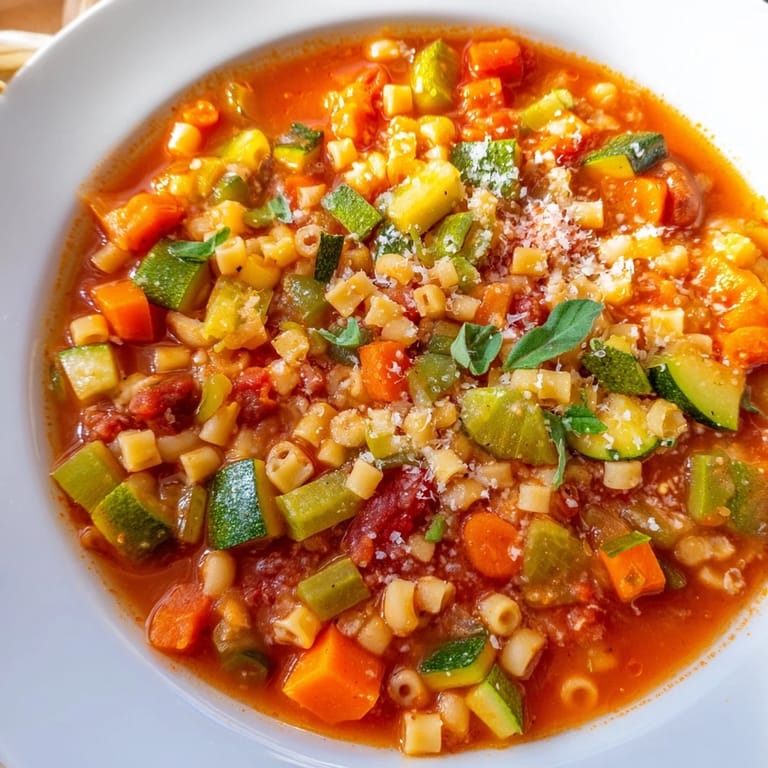
Save One winter, I made this soup for a friend whos vegetarian and a friend whos gluten-free, and I realized it was the first meal Ive made in years that nobody had to pick around or modify. Watching them both enjoy the same warm bowl felt like I'd discovered something quietly important about cooking.
Why This Soup Works Year-Round
The beauty of minestrone is that it adapts to whatever season youre in. In spring, add fresh peas at the end instead of some of the green beans. Summer versions love a handful of spinach or torn zucchini blossoms if youre lucky enough to find them. Fall and winter are when this soup feels most at home, when you want something warm and grounding without being heavy. The tomato base stays constant while the vegetables around it shift with whats available, which is honestly how cooking should work.
The Pasta Question
Ive learned that pasta choice matters more than people think in minestrone. Small shapes like ditalini, small elbow pasta, or even tiny shells work best because they stay suspended in the broth instead of sinking to the bottom. Ive tried adding larger pasta before and it dominates the bowl, making it feel more like pasta soup than vegetable soup. I cook my pasta until its just barely tender, maybe even slightly underdone, because the continued simmering in the hot broth will soften it further. Some people add pasta directly to the pot from the start, but I cook it separate for ninety seconds in salted water first, then add it, so I have total control over the final texture.
Making It Your Own
The real magic of minestrone is how personally it can become. The first time I made it, I followed the recipe exactly and it was delicious. The second time, I added a handful of torn kale at the end because I had it, and suddenly my version felt more interesting than the original. Ive seen versions with white beans instead of cannellini, versions with a splash of red wine, versions finished with a dollop of pesto instead of just basil. The structure stays the same but your version can absolutely reflect your tastes and whats in your kitchen.
- If you like your soup thicker, simmer it uncovered longer so more liquid evaporates, or add the pasta with a few minutes less cooking time.
- For deeper flavor, try roasting the tomato paste in the pot for a minute before adding the liquids.
- A squeeze of fresh lemon juice right before serving brightens everything up and makes people wonder what your secret is.
 Save
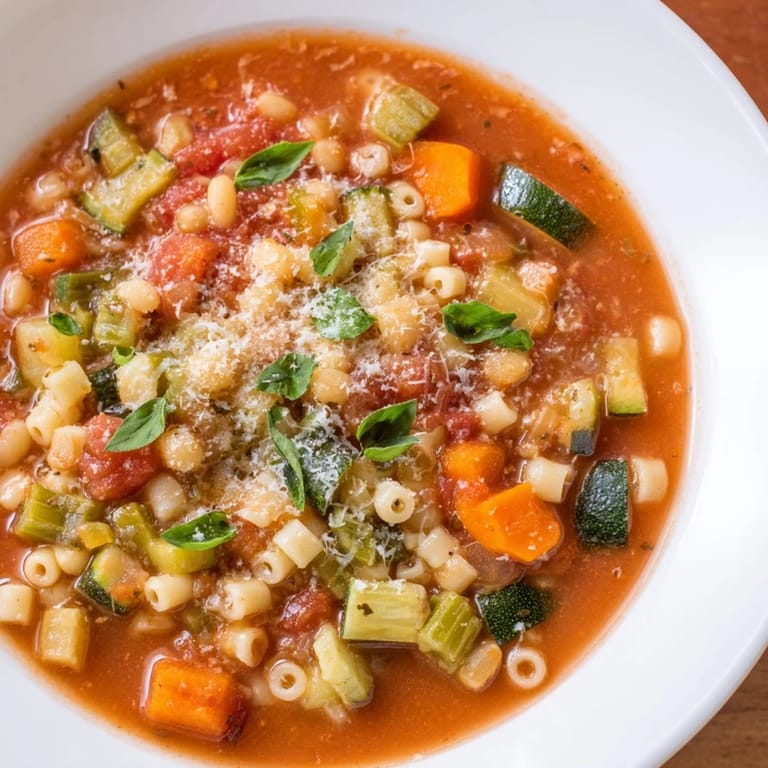
Save Minestrone has become my favorite kind of cooking, the kind where you dont need fancy techniques or rare ingredients, just attention and care. Its the soup I make when I want to remind myself why I love feeding people.
Recipe FAQs
- → Can I use gluten-free pasta in this dish?
Yes, gluten-free pasta works well and allows for accommodating gluten sensitivities without compromising flavor or texture.
- → How can I make it vegan-friendly?
Simply omit the grated Parmesan cheese at the end, and use vegetable broth to keep it fully plant-based.
- → What herbs enhance the flavor best?
Fresh basil and parsley added at the end add brightness, while dried oregano and thyme deepen the savory notes in the broth.
- → Can I add more vegetables to this preparation?
Absolutely, spinach or kale added near the finish boost nutrients and add extra greens without overpowering the balance.
- → Is it suitable for meal prep and reheating?
Yes, this dish reheats nicely and often benefits from resting, allowing flavors to meld even further over time.