 Save
Save My kitchen counter was a disaster of flour dust and sticky dough scraps when I realized I'd been kneading for nearly fifteen minutes, lost in thought. Making ravioli from scratch had always seemed like something only nonnas in Italian villages could do, but there I was, hands coated in dough, proving myself wrong. The filling sat waiting in a bowl, flecked with green spinach and smelling faintly of nutmeg. I'd invited friends over without mentioning I was attempting this for the first time, which now felt like either bravery or foolishness. But the dough was finally smooth as silk, and I knew there was no turning back.
I remember plating the first batch with shaky hands, worried the ravioli would burst or taste bland. My friend took one bite and closed her eyes, and for a moment I thought something was wrong. Then she smiled and said it tasted like the tiny trattoria we'd stumbled into in Florence years ago. That comparison felt generous, but it reminded me why homemade food matters. It's never just about the recipe. It's about the moment it creates and the memories it pulls forward.
Ingredients
- All-purpose flour: The foundation of your dough, providing structure without being too heavy, and it absorbs the eggs beautifully when you work it slowly.
- Eggs: They bind the dough and give it that rich yellow color, plus the yolk in the filling adds silky body to the ricotta mixture.
- Ricotta cheese: Choose whole milk ricotta for creaminess, and if it looks watery, drain it in a cheesecloth for twenty minutes to avoid soggy filling.
- Fresh spinach: Bright and earthy, but you must squeeze out every bit of water after cooking or your filling will be too loose to hold its shape.
- Parmesan cheese: Adds a sharp, salty depth that balances the mild ricotta, and always grate it fresh for the best flavor.
- Nutmeg: Just a whisper of it transforms the filling from ordinary to something that feels warm and a little mysterious.
- Marinara sauce: Whether homemade or jarred, a good marinara should taste bright and slightly sweet, with enough acidity to cut through the richness.
- Garlic: A quick saute in olive oil releases its sweetness and perfumes the entire sauce without overwhelming the delicate ravioli.
- Fresh basil: Torn at the last second, it adds a pop of color and a sweet herbal note that ties everything together.
Tired of Takeout? 🥡
Get 10 meals you can make faster than delivery arrives. Seriously.
One email. No spam. Unsubscribe anytime.
Instructions
- Make the Pasta Dough:
- Mound your flour on a clean counter and create a well in the center, then crack the eggs into it with the salt. Use a fork to gradually pull flour into the eggs, stirring gently until it starts clumping into a shaggy dough. Knead it firmly for eight to ten minutes until it feels smooth and springs back when you poke it, then wrap it tightly in plastic and let it rest for thirty minutes so the gluten can relax.
- Prepare the Filling:
- Steam or quickly saute your spinach until it wilts down into a dark green heap, then drain it and squeeze out every drop of water using a clean towel or your hands. Chop it finely and mix it with the ricotta, Parmesan, egg yolk, nutmeg, salt, and pepper until everything is evenly combined and smells faintly spiced.
- Roll the Pasta:
- Cut your rested dough in half and keep one piece covered while you work with the other. Roll it out as thin as you can manage, about one-sixteenth of an inch, using a pasta machine or a rolling pin and a lot of patience.
- Shape the Ravioli:
- Lay one sheet of pasta flat and place small spoonfuls of filling about two inches apart across the surface. Brush water along the edges and between the mounds, then drape the second sheet over the top and press firmly around each mound to seal. Cut them into squares with a knife or ravioli cutter, then crimp the edges with a fork so they stay closed during cooking.
- Cook the Ravioli:
- Bring a large pot of salted water to a gentle boil, then add your ravioli in batches so they don't crowd. They'll sink at first, then float to the top after three to four minutes, which means they're ready to be lifted out with a slotted spoon.
- Make the Marinara Sauce:
- Heat olive oil in a saucepan over medium heat and add minced garlic, stirring until it smells sweet and turns golden. Pour in your marinara sauce, season it with salt and pepper, and let it simmer gently for five minutes to marry the flavors.
- Serve:
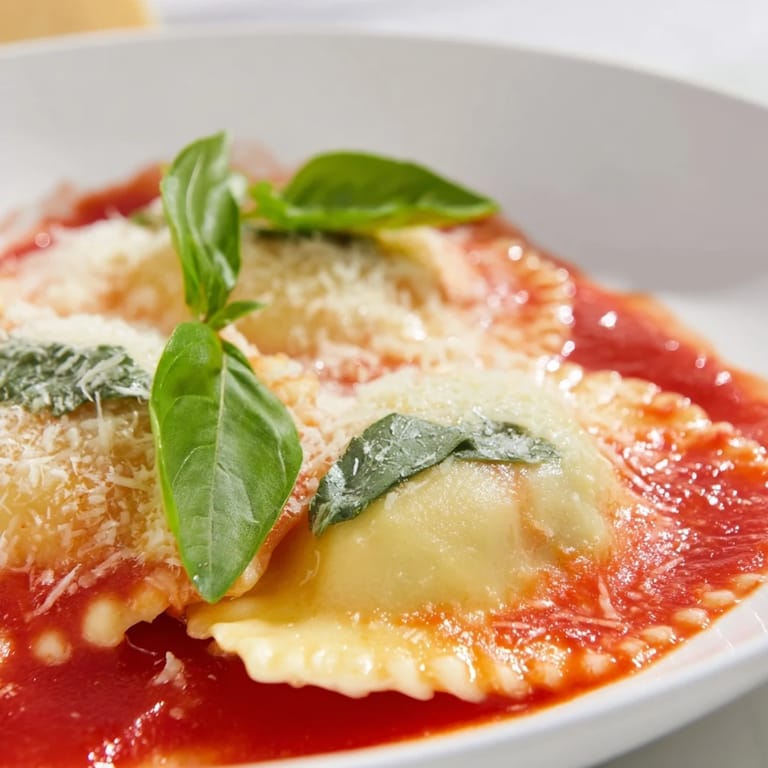
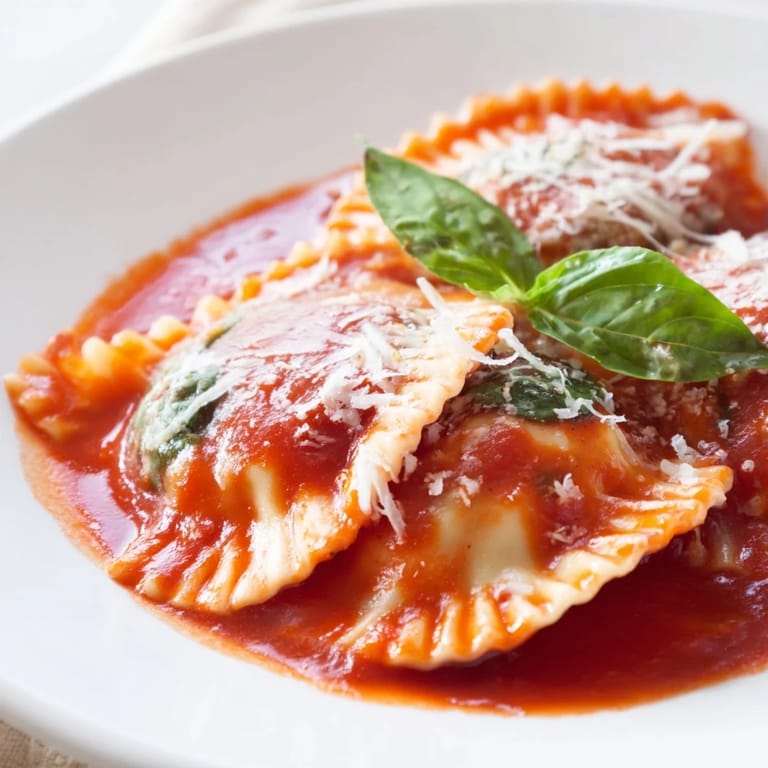
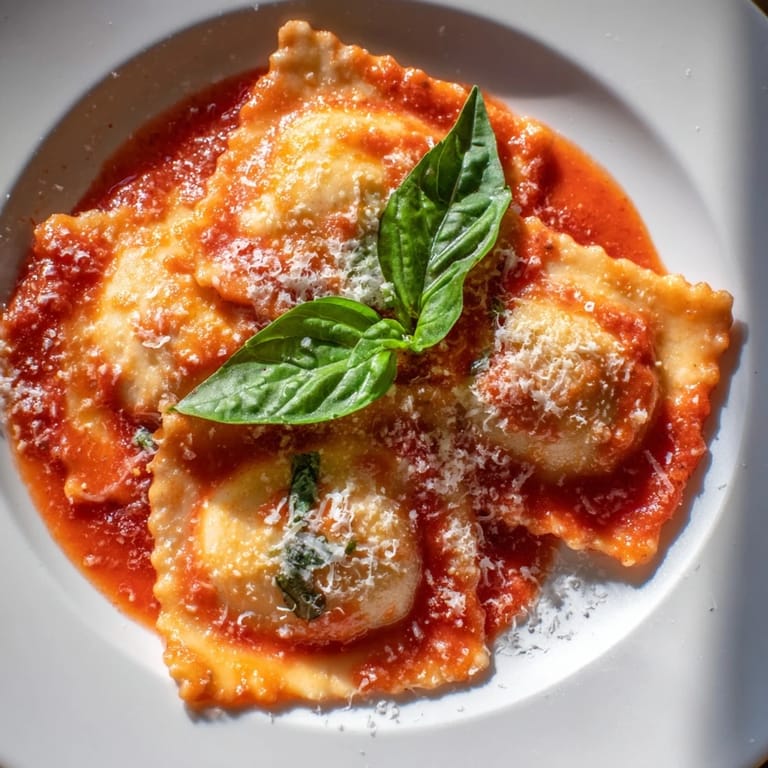
- Spoon a layer of warm sauce onto each plate, then arrange the hot ravioli on top. Drizzle more sauce over them, scatter fresh basil leaves, and finish with a generous grating of Parmesan.
 Save
Save The night I served this, my kitchen smelled like garlic and basil, and my friends lingered at the table long after the plates were empty. Someone opened a bottle of Pinot Grigio, and we sat there talking and laughing, the kind of evening that stretches without anyone noticing the time. It wasn't just the ravioli that made it special, though they were good. It was the warmth of making something with my hands and watching people I care about enjoy it. That's when this dish stopped being an experiment and became something I'd make again and again.
Storing and Reheating
If you have uncooked ravioli left over, lay them on a parchment-lined baking sheet and freeze them in a single layer until solid, then transfer them to a freezer bag. They'll keep for up to three months and can go straight from the freezer into boiling water, just add an extra minute or two to the cooking time. Cooked ravioli don't reheat as well because the pasta can turn mushy, but if you must, warm them gently in simmering sauce rather than the microwave. Leftover filling can be refrigerated for up to three days and used in lasagna, stuffed shells, or even spread on toasted bread.
Customizing the Filling
Once you've made this filling a few times, you'll start thinking about variations, and that's when the recipe becomes truly yours. I've stirred in sauteed mushrooms for earthiness, swapped spinach for kale when that's what I had on hand, and even added a spoonful of pesto for extra brightness. A pinch of lemon zest in the ricotta mixture wakes everything up, especially in the summer when you want something a little lighter. You can also fold in cooked crumbled sausage if you're feeding someone who isn't vegetarian, though I'd reduce the salt slightly to compensate.
What to Serve Alongside
Ravioli is rich and satisfying on its own, so I like to keep sides simple and let the pasta be the star. A crisp green salad with lemon vinaigrette cuts through the creaminess and adds a fresh contrast that feels necessary. Garlic bread is always welcome, though I prefer to toast slices of good crusty bread and rub them with a halved garlic clove rather than making anything too buttery. If you want to go a little fancier, roasted asparagus or blistered cherry tomatoes with olive oil and sea salt work beautifully.
- Serve with a chilled glass of Pinot Grigio or a light Chianti that won't overpower the delicate flavors.
- Keep extra Parmesan and red pepper flakes on the table for guests who like to adjust their own seasoning.
- Don't skip the fresh basil, it adds a brightness that dried herbs simply can't replicate.
 Save
Save Making ravioli by hand takes time, but it's the kind of cooking that slows you down in the best way. You'll end up with flour on your shirt and sauce on your apron, and when you sit down to eat, it will feel earned and worth every minute.
Recipe FAQs
- → Can I prepare the ravioli ahead of time?
Yes, you can freeze uncooked ravioli on a baking sheet for several hours, then transfer to a freezer bag for up to three months. Cook directly from frozen, adding 1-2 minutes to the cooking time.
- → What type of spinach works best?
Fresh spinach is ideal for the most vibrant flavor, but frozen spinach works well too. Thaw frozen spinach completely and squeeze out all excess moisture to prevent a watery filling.
- → How do I know when the ravioli is cooked?
The ravioli is ready when it floats to the surface of boiling water. Let it simmer for an additional 1-2 minutes to ensure the filling is heated through.
- → Can I make the pasta dough by hand?
Absolutely. Create a flour well on a clean surface, add eggs and salt, then gradually incorporate flour with a fork until a shaggy dough forms. Knead by hand for 8-10 minutes until smooth and elastic.
- → What wine pairs well with this dish?
A crisp white wine like Pinot Grigio or Vermentino complements the creamy filling and tomato-based sauce beautifully, cutting through the richness while enhancing the fresh herbs.
- → How can I add more flavor to the filling?
Consider adding a pinch of lemon zest, fresh thyme, or a touch of freshly grated nutmeg to the ricotta mixture. Some cooks also add roasted garlic or a small amount of mascarpone for extra creaminess.