 Save
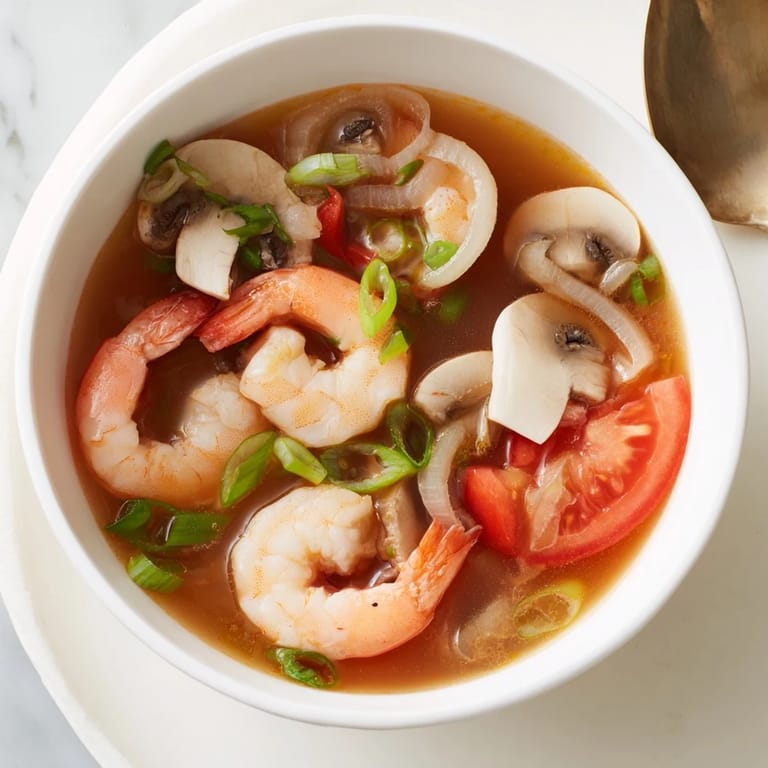
Save The first time I tasted real tom yum, I was sitting in a tiny Bangkok stall at midnight, and the heat hit me so suddenly I actually laughed—my eyes watered, my nose ran, but I couldn't stop eating it. Years later, I learned the magic wasn't just about the chili; it was how the lemongrass whispered underneath, how the lime brightened everything at the last second, how one bowl could taste like a conversation between bold and subtle. Now I make it at home whenever I need that same feeling, that perfect balance of spicy, sour, and aromatic that somehow makes everything feel a little more alive.
I made this for friends who were skeptical about Thai food, and watching their faces when they tasted it—that moment when the flavors clicked—reminded me why I love cooking for people. One of them asked for the recipe before they'd even finished the bowl, which felt like the highest compliment I could get.
Ingredients
- Chicken or vegetable stock (4 cups): This is your canvas; use something you actually like drinking because it becomes the soul of the soup.
- Fresh lemongrass (2 stalks): Smash it gently with the side of your knife—you're waking it up, not destroying it, and that bruising releases those citrusy oils that make the whole pot smell incredible.
- Kaffir lime leaves (4 leaves): These are non-negotiable if you can find them; they taste nothing like regular limes and add a floral complexity that's hard to replicate.
- Fresh galangal (3 slices): It's like ginger's spicier, more peppery cousin; if you can't find it, ginger works, but galangal is worth hunting for.
- Thai bird's eye chilies (2 chilies): These are the heat source, so taste your tolerance first—I've learned the hard way that Thai spicy is not the same as American spicy.
- Large shrimp (250 g): Big enough to stay meaty, small enough to cook in a flash; don't skip the deveining step or you'll bite into something unpleasant.
- White mushrooms (150 g): They soak up the broth and add earthiness that balances the bright acid.
- Tomatoes (2 medium): Ripe ones matter here because they'll give sweetness and body to the soup.
- Onion (1 small): Slice it thin so it softens quickly and melts into the broth.
- Fish sauce (2 tablespoons): Yes, it smells funky in the bottle, but it's the umami backbone that makes this taste authentic—trust the process.
- Lime juice (1 tablespoon plus more): Squeeze it fresh, not from a bottle; the difference is real and you'll taste it.
- Sugar (1 teaspoon): Just a whisper to round out the heat and balance the sour.
- Chili paste or nam prik pao (1 teaspoon): Optional but honestly worth adding for depth and a smoky heat that doesn't just burn.
Tired of Takeout? 🥡
Get 10 meals you can make faster than delivery arrives. Seriously.
One email. No spam. Unsubscribe anytime.
Instructions
- Wake up your broth:
- Pour your stock into a medium pot and get it to a simmer—not a boil, a gentle bubble. Add the smashed lemongrass, torn kaffir lime leaves, galangal slices, and sliced chilies, then let them infuse for 5 to 7 minutes while your kitchen fills with that unmistakable Thai aroma. You'll know it's ready when the broth tastes aromatic and warm, not just like plain stock.
- Build texture:
- Toss in your sliced mushrooms, tomato wedges, and onion slices and let them soften for 3 to 4 minutes. The mushrooms will drink up the flavor and the tomatoes will start to break down slightly, thickening the broth just enough.
- Cook the shrimp:
- Add your shrimp and watch carefully—they'll turn pink and opaque in 2 to 3 minutes, and overcooked shrimp turns rubbery fast. Stir them gently so they cook evenly.
- Season to life:
- Stir in the fish sauce, fresh lime juice, sugar, and chili paste if you're using it. Taste it now and don't be shy about adjusting—this is your soup, and if it needs more lime or a pinch more fish sauce, give it what it needs.
- Finish and serve:
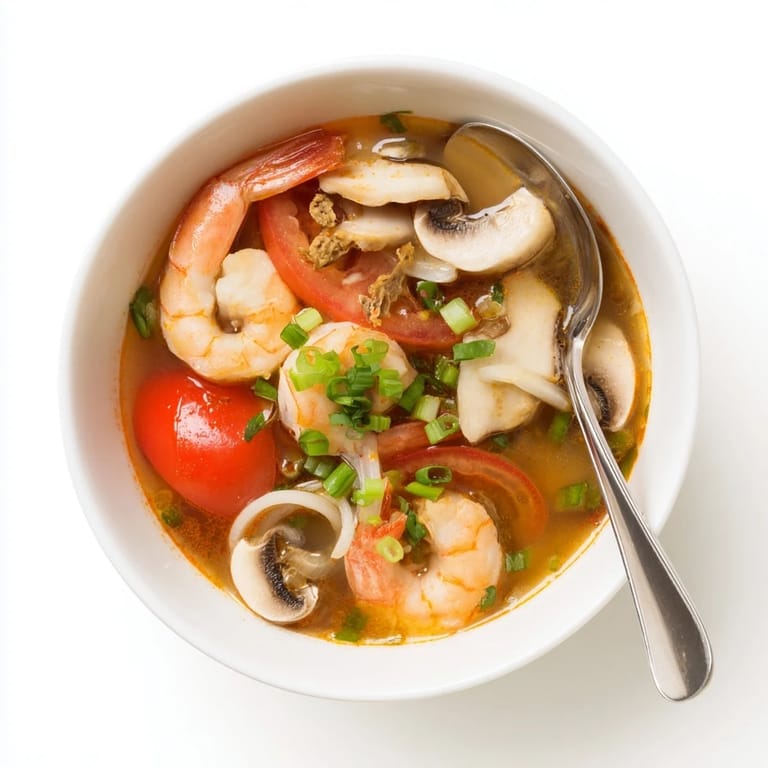
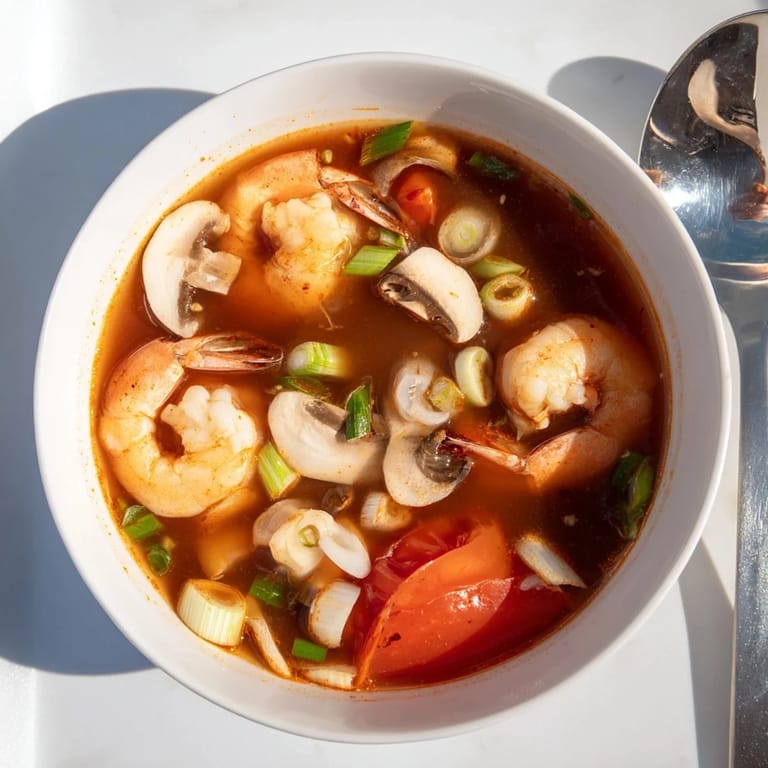
- Remove the pot from heat and fish out the big pieces of lemongrass and galangal if you prefer a cleaner bowl (I sometimes leave them in because I love chewing on the softened lemongrass). Ladle the soup into bowls and scatter cilantro and green onions over the top, with extra lime wedges on the side for squeezing.
 Save
Save There's something about sitting down with a bowl of tom yum that feels like a small act of self-care—the steam rising up, the bright colors of cilantro and lime, the heat that makes you feel awake. It reminds me that sometimes the best comfort isn't creamy or heavy; it's sharp and alive.
The Flavor Puzzle
Thai cooking is about balance in a way that's different from other cuisines I've learned. It's not about one flavor being the star; it's about heat, sour, salty, and sweet all dancing together, and tom yum is the perfect classroom for understanding that. When you get it right, you can taste each element—the burn of chili, the brightness of lime, the umami of fish sauce, the sweetness of shrimp and tomato—but they all blur together into something that tastes like one complete thought. If something tastes off, it's usually because one of those elements is too loud or too quiet, and that's actually good news because it means you can fix it.
Ingredient Swaps and Variations
I've made this soup a hundred different ways depending on what I had and who I was cooking for. Sometimes I use prawns instead of shrimp, sometimes I add a splash of coconut milk to mellow the heat, sometimes I toss in snap peas or baby corn for crunch. The structure is solid enough that it can handle change, and that flexibility is part of why I love it—it's not precious about being made one exact way. I've also made a vegetarian version using firm tofu and soy sauce instead of fish sauce, and it's genuinely just as good, especially if you use extra mushrooms and add a splash of rice vinegar for that sour note.
Serving and Pairings
Tom yum doesn't need much—it's complete on its own, but I've learned that serving it with a side of jasmine rice transforms the experience. The rice soaks up the broth in the best way, and you get this interplay between the brightness of the soup and the softness of the rice. If you're feeling like pairing a drink, a cold Riesling cuts through the heat beautifully, or a crisp lager if you want something lighter. I've even served this at dinner parties as the first course, and it always impresses—there's something about a bowl of aromatic, spicy soup that makes people feel taken care of.
- Squeeze extra lime into your bowl just before eating; it's the final brightness that makes everything pop.
- If the heat builds and becomes too much, eating with jasmine rice or even bread helps cool your mouth.
- Leftover soup keeps in the fridge for a couple days, though the broth gets more intense as it sits, so add a little extra stock when you reheat it.
 Save
Save This soup has become my answer to the question of what to make when I want to feel like I'm somewhere else for a little while. Every time I make it, I'm transported back to that Bangkok stall, that midnight moment, and that's a gift a recipe can give you.
Recipe FAQs
- → What is the main spice in Tom Yum?
Bird's eye chilies provide the distinctive spicy kick in this dish, balanced by aromatic herbs like lemongrass and kaffir lime leaves.
- → Can I substitute shrimp with another protein?
Yes, tofu can be used for a vegetarian option, paired with soy sauce to replace fish sauce.
- → How do I make the broth flavorful?
Simmering lemongrass, kaffir lime leaves, and galangal in stock infuses the broth with authentic aromatic flavors.
- → What garnishes enhance this soup?
Fresh cilantro, sliced green onions, and extra lime wedges add brightness and freshness to the final dish.
- → How long does it take to prepare this dish?
Preparation takes about 15 minutes, followed by 20 minutes of cooking for a total of 35 minutes.
- → How can I adjust the soup's spiciness?
Modify the amount of chilies added during simmering according to your preferred heat level.