 Save
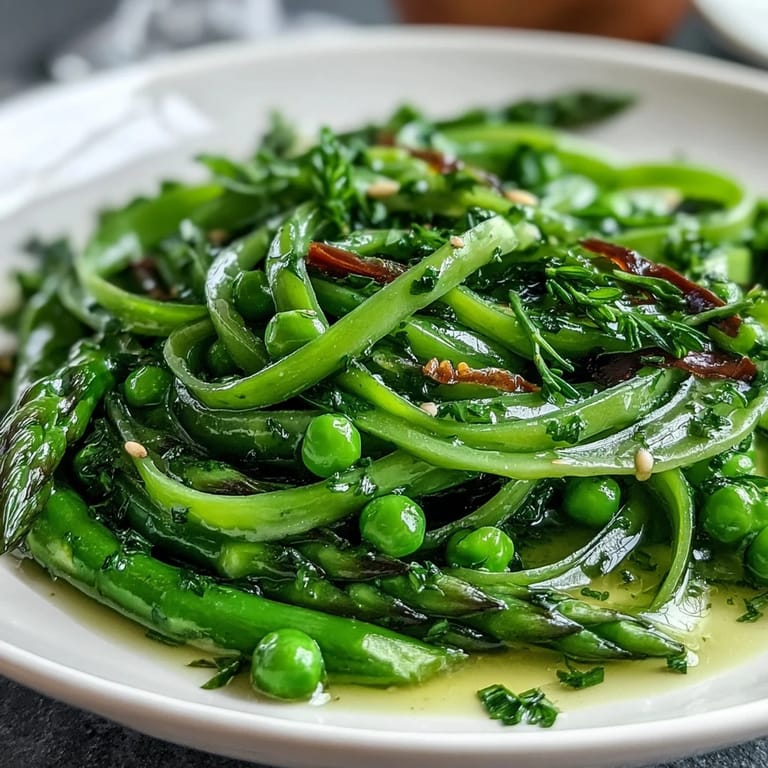
Save Last spring, I found myself with a bunch of asparagus that seemed too delicate to roast, and a handful of peas that needed rescuing from the freezer. Something about the season made me want to abandon the heavy, cooked vegetable route entirely. I grabbed my vegetable peeler out of curiosity, ran it along an asparagus spear, and watched it curl into this impossibly thin ribbon. That one small gesture changed everything—suddenly I had a salad that tasted like April itself, bright and alive in a way that felt almost surprising for something so simple.
I made this for a casual lunch with my neighbor, who showed up with homemade bread and wine while I was still deciding what to serve. We ate at the kitchen counter, and she kept going back for more, complimenting how the salad managed to feel both light and satisfying. It became our thing that summer—whenever someone needed to bring something to a gathering, this salad appeared on my counter. There's something about a recipe that becomes reliable enough to trust, flexible enough to adjust, and good enough that people remember it fondly.
Ingredients
- Fresh asparagus, about 300g: Trim the woody ends off first (snap them back until they naturally break), then this tender part shaves into silky ribbons that won't toughen up the moment the dressing touches them.
- Fresh or frozen green peas, 1 cup: If using frozen, thaw them at room temperature for a few minutes—don't boil them, as that softens their sweetness into submission.
- Baby arugula or spring greens, 2 cups: These provide a peppery backbone that prevents the salad from tasting one-note and delicate.
- Radishes, 2 sliced thin: They add a crisp bite and a little visual pop that transforms this from plain green to genuinely beautiful.
- Shaved Parmesan or pecorino, 1/4 cup: Use a vegetable peeler to shave thin curls rather than grating—they melt slightly into the dressing and distribute flavor evenly.
- Toasted pine nuts or slivered almonds, 1/4 cup: Toast them yourself in a dry skillet for just a few minutes until fragrant, or buy them pre-toasted; they're worth the small effort because raw nuts feel out of place here.
- Extra-virgin olive oil, 3 tablespoons: This is where quality actually matters since there's nothing heavy to mask thin or off flavors.
- Freshly squeezed lemon juice, 2 tablespoons: Fresh lemon juice is non-negotiable; bottled versions taste tinny and bitter by comparison.
- Lemon zest, 1 teaspoon: That bright, fragrant oil in the zest adds complexity that plain juice can't deliver alone.
- Honey or maple syrup, 1 teaspoon: Just enough sweetness to balance the acid without making it taste like dessert.
- Dijon mustard, 1 teaspoon: This emulsifies the dressing and adds a subtle depth that most people won't identify but will definitely taste.
- Sea salt and freshly ground black pepper: Season carefully and taste as you go; these are your final adjustments for balance.
Tired of Takeout? 🥡
Get 10 meals you can make faster than delivery arrives. Seriously.
One email. No spam. Unsubscribe anytime.
Instructions
- Shave the asparagus with care:
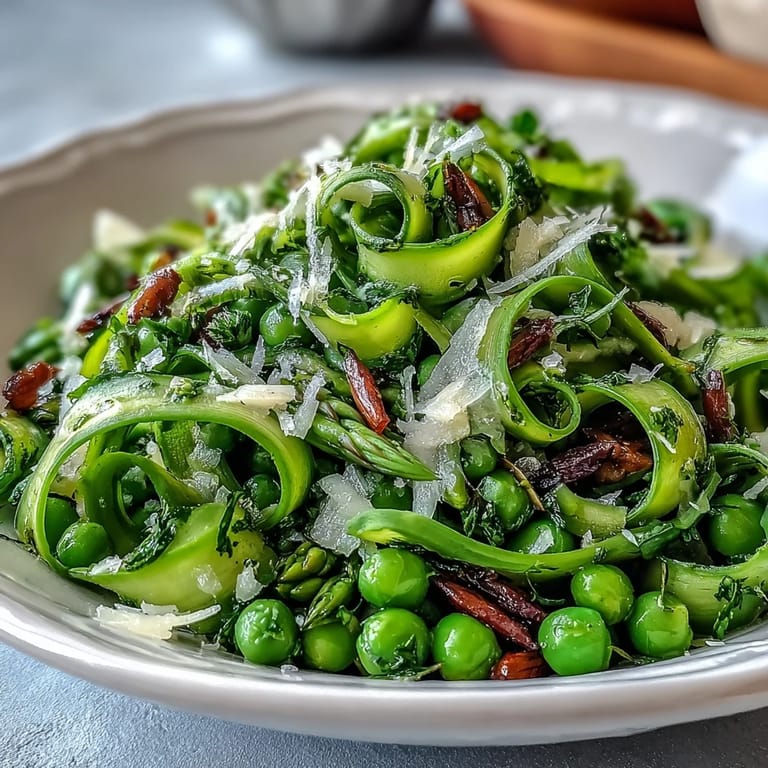
- Hold each spear steady at the base and run your vegetable peeler from tip to end, rotating slightly after each pass. You'll create thin, flexible ribbons that catch light and look elegant on the plate.
- Combine your vegetables:
- In a large salad bowl, layer the asparagus ribbons, peas, greens, and radish slices together without yet tossing them. This keeps everything distinct until the dressing brings it all into conversation.
- Make the dressing come alive:
- In a small bowl or clean jar, whisk the olive oil, lemon juice, zest, honey, mustard, salt, and pepper together vigorously for about a minute. You'll see it turn slightly pale and emulsified, which means the flavors have begun to bond rather than separate.
- Dress the salad with intention:
- Pour the dressing over the vegetables and toss gently with your hands or salad servers—rough handling will bruise the delicate greens and asparagus ribbons. Stop as soon as everything is lightly coated.
- Finish with cheese and nuts:
- Scatter the shaved Parmesan and toasted nuts across the top just before serving, or toss them in lightly if you prefer them distributed throughout. Either way, add them at the last moment so they stay crisp and don't become soggy.
 Save
Save One evening, I made this salad alongside grilled fish for my family, and my daughter—who normally picks vegetables out of everything—asked for seconds. She discovered that shaved asparagus tastes nothing like the steamed version she'd rejected her whole life, and that the peas were sweet rather than mushy. That moment, watching her eat vegetables by choice, reminded me that presentation and texture matter as much as flavor. Sometimes the simplest changes make the biggest difference.
When Spring Arrives in Your Kitchen
There's something about this salad that feels seasonal in the best way. It doesn't fight against asparagus and peas at their peak; instead, it celebrates them by doing as little as possible. When I make this in the off-season using decent frozen peas and imported asparagus, it's still good, but it tastes like a memory of spring rather than the real thing. If you can, wait for the season when asparagus is snapping with freshness and peas taste like captured sweetness. Your taste buds will know the difference.
Building Flavor Through the Dressing
The lemon dressing is where this salad earns its reputation. It's not just acid thrown at vegetables; it's a balance of bright, sweet, sharp, and savory notes that work together. The mustard is the secret player here—most people won't notice it consciously, but they'll taste why this dressing tastes more complex than just lemon and oil. The honey prevents the acid from feeling aggressive, while the lemon zest adds a dimension that juice alone can't achieve. This is worth understanding because once you see how these five elements create harmony, you'll start applying the same logic to other dressings.
Flexibility and Swaps That Work
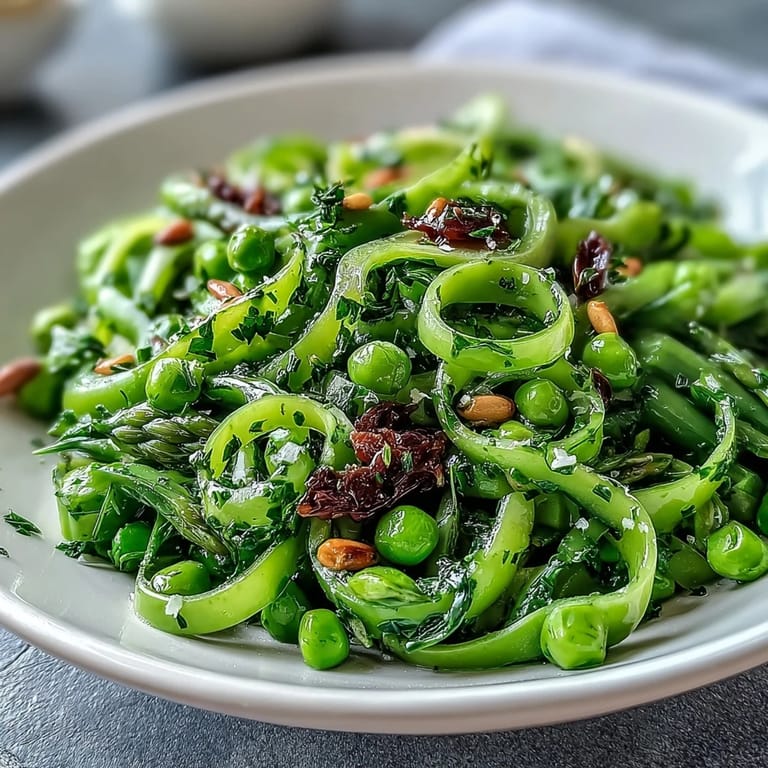
One of the reasons I make this salad so often is that it welcomes substitution without falling apart. Sugar snap peas work beautifully if you slice them thin, and blanched fava beans add an earthiness that's equally rewarding. Fresh mint or basil scattered over the top pushes the salad toward summer even more intensely. If Parmesan isn't your thing, pecorino gives you a sharper edge, or you can skip cheese entirely for a vegan version that's just as satisfying. The core of the recipe—shaved asparagus, peas, greens, bright dressing—stays steady while everything else can shift with what you have and what you're craving.
- Try adding fresh mint or basil if you want more herbal brightness.
- Swap the nuts for sunflower seeds if you need to avoid tree nuts.
- Use whatever spring greens you find; baby spinach or lettuce work perfectly fine.
 Save
Save This salad taught me that sometimes the most elegant food comes from removing things rather than adding them. It's a reminder worth keeping in your back pocket as a cook.