 Save
Save There's something about the moment when olive oil hits a cake batter that makes you pause—the way it catches the light, how it promises something different from the usual butter routine. My sister brought a tin of these to a book club meeting last spring, and I watched grown adults go quiet mid-conversation, forks suspended in that little moment of recognition when something tastes both familiar and unexpectedly sophisticated. She'd never mentioned making them before, so of course I demanded the recipe immediately, and what I got was this: a cupcake that tastes like it belongs in a Parisian patisserie but comes together in about an hour in any kitchen.
I made these for the first time on a gray afternoon when I was meant to be doing something productive, and somehow the kitchen filled with this unexpected warmth—not just from the oven, but from the smell of lemon zest mingling with good olive oil. By the time they cooled, I'd already recruited my neighbor to taste-test, and she came back three times that week asking me to make them again. That's when I knew they weren't just a nice recipe; they were the kind of thing that makes people ask you to bake for them on purpose.
Ingredients
- All-purpose flour: This is your structure—it keeps the cupcakes tender without being dense, and 1 1/2 cups gives you just enough body to support that silky olive oil.
- Baking powder and baking soda: Together they lift the batter evenly, but don't skip the soda; it reacts with the acidity from the lemon zest and cream cheese frosting coming later.
- Fine sea salt: A pinch is all you need, but it's not optional—it rounds out the sweetness and makes the flavor profile feel complete.
- Granulated sugar: Cream this properly with your eggs; you're not just mixing, you're incorporating air that makes these cupcakes light.
- Eggs at room temperature: Cold eggs won't incorporate smoothly into the oil, so take them out of the fridge about 15 minutes before you start.
- Extra virgin olive oil: Use something you actually like to eat; the flavor matters here more than in other baking, and a fruity or peppery oil adds genuine character.
- Whole milk at room temperature: This keeps the batter from seizing up when you add it to the oil mixture, so don't skip the temperature adjustment.
- Pure vanilla extract: The real thing makes a noticeable difference in the final taste; imitation can taste a bit harsh alongside the delicate oil flavor.
- Lemon zest: Optional but recommended—just one lemon gives brightness that makes the black currant frosting sing without adding actual lemon flavor.
- Unsalted butter: Softened properly, not melted, so your frosting stays fluffy and doesn't turn into pudding.
- Cream cheese: Softened at room temperature so it blends smoothly with the butter; cold cream cheese creates lumps that no amount of beating fixes.
- Powdered sugar: Sift it first, every single time—lumpy frosting is the one mistake you can prevent with five seconds of effort.
- Black currant jam or puree: The star ingredient here; it brings tartness and sophistication that regular berries can't quite match, so find the best quality you can afford.
- Lemon juice: A teaspoon cuts through the richness and keeps the frosting from tasting one-note sweet.
Tired of Takeout? 🥡
Get 10 meals you can make faster than delivery arrives. Seriously.
One email. No spam. Unsubscribe anytime.
Instructions
- Set yourself up for success:
- Preheat to 350°F and line your tin with paper liners before you do anything else; this takes two minutes and saves you from scrounging for liners mid-batter. Room temperature eggs and milk matter more here than you'd think because they integrate smoothly into the oil without causing any weird separation.
- Build your dry team:
- Whisk flour, baking powder, baking soda, and salt together in a medium bowl—this distributes the leavening evenly so you don't end up with random tall and short cupcakes. You'll fold this in later, so just set it aside and resist the urge to be impatient.
- Start with eggs and sugar:
- Beat them together for about two minutes until the mixture is pale and noticeably fluffy; this incorporates air that keeps the cupcakes tender and prevents them from becoming dense little hockey pucks. You should see a visible transformation in color and volume.
- Introduce the olive oil gently:
- Whisk it in gradually while the eggs and sugar are still being beaten, so it emulsifies properly and doesn't create a greasy batter. If you dump it all in at once, the mixture can separate and you'll have a sad, broken batter.
- Add milk, vanilla, and zest:
- Stir these in after the oil is incorporated, then pause—your wet mixture should smell bright and complex at this point, like a promise of what's coming.
- The crucial fold:
- Gently fold the dry ingredients into the wet mixture using a spatula, stopping as soon as you don't see white flour streaks anymore. Overmixing develops gluten and makes your cupcakes tough, which defeats the whole purpose of using olive oil in the first place.
- Fill and bake:
- Divide the batter evenly among the liners using a small cookie scoop—fill each about two-thirds full, which gives you room for the rise without spillover. Bake for 16 to 18 minutes; a toothpick should come out clean, but the cupcakes should still feel slightly tender to the touch.
- Cool with patience:
- Let them rest in the pan for five minutes so they set slightly, then transfer to a wire rack to cool completely—frosting warm cupcakes is a texture disaster, so plan accordingly.
- Frosting foundations:
- Beat butter and cream cheese together until they're smooth and creamy, about two minutes; you're creating a unified base that won't have streaks of butter or cheese showing up later.
- Sugar integration:
- Add powdered sugar gradually, a quarter cup at a time, beating between additions so it incorporates evenly and the frosting stays light and fluffy. If you dump it all in at once, you'll have a powdery mess.
- The black currant moment:
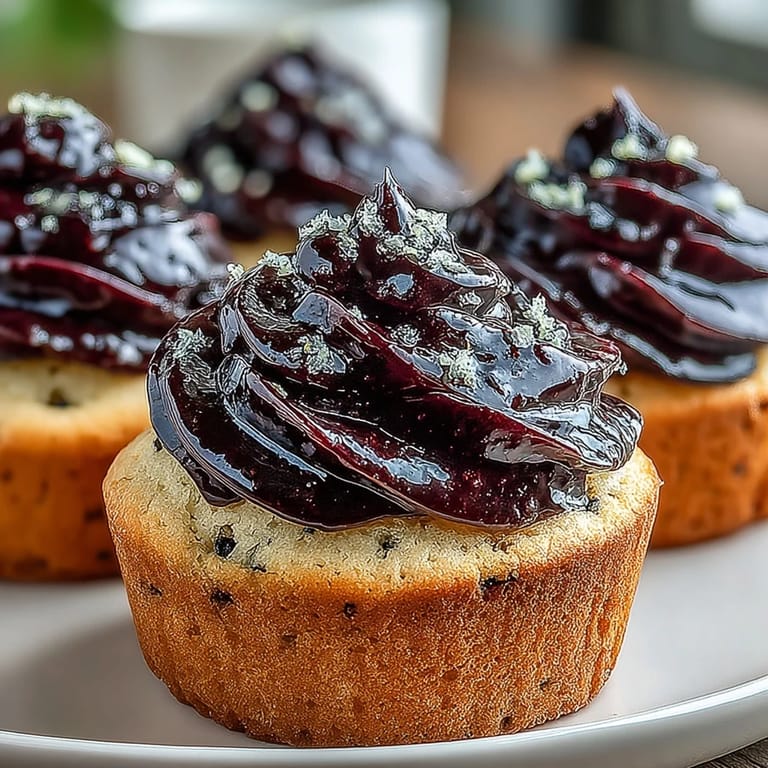
- Mix in the jam, lemon juice, and salt, beating just until everything is unified and spreadable—the frosting should look like a luxurious berry cream at this point. Taste it and adjust; if it's too sweet, add a tiny squeeze more lemon juice.
- Frost with confidence:
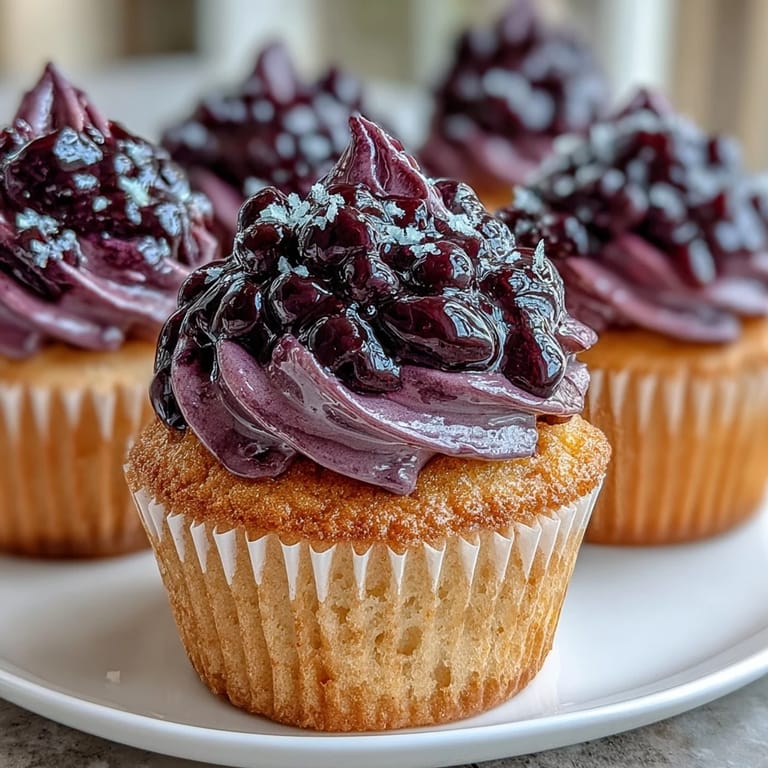
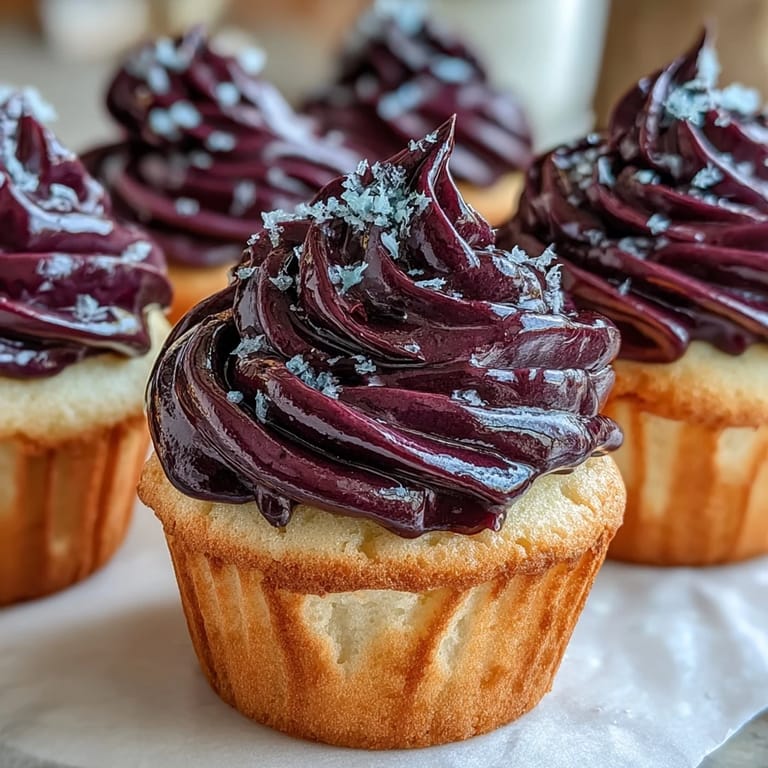
- Once the cupcakes are completely cool, spread or pipe the frosting generously on top, garnishing with extra black currants or a whisper of lemon zest if you're feeling fancy. They're ready to serve immediately, or they'll keep for a few days in an airtight container.
 Save
Save I brought these to a small dinner party last summer, and somehow a conversation that had been a bit stilted suddenly loosened up the moment everyone tasted one. Someone mentioned that olive oil cake always felt like something you'd have in Italy or France, and we ended up talking about travel and food memories for the next two hours—all because of a cupcake that managed to be both comforting and elegant at the same time. That's the magic of food done right: it brings people together without fanfare.
Choosing Your Olive Oil Wisely
The olive oil is the literal foundation here, so it deserves more thought than you might normally give it. A mild, buttery olive oil will fade into the background and let the lemon and black currant shine, while a peppery or grassy one will add its own personality to the cupcake—neither is wrong, it just changes the experience. I learned this by accident when a friend brought over a bottle of oil from Greece that was so aggressively herbaceous it practically punched you in the face, and you know what? Those cupcakes were incredible, just completely different from what I'd made before. The lesson is this: taste your oil first, and choose based on what you want the cupcake to say.
The Black Currant Frosting Advantage
Most frosting recipes feel obligatory, like they're just there to add sweetness, but this one is actually a flavor protagonist. The tartness of the black currant plays against the richness of the butter and cream cheese in a way that makes you want another cupcake, even though one should theoretically be enough. I spent a ridiculous amount of time experimenting with jam ratios before I landed on a quarter cup as the sweet spot—enough to taste the fruit, not so much that it overpowers the frosting or makes it too loose to spread properly. The lemon juice is the secret weapon: just a teaspoon balances everything and prevents that one-note sweetness that makes frosting feel cloying.
Storage and Serving Secrets
These cupcakes actually improve over a day or two, which is unusual for something this tender—the flavors settle and become more cohesive, and the cupcake stays moist without drying out. Store them in an airtight container at room temperature if you're serving them within a day, or in the fridge if you need them to last longer, and let them come back to room temperature before serving so the frosting softens slightly. They pair beautifully with tea, particularly Earl Grey or oolong, and if you want to get fancy, a slightly off-dry sparkling wine complements the tartness of the black currant in a sophisticated, unexpected way.
- Unfrosted cupcakes freeze well for up to a month, so you can bake and freeze in advance, then frosting fresh when you need them.
- If your frosting seems too soft after decorating, pop the cupcakes in the fridge for 15 minutes to set it up without compromising the taste.
- Make the frosting no more than a few hours ahead, as cream cheese-based frostings can get grainy if they sit too long at room temperature.
 Save
Save These cupcakes have become my answer to 'bring something fancy but not fussy' because they somehow manage both. They're the kind of thing you can make on a Tuesday evening and feel accomplished, or prep the night before a dinner party and know you've got something impressive waiting.
Recipe FAQs
- → Can I taste the olive oil in these cupcakes?
The olive oil provides moisture and a subtle fruity background flavor without overwhelming. Use a mild extra virgin olive oil for the most delicate taste.
- → What can I substitute for black currant jam?
Blackberry or raspberry jam work beautifully as alternatives. They provide similar tartness and deep purple color, though the flavor profile will shift slightly.
- → How should I store these cupcakes?
Store in an airtight container at room temperature for up to 2 days. For longer storage, refrigerate for up to 5 days. Bring to room temperature before serving for best texture.
- → Can I make these in advance?
Bake the cupcakes up to 2 days ahead and store unfrozen. Frost on the day of serving for the freshest appearance and texture. The frosting can be made 1-2 days in advance and refrigerated.
- → Why use olive oil instead of butter?
Olive oil creates exceptionally moist cupcakes with a tender crumb. It also adds subtle fruity notes that complement the tart black currant frosting beautifully.
- → What beverages pair well with these cupcakes?
These pair wonderfully with Earl Grey tea, off-dry sparkling wine, or even a crisp rosé. The fruity notes in the frosting complement both tea and light wines.