 Save
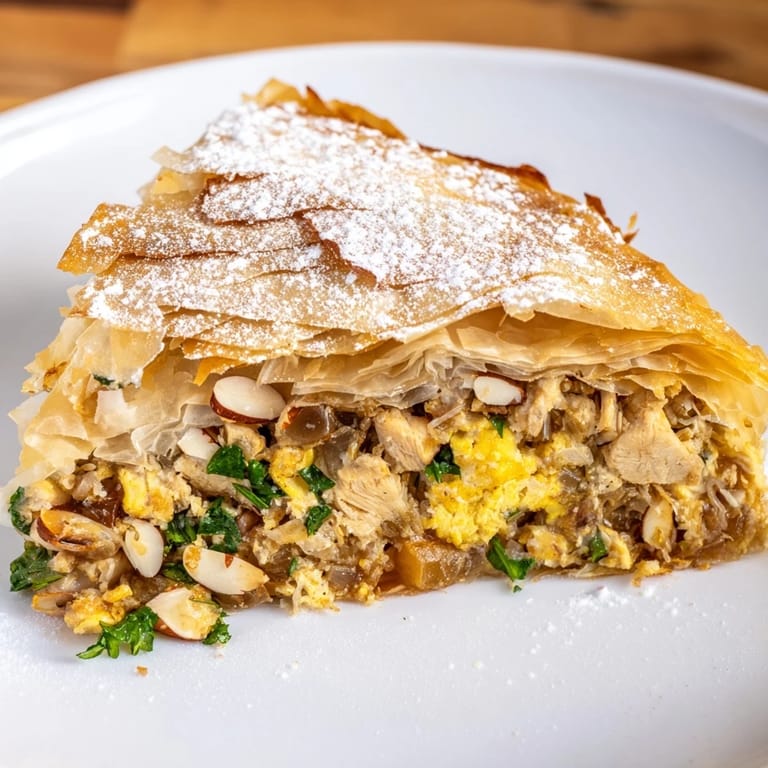
Save The first time I tasted pastilla, I was sitting on a low cushion in a Marrakech riad, watching my host's grandmother fold tissue-thin phyllo with a precision that made it look like meditation. The contrast hit me immediately—crispy pastry giving way to warm, spiced chicken, then that unexpected dusting of powdered sugar and cinnamon that somehow made everything taste more alive. Years later, I finally understood that this wasn't just a dish; it was a lesson in balance, the kind of lesson that only comes from cultures that have spent centuries perfecting the art of surprising people's mouths.
I made this for a dinner party on a rainy November evening, and I remember my neighbor nearly knocking over her wine glass when she bit into it. She'd grown up eating her mother's version in Fez and hadn't had one in twenty years. Watching her eyes close for a moment, watching her just sit with the taste—that's when I realized pastilla isn't showing off; it's remembering.
Ingredients
- Bone-in chicken thighs: They stay moist during the long simmer and give the filling body that boneless breasts never could.
- Saffron threads: Worth seeking out, though optional—soak them in warm water first so they release their golden, floral notes into the filling.
- Phyllo pastry: Keep it covered with a damp towel while you work or it'll turn to parchment on you; these sheets are delicate but tougher than they look.
- Toasted almonds: Toast them yourself if you can—the five minutes of heat changes them from ingredient to voice in the dish.
- Eggs: They bind everything and add a subtle richness; don't overcook them, or they'll turn grainy and lose that silky quality.
- Melted butter: For brushing phyllo and cooking eggs, it's your binding agent and your golden light all at once.
- Ground spices: This is the soul of the dish—ginger, cinnamon, turmeric, nutmeg working together like a conversation, not individual shouts.
Tired of Takeout? 🥡
Get 10 meals you can make faster than delivery arrives. Seriously.
One email. No spam. Unsubscribe anytime.
Instructions
- Build the flavor base:
- Heat olive oil in your Dutch oven and let the onions and garlic soften until they smell sweet and almost caramelized. This is your foundation, and taking two minutes here changes everything that follows.
- Toast the chicken in spices:
- Add your chicken and all the dry spices at once, letting them bloom in the heat for a minute before browning the meat. The spices won't taste raw this way; they'll taste like they've been somewhere and come back wise.
- Simmer until surrendered:
- Cover and let the chicken cook gently for 30 to 35 minutes, just below a boil. You'll smell the house change—the spices and stock and chicken becoming something none of them were alone.
- Shred and reduce:
- Once the chicken is falling off the bone, pull it out, let it cool enough to touch, then shred it. Strain the cooking liquid back into the pot and reduce it hard until it's concentrated and glossy, about a cup.
- Reunite and garnish:
- Return the shredded chicken to that reduced sauce, fold in the parsley, cilantro, and toasted almonds. This is the moment the filling becomes complete—taste it, adjust the salt, let it cool while you move on.
- Scramble eggs like you mean it:
- Melt butter gently, beat eggs with salt, then pour them in and stir slowly, almost distractedly, until they're soft and still a little wet. Fold these creamy curds into your cooled chicken mixture—they're the silk thread that holds everything together.
- Layer phyllo like you're building trust:
- Brush your pan with butter, then lay down phyllo sheet by sheet, brushing each one, letting the edges hang wild over the sides. This isn't precision work; this is meditation work.
- Fill and fold:
- Pour your chicken-egg mixture into the center, then fold those hanging phyllo edges back over it like you're tucking something precious in. Layer four more sheets on top, butter each one, tuck the edges down into the pan.
- Golden and resting:
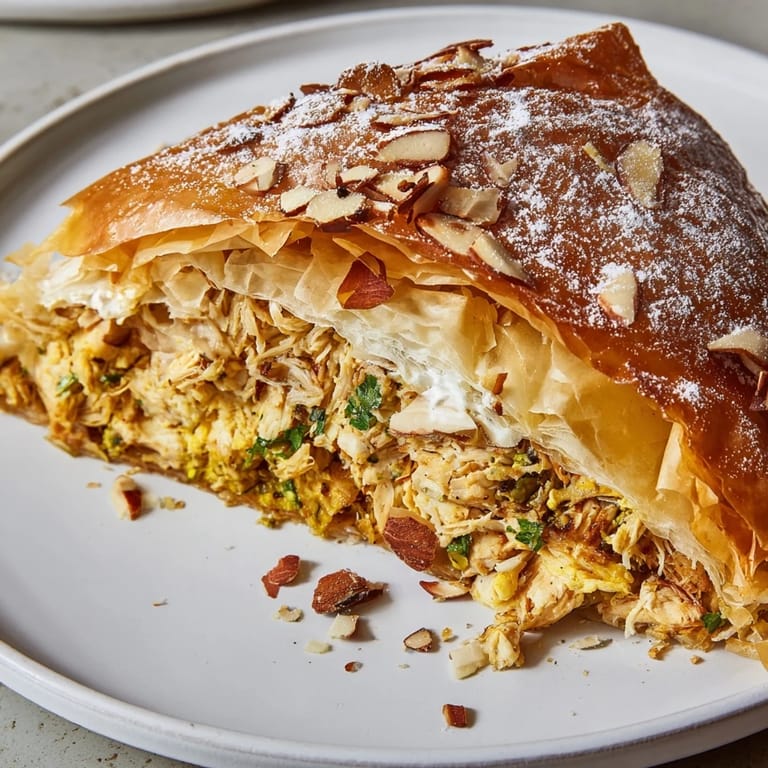
- Bake at 375°F for 35 to 40 minutes until the top is deep gold and you can hear it crackle if you lean close. Let it rest for ten minutes—this matters, the structure needs that breath.
- The final gesture:
- Dust the whole thing generously with powdered sugar and cinnamon. This isn't garnish; it's the punctuation mark that makes the sentence mean something different.
 Save
Save There's a moment, right after you pull pastilla from the oven, when the whole kitchen stops and holds its breath. The crust is still crackling, the kitchen smells like spices and butter and something ancient, and you haven't cut into it yet, so it's still perfect, still full of promise. That moment is why we cook.
The Sweet-Savory Truth
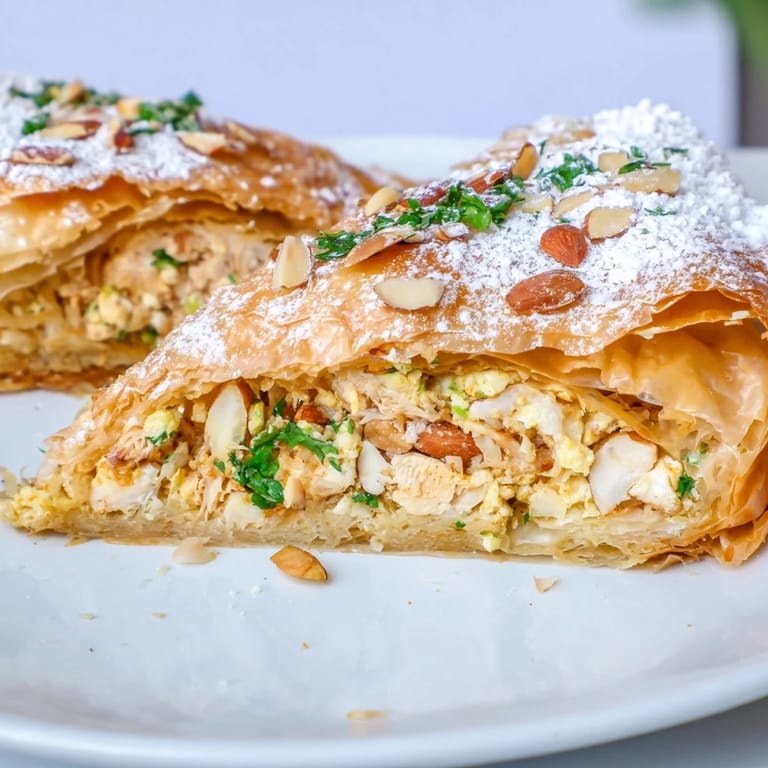
The powdered sugar and cinnamon on top aren't random—they're a statement. In Moroccan cooking, sweet and savory aren't enemies; they're partners who finish each other's sentences. When you bite through that sugared crust into the spiced chicken and egg, your mouth doesn't know whether to expect dessert or dinner, and that confusion is exactly the point. It wakes you up. It makes you taste things you've tasted a thousand times as if for the first time.
Why Phyllo Matters Here
Phyllo is the difference between a pie and pastilla. Those paper-thin sheets, when layered and buttered and baked, create a texture that's almost impossible to describe to someone who hasn't experienced it—it shatters and sings and somehow stays tender all at once. It's also forgiving, more than people think. It tears, you fix it. It sticks, you dust it with a little flour. It wants to work with you; you just have to respect it enough to keep it covered while you're not using it.
Variations and Moments
Some cooks add dried apricots or dates to the filling, and they're not wrong—that extra sweetness catches you off guard in the best way. Some use pigeon instead of chicken, which is traditional and richer and harder to find. Some add a pinch of orange zest to the egg mixture, which is subtle but changes the whole mood of the dish. The bones of the recipe are strong enough to let you play.
- If you can't find phyllo, thin sheets of pastry or even crispy wonton wrappers will work in a pinch, though the result will be different.
- Make the filling a day ahead and keep it covered in the refrigerator—it'll actually taste better, and your day-of stress will evaporate.
- Serve this with a bright salad and mint tea, and watch how the meal suddenly feels like a conversation instead of just eating.
 Save
Save Pastilla teaches you that the most impressive dishes often come from the willingness to hold two opposite things in your mouth at the same time. Make this, and you'll understand why people remember meals for decades.
Recipe FAQs
- → What type of meat works best for this dish?
Traditionally made with pigeon, boneless chicken thighs serve as a popular substitute due to their tenderness and flavor.
- → How is the filling prepared before baking?
The filling combines spiced, shredded meat with toasted almonds, fresh herbs, and softly scrambled eggs for richness and texture.
- → What pastry is used in this dish?
Thin layers of phyllo pastry are brushed with butter and layered carefully to create a crisp, flaky crust.
- → How is the balance of sweet and savory achieved?
A sprinkle of powdered sugar and cinnamon atop the baked pie introduces a subtle sweetness balancing the spiced filling.
- → Can the filling include dried fruits?
For added depth, chopped dried apricots or dates can be mixed into the filling to enhance its complexity and texture.