 Save
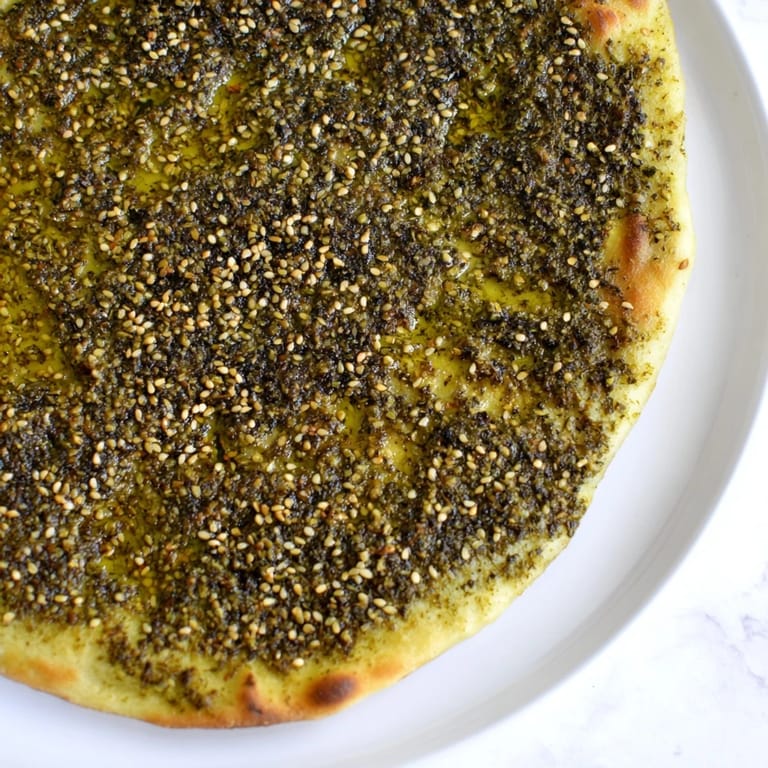
Save The first time I truly understood zaatar bread wasn't from a recipe—it was at a small bakery in Beirut where the smell hit me before I even opened the door. That herbaceous, almost citrusy aroma mixed with toasted sesame and warm olive oil made me stop in my tracks. Years later, I realized I could recreate that exact moment in my own kitchen, and now whenever I pull a batch from the oven, I'm transported back to that narrow street and the baker's knowing smile when I asked for just one more piece.
I made these for a dinner party once when I realized twenty minutes before guests arrived that I hadn't prepared bread. Instead of panicking, I mixed the dough while catching up on the phone, and by the time everyone walked through the door, four golden rounds were cooling on the counter. My friend Sarah broke off a piece, closed her eyes, and said, "Where have you been hiding this?" That question made me realize it's not just bread—it's a conversation starter.
Ingredients
- All-purpose flour (2 cups): The foundation that holds everything together; I've learned that slightly older flour absorbs water differently than brand-new bags, so trust your feel more than strict measurements.
- Instant dry yeast (1 teaspoon): Room temperature matters here—cold yeast wakes up slowly, so I always let mine sit for a moment before mixing.
- Sugar (1 teaspoon): This tiny amount feeds the yeast and helps the dough brown beautifully; don't skip it thinking it won't matter.
- Salt (3/4 teaspoon): The flavor anchor that makes the bread taste like itself rather than blank canvas.
- Olive oil (2 tablespoons for dough, 1/3 cup extra virgin for topping): There's a difference—use regular olive oil for the dough and save your good stuff for the top where you'll actually taste it.
- Warm water (2/3 cup): Warm means you can hold your finger in it comfortably; too hot kills the yeast, too cold and it sulks.
- Zaatar spice blend (1/4 cup): This is where the magic lives—a blend of dried thyme, sumac, and sesame that tastes ancient and alive all at once.
- Toasted sesame seeds (2 tablespoons): Buy them already toasted if you can; it saves a step and ensures they're nutty, not raw.
Tired of Takeout? 🥡
Get 10 meals you can make faster than delivery arrives. Seriously.
One email. No spam. Unsubscribe anytime.
Instructions
- Mix the foundation:
- Combine flour, yeast, sugar, and salt in a large bowl, then pour in your olive oil and gradually add warm water while stirring. The dough will be soft and slightly sticky—this is exactly right. If it feels like stiff clay, add a tablespoon more water.
- Build the strength:
- Knead for 5 to 7 minutes on a lightly floured surface until the dough becomes smooth and elastic, springy under your palms. You'll feel when it shifts from shaggy to silky.
- Let it rest and rise:
- Place the dough in a lightly oiled bowl, cover it with a damp cloth, and find a warm corner of your kitchen—a sunny windowsill works beautifully. After about an hour, it should have doubled in volume and be puffy with potential.
- Prepare your stage:
- Preheat your oven to 220°C (425°F) and line two baking sheets with parchment paper. This step prevents sticking and gives you the crispy edges you're after.
- Shape and rest:
- Divide the dough into four equal pieces, roll each into a ball, then flatten gently into a round about 6 to 7 inches across. For an even fluffier result, let these rounds rest for 10 minutes before adding the topping.
- Make the magic paste:
- Mix zaatar, toasted sesame seeds, and extra virgin olive oil in a small bowl until you have a textured paste. Taste it—this is your moment to adjust the flavors before it hits the bread.
- Dress the bread:
- Spread the zaatar mixture generously and evenly over each round, leaving a small border at the edges so it doesn't burn. The olive oil will sizzle and deepen the colors as it bakes.
- Bake until golden:
- Bake for 12 to 15 minutes until the breads are golden and the edges are just starting to crisp. The kitchen will fill with that smell you've been chasing.
- Serve with intention:
- Warm or at room temperature, with labneh, olives, hummus, or fresh vegetables. Tear into it while it's still warm if you can.
 Save
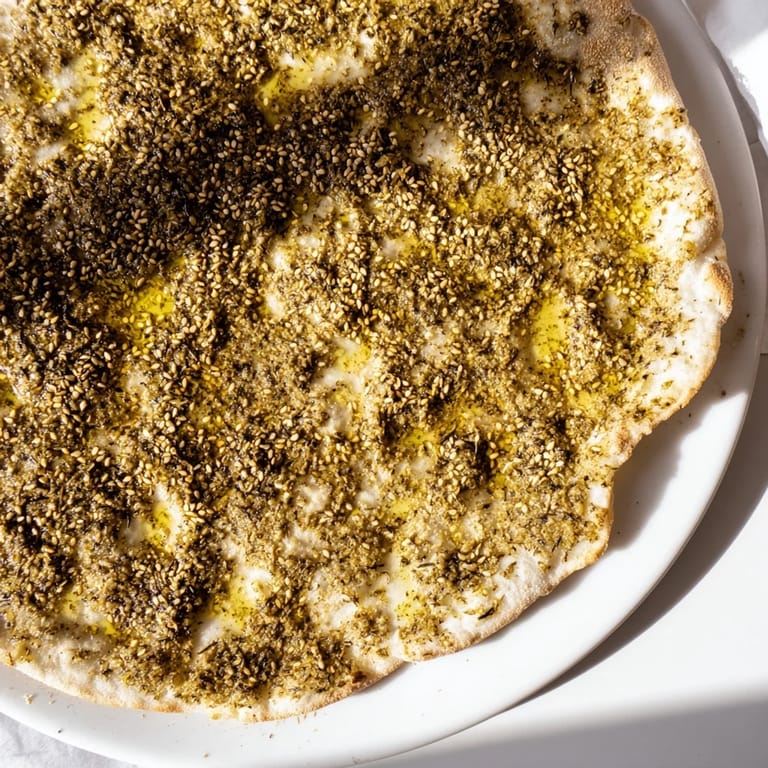
Save There's a moment right after you pull these from the oven when someone walks into the room and stops mid-sentence because the smell has done something to their brain. That's when you know you've made something that reaches beyond hunger. It becomes a reason to gather, to slow down, to remember why food matters.
The Zaatar Difference
Zaatar isn't just a topping—it's a story in a jar. Made from wild thyme, sumac, and sesame, it carries the flavor of hillside harvests and ancient trade routes. The sumac gives it that subtle tartness that makes your mouth wake up, while the thyme brings an earthiness that feels both comforting and sophisticated. Once you start cooking with it, you'll find yourself sprinkling it onto eggs, yogurt, and vegetables, discovering new reasons to use it.
Timing and Temperature
Bread-making looks intimidating until you realize it's just flour, water, and time working together. The 220°C oven temperature is hot enough to give you that golden crust without burning the zaatar on top—it's the sweet spot where magic happens in about 15 minutes. If your oven runs cool, add a few extra minutes and watch carefully. If it runs hot, start checking around the 12-minute mark. Every oven has its own personality, and learning yours is part of becoming confident in the kitchen.
Variations and Serving Suggestions
This is where creativity takes over. Some mornings I add a pinch of chili flakes for heat, other times I brush the finished bread with more olive oil for extra richness. You can serve it alongside hummus, baba ganoush, or creamy labneh—or just eat it plain with tea and conversation. The beauty of zaatar bread is that it knows how to play well with others while also standing perfectly fine on its own.
- For a spicy version, mix in a pinch of Aleppo pepper or red chili flakes to the zaatar topping before spreading.
- Try brushing the warm bread with a little more olive oil right out of the oven for extra silkiness.
- Leftovers freeze beautifully and can be warmed gently in a low oven to taste almost as good as fresh.
 Save
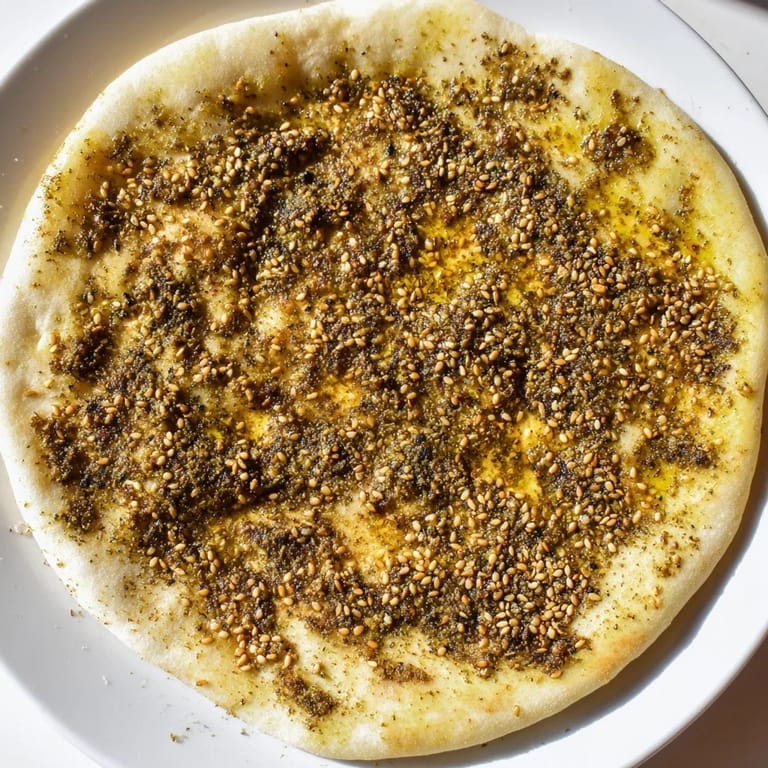
Save This bread is a reminder that the simplest things often carry the most flavor. Make it when you have time to appreciate the process, share it with people you actually want to sit with, and let the kitchen do what it does best.
Recipe FAQs
- → What is zaatar and how does it affect the flavor?
Zaatar is a Middle Eastern blend of herbs, sesame seeds, and spices that adds a tangy, nutty, and aromatic flavor to the bread.
- → Can the dough be made ahead of time?
Yes, the dough can be prepared and left to rise in the refrigerator overnight for convenience and enhanced flavor.
- → What is the best way to achieve a crispy crust?
Baking at a high temperature (around 220°C/425°F) on parchment paper helps create a crisp, golden crust.
- → Are there any common allergens in this bread?
Yes, it contains gluten from wheat and sesame seeds, so those with allergies should take caution.
- → How can I add a spicy kick to the flavor?
A pinch of chili flakes mixed into the zaatar topping provides a pleasant subtle heat.