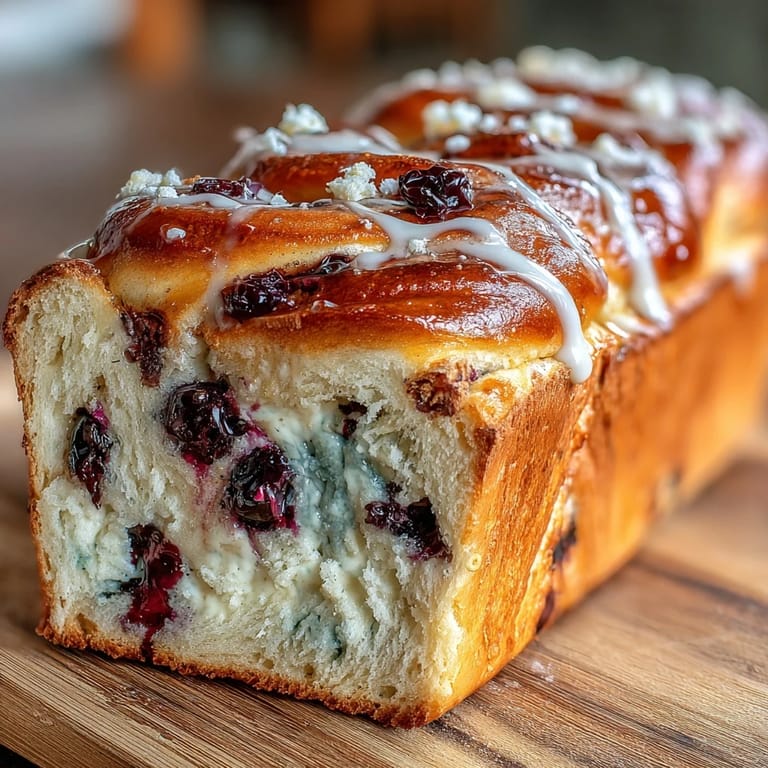
 Save
Save There's something about the smell of sourdough baking that makes even a quiet Tuesday morning feel special. I stumbled into this lemon blueberry swirl bread on a whim—I'd been staring at a container of my starter, knowing it deserved something more interesting than plain white loaves, and I had a lemon sitting on the counter that was practically begging to be used. The combination felt obvious once I thought about it, but the execution took a few tries to get right, especially figuring out how to keep those blueberries from sinking to the bottom.
I brought a loaf to my neighbor's book club last spring, sliced it still slightly warm, and watched people's faces light up when they bit into those pockets of jammy blueberry. Someone asked if I'd bought it from a bakery, and I remember feeling that small, unreasonable pride that comes from homemade bread being mistaken for professional. It became the thing people started requesting by name.
Ingredients
- Bread flour (3 cups / 370 g): This matters more than you'd think—all-purpose won't give you the same structure for holding all that fruit and swirl without the loaf collapsing.
- Active sourdough starter (1/2 cup / 120 g at 100% hydration): Make sure yours is bubbly and fed at least 4–6 hours before mixing; a sluggish starter means a sluggish rise.
- Whole milk (1 cup / 240 ml, lukewarm): The fat in whole milk makes the crumb tender in a way skim milk can't quite achieve.
- Unsalted butter (1/4 cup / 55 g, softened): Softened, not melted—this is the only way to incorporate it smoothly without overworking the dough.
- Granulated sugar (1/4 cup / 50 g): This feeds your starter and adds slight sweetness without making the bread taste like cake.
- Egg (1 large): Helps bind everything and gives the crumb a silky texture.
- Fine sea salt (1 tsp): Enhances flavor and keeps gluten development in check—don't skip it.
- Lemon zest (from 1 lemon): Fresh zest is non-negotiable here; bottled loses its punch during the long rise.
- Fresh or frozen blueberries (1 cup / 150 g): Frozen actually works better because they hold their shape better than fresh when cooked into the filling.
- Granulated sugar for swirl (1/4 cup / 50 g): This sweetens the fruit filling without needing a bunch of other ingredients.
- Lemon juice (2 tbsp): Fresh lemon juice only—the brightness matters too much to use bottled here.
- Cornstarch (1 tbsp): Thickens the blueberry filling so it doesn't soak into your dough and make it soggy.
- Powdered sugar for glaze (1/2 cup / 60 g, optional): Adds a subtle sweetness and looks beautiful when drizzled.
Tired of Takeout? 🥡
Get 10 meals you can make faster than delivery arrives. Seriously.
One email. No spam. Unsubscribe anytime.
Instructions
- Cook the blueberry filling first:
- Combine blueberries, sugar, and lemon juice in a small saucepan over medium heat and stir gently until the berries start bursting and release their juice, about 5–7 minutes. You'll hear them pop slightly and the mixture will darken—that's exactly right. Stir in cornstarch and cook for another minute until everything thickens into a jammy consistency, then spread it on a plate to cool completely while you make the dough (this is crucial; warm filling will make your dough sticky).
- Mix your dough:
- In a large bowl or stand mixer, combine lukewarm milk, your active starter, softened butter, sugar, egg, salt, and lemon zest and mix until everything is roughly combined. Gradually add flour while mixing, then knead for 8–10 minutes until the dough is smooth and elastic—you should be able to stretch it gently without it immediately tearing back.
- Let it rise its first time:
- Place your dough in a lightly greased bowl, cover it loosely with a damp cloth or plastic wrap, and let it sit at room temperature until it's roughly doubled in size, somewhere between 4–6 hours depending on how active your starter is and how warm your kitchen is. You'll know it's ready when you poke it gently and the indent springs back slowly instead of immediately.
- Shape and fill:
- Turn the dough out onto a floured surface and gently roll it into a rectangle about 9 inches wide by 16 inches long—don't stress about being exact. Spread your cooled blueberry filling evenly over the dough, leaving about a 1-inch border on all sides so the filling doesn't squeeze out when you roll.
- Roll and place:
- Starting from one of the short ends, roll the dough tightly into a log, pinching the seam as you go to keep it sealed. Place it seam-side down in a greased 9x5-inch loaf pan.
- Second rise:
- Cover the pan and let it rise at room temperature for 1–2 hours until the dough is puffy and rises about an inch above the rim of the pan. This is when your kitchen will smell absolutely incredible.
- Bake:
- Preheat your oven to 350°F (175°C) and bake for 35–40 minutes until the top is golden brown and the loaf sounds hollow when you tap it on the bottom. If the top starts browning too quickly, loosely tent it with foil.
- Glaze (optional):
- While the bread cools, whisk together powdered sugar and 1–2 tablespoons of fresh lemon juice until it reaches a drizzle-able consistency, then drizzle it over the cooled loaf for a subtle sweetness and shine.
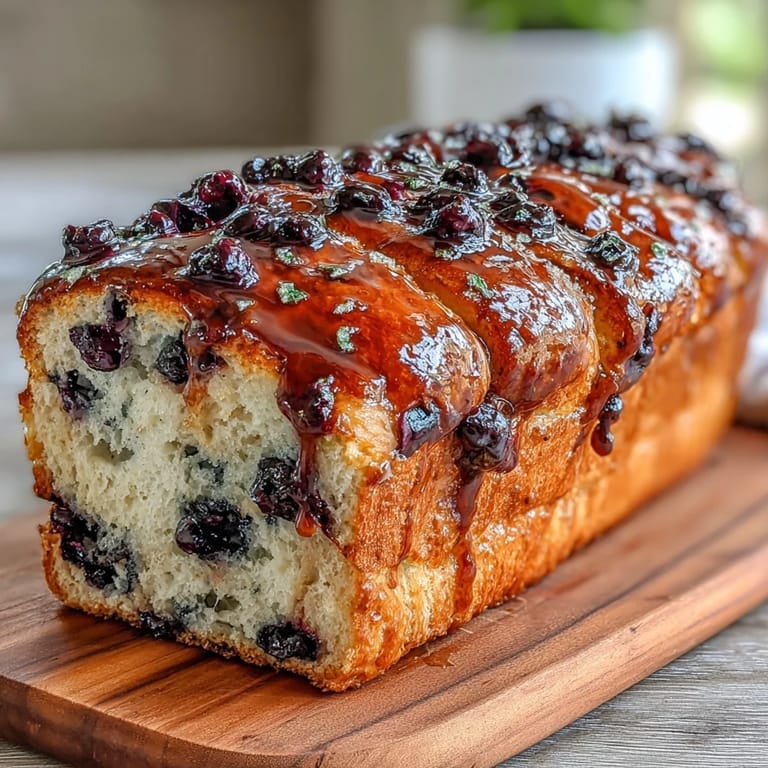 Save
Save There was a morning last summer when my partner brought this bread to a coffee meeting and came home saying someone asked for the recipe—I felt like I'd just received a small validation that this wild sourdough experiment had actually worked out. That's when I realized this bread had become more than just breakfast; it was the thing I made when I wanted someone to know I'd taken time with something.
Why Your First Rise Takes So Long
Sourdough rises on its own timeline, not the clock's timeline, which is both liberating and slightly maddening. Your starter's strength, the ambient temperature, humidity, and even the phase of the moon (okay, maybe not that one) all factor in. I've had doughs that doubled in 4 hours on a warm afternoon and ones that needed 7 hours on a chilly day. The point is to watch the dough itself, not set a timer and hope for the best—poke it gently and trust what you feel.
The Swirl Technique That Actually Works
Most swirled breads I've seen just have fruit sunk to the bottom, which is disappointing and wasteful. The secret is rolling the dough thin enough that you can spread the filling all the way across without using so much that it leaks out, and rolling it tightly enough that the spiral stays intact as the bread rises and bakes. Think of it like rolling a cinnamon roll—not casual, but not tense either.
Variations and Storage
Once you master the basic technique, you can swap the blueberries for raspberries, blackberries, or even a combination—just adjust the sugar slightly based on how tart the fruit is. The bread keeps for three days wrapped in plastic at room temperature, and it actually toasts beautifully on day two if you want to extend its life with better texture. I've also frozen this bread successfully for up to a month, thawed at room temperature, and the crumb stays tender.
- If you're using raspberries instead of blueberries, cook them a bit less aggressively since they break down faster and can become too soupy.
- A small offset spatula or butter knife makes spreading the blueberry filling much easier than trying to do it with the back of a spoon.
- Lightly scoring the top of the loaf before baking gives it room to expand without splitting randomly in odd places.
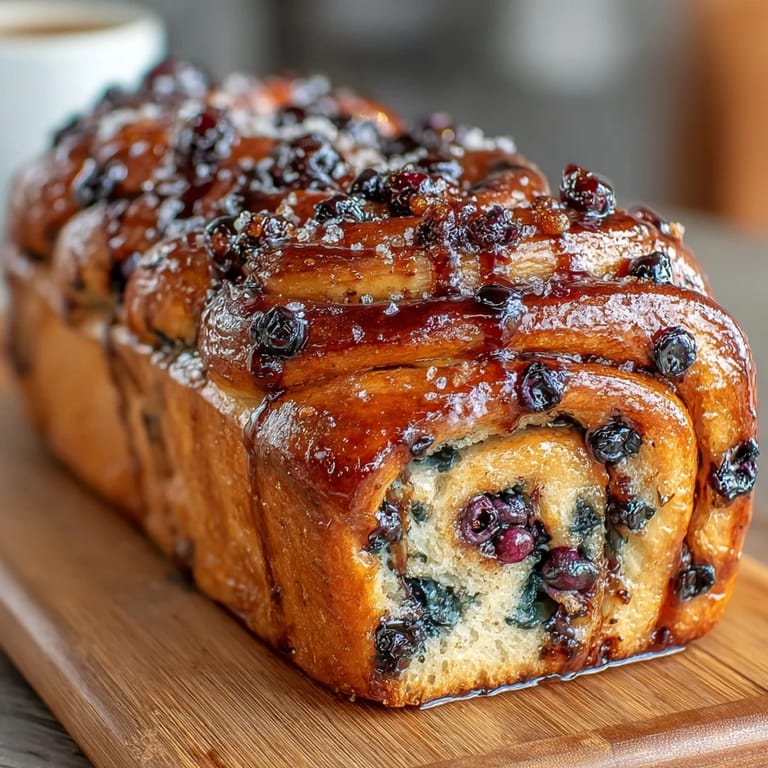 Save
Save Making this bread has taught me that the time investment in sourdough is actually time well spent, especially when it means producing something beautiful enough to share. It's the kind of recipe that rewards your patience by tasting like you actually know what you're doing.
Recipe FAQs
- → How do I achieve the swirl effect without mixing the berries into the dough?
Roll the dough into a rectangle, evenly spread the cooled blueberry lemon mixture leaving a border, then roll tightly before placing in the pan. This keeps the swirl defined.
- → Can frozen blueberries be used instead of fresh ones?
Yes, frozen blueberries work well. Thaw and drain excess juice before cooking the swirl to avoid a soggy dough.
- → What is the best temperature for proofing this dough?
Room temperature, around 70-75°F, allows the sourdough starter to activate gently for the 4–6 hour first rise and the 1–2 hour second rise.
- → How should the bread be stored after baking?
Store at room temperature wrapped in a clean cloth or airtight container for up to two days. Toast slices if stored longer to refresh texture.
- → Is the glaze necessary and how does it affect flavor?
The glaze is optional and adds a delicate sweetness with extra lemon zing, enhancing the overall brightness without overpowering.