 Save
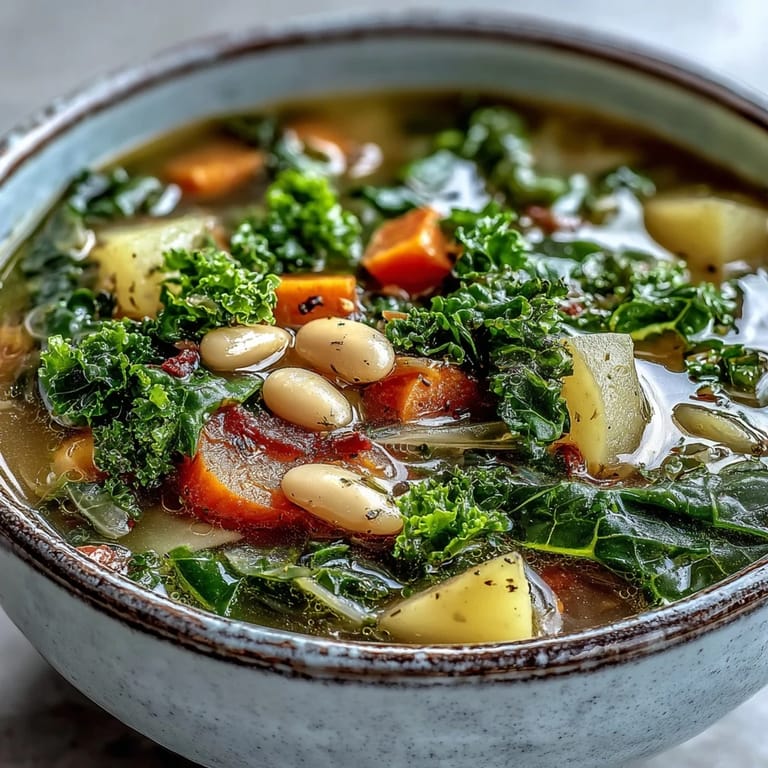
Save My neighbor stopped by on a gray Tuesday morning with a bundle of kale from her garden, and honestly, I wasn't sure what to do with it. She mentioned her grandmother's soup, something simple but filling, and by that afternoon I'd created this version—a recipe that's become my go-to when I want something that feels both nourishing and deeply comforting. The beauty of it is how the earthiness of the kale plays against the sweetness of the root vegetables, all bound together with creamy beans. Every bowl tastes like someone actually cared enough to slow down and cook.
I made this for my book club one winter, and someone asked for the recipe before they'd even finished their bowl—that's when I knew it was a keeper. The conversation flowed easier that night, everyone relaxed into their chairs, and somehow a humble soup became the reason people lingered an extra hour. That's the quiet power of a good, honest bowl of soup.
Ingredients
- Olive oil: Two tablespoons is enough to build flavor without making it heavy; I use a good quality one because you actually taste it here.
- Large onion: The foundation—letting it turn translucent teaches patience and builds sweetness that carries through the whole pot.
- Garlic cloves: Mince them small so they dissolve into the broth rather than being chunks you bite into.
- Carrots and celery: The holy trinity with onion, these create backbone; don't skip them even if you're tempted.
- Potato: Adds body and creaminess without cream, which I learned matters more than I expected.
- Kale: Remove those tough stems—I learned this the hard way—and chop the leaves into pieces you'd actually want to eat.
- Cannellini beans: Drain and rinse them thoroughly to reduce sodium and prevent a gummy soup.
- Vegetable broth: Low-sodium lets you control the salt, which gives you permission to taste as you go.
- Lemon juice: Just a tablespoon brightens everything at the end, making the whole thing sing instead of sit flat.
- Thyme and cumin: Thyme whispers, cumin adds warmth; together they make this taste like someone's grandmother is in your kitchen.
- Salt, pepper, and red pepper flakes: Season gradually and trust your palate over the recipe—that's where real cooking begins.
Tired of Takeout? 🥡
Get 10 meals you can make faster than delivery arrives. Seriously.
One email. No spam. Unsubscribe anytime.
Instructions
- Heat and sauté the aromatics:
- Pour olive oil into your pot over medium heat and let it shimmer before adding the chopped onion. You're listening for a gentle sizzle, not a violent hiss, and watching for that moment when the onion turns from opaque to golden and soft—about three minutes.
- Build the vegetable base:
- Stir in garlic, carrots, celery, and potato, letting them soften and get to know each other for five minutes. You'll notice the pot becomes fragrant and fuller somehow, as if the vegetables are already becoming soup.
- Introduce the kale:
- Add the chopped kale and stir for a couple minutes until it loses its raw look and begins to soften. It'll shrink dramatically, which always surprises people, but that's exactly what you want.
- Add the broth and spices:
- Pour in your vegetable broth, then scatter in the thyme, cumin, salt, pepper, and red pepper flakes if you're using them. Give everything a good stir so the spices aren't clumped in one corner.
- Simmer until tender:
- Bring to a boil, then lower the heat and let it bubble gently uncovered for twenty minutes. The vegetables soften, flavors meld, and your kitchen fills with the kind of smell that makes everyone ask what you're making.
- Finish with beans and brightness:
- Stir in the drained cannellini beans and let them warm through for five minutes—they don't need long since they're already cooked. Squeeze in the lemon juice last, taste it, adjust your seasoning, and serve immediately.
 Save
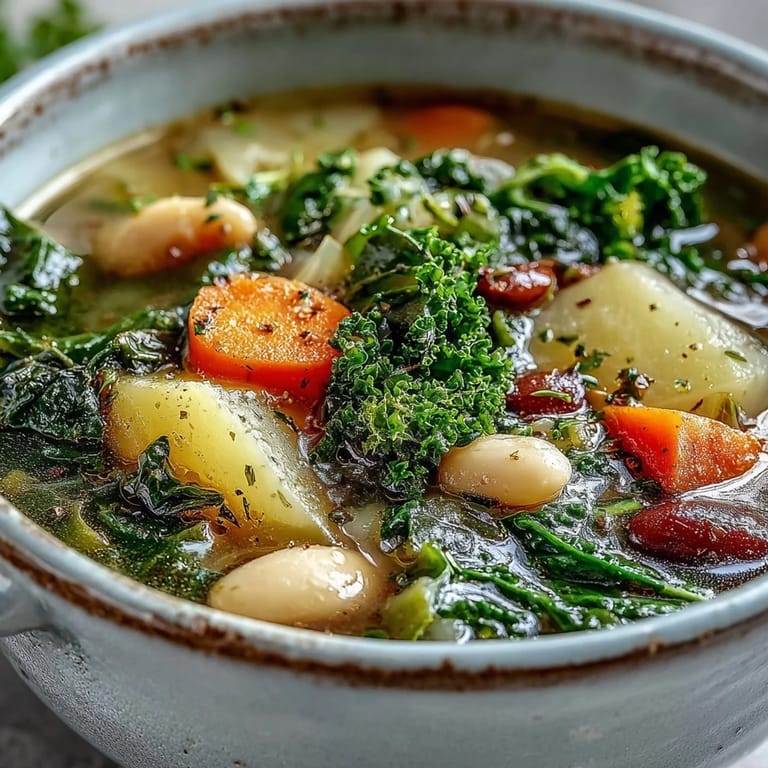
Save There was one afternoon when I made this soup for my sister after she'd had surgery, and she ate two bowls without saying anything—just quietly eating, slowly getting stronger. That bowl of soup wasn't about nutrition facts or cooking technique; it was about showing up for someone. It reminded me that sometimes the most important recipes are the ones that let people know they're cared for.
Timing and Rhythm
The prep work takes about fifteen minutes if you're not rushed, and I actually enjoy the chopping part because it's meditative—your hands know what to do while your mind settles. Once everything hits the pot, you're mostly just waiting, which means you can set a timer and actually sit down instead of hovering. The soup won't demand much from you after that first burst of activity, which is why it's perfect for afternoons when you want something wholesome without stress.
Making It Your Own
This recipe isn't precious about substitutions, which I appreciate because real cooking happens in your kitchen with what you have. If you don't have celery, add more carrot; if kale feels too bitter, swap in spinach or chard; if you're not vegetarian, a handful of cooked shredded chicken transforms it into something heartier. I've made it with chickpeas instead of cannellini beans, and it was equally good—just a slightly different texture and earthiness.
Serving and Storage
Serve it hot with crusty bread, a drizzle of good olive oil, or a sprinkle of Parmesan if you're not vegan—it rounds everything out beautifully. This soup is even better the next day after flavors have settled and deepened, and it keeps in the fridge for about four days or freezes well for a month if you want to make a double batch.
- Cool it completely before freezing so condensation doesn't create ice crystals.
- Reheat gently on the stove rather than microwaving, which helps the flavors integrate again.
- Add fresh lemon juice when you reheat because that brightness fades over time.
 Save
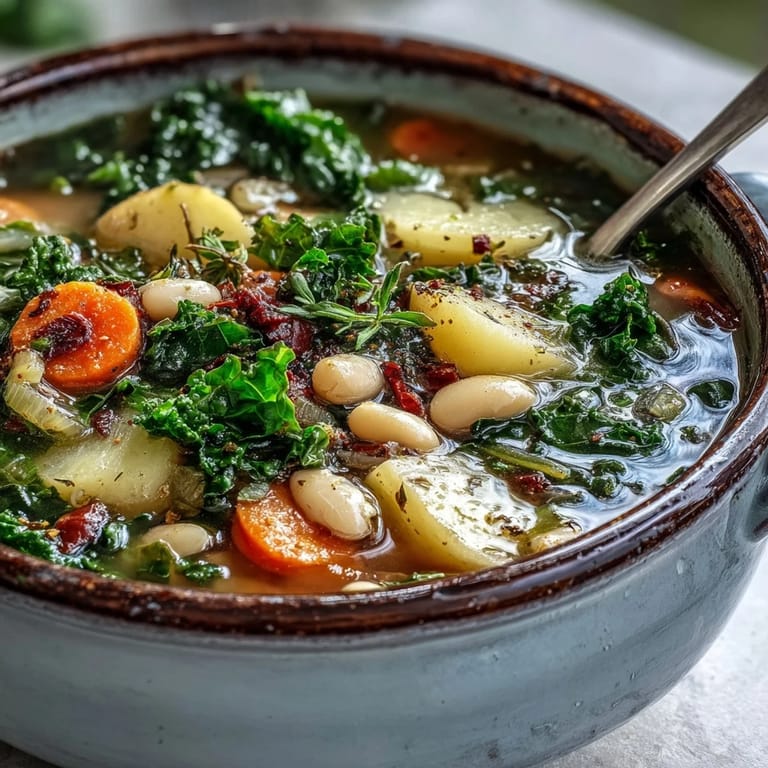
Save This soup has become my answer to so many things—a quiet lunch, a gift, a way to use what's growing, a moment to slow down. Make it when you need something real, something that nourishes both the body and the kitchen itself.
Recipe FAQs
- → Can I make this kale soup ahead of time?
Absolutely. This soup actually tastes better the next day as flavors meld together. Store in an airtight container in the refrigerator for up to 4 days, or freeze for up to 3 months.
- → What type of kale works best?
Curly kale or Lacinato (dinosaur) kale both work beautifully. Just be sure to remove those tough stems before chopping the leaves into bite-sized pieces.
- → Can I use dried beans instead of canned?
Yes. Soak 1 cup dried cannellini beans overnight, then cook until tender before adding to the soup. This will extend your total preparation time significantly.
- → How do I prevent the kale from becoming too mushy?
Add the kale during the last 15-20 minutes of simmering. This keeps the texture pleasant while ensuring the leaves become tender and easy to eat.
- → What can I serve alongside this soup?
Crusty gluten-free bread, crackers, or a simple side salad make excellent accompaniments. For added protein, consider grilled chicken or roasted chickpeas on top.
- → Is this soup freezer-friendly?
Definitely. Portion cooled soup into freezer-safe containers, leaving some room for expansion. Thaw overnight in the refrigerator before reheating gently on the stove.