 Save
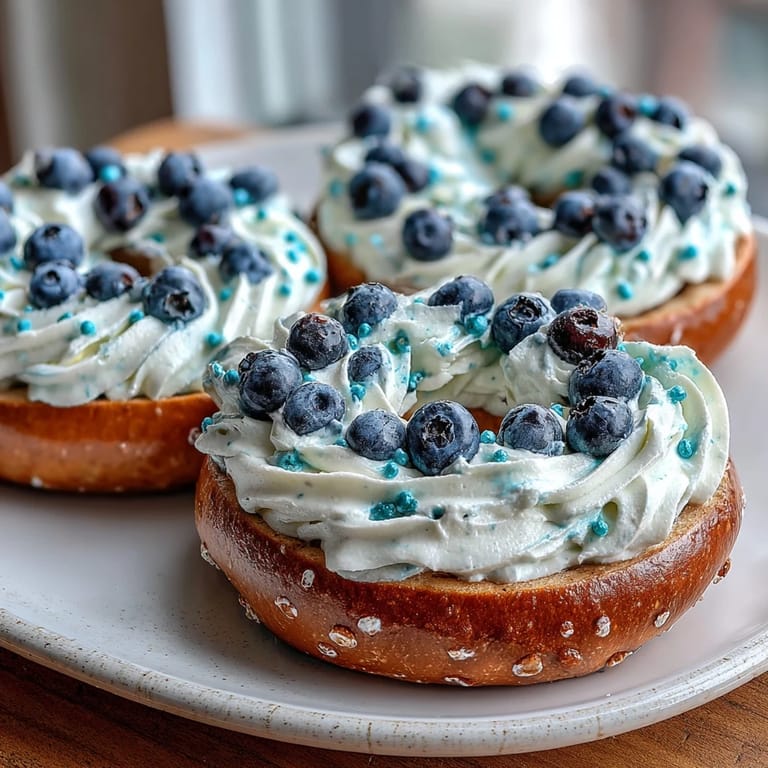
Save My kitchen smelled like a bakery the morning I first tried making protein bagels—that yeasty warmth mixed with something unexpectedly modern. I'd been on a mission to stop buying those sad, rubbery protein snacks at the coffee shop, and it hit me while I was kneading dough: why not bagels? The blueberries burst in my fingers as I worked them in, staining everything purple, and somehow that mess felt like progress. That first batch came out golden and chewy, and when I topped them with tangy Greek yogurt frosting, my partner actually asked for the recipe instead of just eating one.
I made these for a Sunday brunch with friends who are always skeptical about "healthy" versions of comfort foods. They were sitting around my kitchen island, coffee in hand, waiting to be impressed or politely lie. The second they bit through that chewy bagel and hit the tart frosting with those pockets of jammy blueberry, the room went quiet—the good kind of quiet. Someone asked if I was selling them, and I knew I'd nailed something.
Ingredients
- Bread flour (2 cups): This gives you structure and chew; all-purpose flour will make them cake-like instead.
- Unflavored whey protein powder (1 cup): Choose a quality brand with minimal additives so it doesn't overpower the dough or add weird aftertastes.
- Granulated sugar (2 tbsp): Feeds the yeast so it wakes up and does its job properly.
- Instant dry yeast (2 ¼ tsp): Don't skip the warmth check—water that's too hot kills it, too cold and it sleeps forever.
- Salt (½ tsp): Balances everything and strengthens gluten development.
- Warm water (¾ cup): Around 110°F is the magic number; use a thermometer if you have one.
- Fresh or frozen blueberries (1 cup): Frozen is honestly better here because they don't bleed color everywhere during kneading.
- Neutral oil (1 tbsp): Makes the dough tender and keeps it from sticking to your hands.
- Water for boiling (6 cups): This seems like a lot but it keeps the temperature stable during the boil.
- Honey or maple syrup (2 tbsp): Adds subtle sweetness to the crust and helps browning.
- Baking soda (1 tbsp): This is the secret to chewy bagels—it raises the pH so the outside gets that distinct texture.
- Greek yogurt (¾ cup): Full-fat tastes creamier, but 2% works if you want to cut calories slightly.
- Powdered sugar (2 tbsp): Sweetens the frosting without grittiness.
- Vanilla extract (½ tsp): A tiny amount that makes the frosting taste more sophisticated.
Tired of Takeout? 🥡
Get 10 meals you can make faster than delivery arrives. Seriously.
One email. No spam. Unsubscribe anytime.
Instructions
- Mix your dry foundation:
- Combine the bread flour, protein powder, sugar, yeast, and salt in a large bowl and stir until everything is evenly distributed. This prevents pockets of unmixed protein powder later.
- Bring it together:
- Make a well in the center, pour in warm water and oil, then mix with a spoon until you have a shaggy, rough dough that's come together but still looks a bit messy.
- Knead it smooth:
- Turn the dough onto a lightly floured surface and knead for 8 to 10 minutes until it becomes smooth, elastic, and springs back when you poke it. Your hands should feel the transformation from sticky to silky.
- Fold in the blueberries:
- Gently knead in the blueberries, distributing them evenly throughout the dough. They'll stain your hands purple, but that means you're doing it right.
- Let it rise:
- Place the dough in a lightly greased bowl, cover it with a clean kitchen towel, and let it sit in a warm spot for about 45 minutes until it roughly doubles in size. A turned-off oven with the light on works perfectly.
- Shape your bagels:
- Preheat your oven to 375°F and line a baking sheet with parchment paper. Punch down the dough, divide it into 6 equal pieces, and roll each into a ball. Poke a hole in the center with your finger, then gently stretch it into a bagel shape with a hole about the size of a quarter.
- Prepare the boil:
- Bring 6 cups of water, honey, and baking soda to a rolling boil in a wide, shallow pot. This is where bagels get their signature chewy exterior.
- Boil briefly:
- Working with one or two bagels at a time, drop them into the boiling water and boil for 45 seconds per side. They should sink, then float to the top—that's your cue to flip.
- Transfer and bake:
- Use a slotted spoon to lift each bagel onto the prepared baking sheet. Bake for 20 to 25 minutes until they're deep golden brown and sound hollow when tapped.
- Make the frosting:
- While bagels bake, whisk together Greek yogurt, powdered sugar, and vanilla extract in a small bowl until smooth and creamy. Taste it and add more sugar if you like it sweeter.
- Finish:
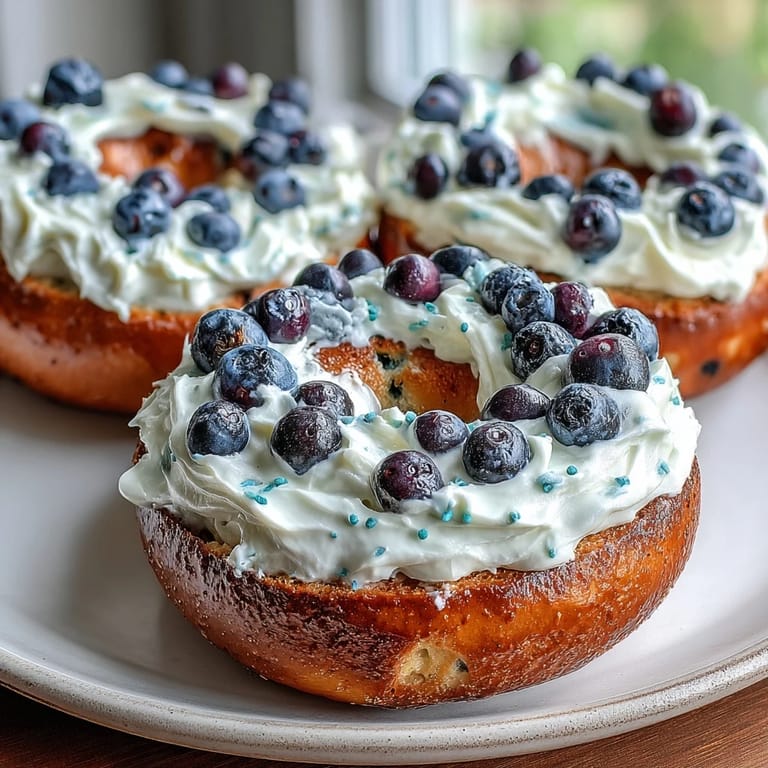
- Once bagels are completely cool on a wire rack, spread or pipe the frosting generously on top and serve immediately.
 Save
Save There's something deeply satisfying about biting into a bagel you made with your own hands—that moment when you realize you've created something that tastes like a real breakfast, not a protein supplement pretending to be food. These bagels remind me that healthy eating doesn't have to mean sacrificing texture, flavor, or the joy of a proper meal.
The Protein Powder Question
The first time I added protein powder to dough, I was terrified it would taste chalky or bitter. I tested three different brands before finding one with a neutral flavor that didn't dominate the bagels. The quality of your protein powder matters here—cheap or overly flavored powders will show up in the final taste. Unflavored whey is your safest bet; it blends invisibly into the dough while delivering those grams of protein without announcing itself.
Why the Boil Works Its Magic
The boiling water and baking soda combination seems like an extra step, but it's actually the difference between chewy bagels and dense bread. The baking soda raises the pH of the dough's surface, which allows it to brown faster and develop that signature chewy exterior. The brief boil also creates a seal that traps steam during baking, keeping the inside tender while the outside gets crispy. Skip this step and you'll end up with something that tastes fine but won't have that unmistakable bagel texture.
Storage, Variations, and Last-Minute Wins
These bagels stay fresh for three days in an airtight container unfrosted, which means you can make a batch on Sunday and have breakfast sorted all week. The frosting is best applied right before eating so it stays creamy and doesn't absorb into the bagel. If you want to get fancy, add a pinch of lemon zest to the frosting for brightness, or sprinkle it on top after frosting for a pop of color and flavor.
- Frozen blueberries work even better than fresh because they hold their shape and don't bleed color.
- A sprinkle of lemon zest on the frosting right before serving feels gourmet and tastes incredible.
- These freeze beautifully unfrosted—just thaw and toast before adding frosting if you want them again in a few weeks.
 Save
Save Making these bagels taught me that protein doesn't have to taste like punishment, and breakfast doesn't have to be boring if you're willing to put in a little effort. They're the kind of recipe that makes you feel like you're taking care of yourself while actually enjoying what you're eating.
Recipe FAQs
- → How does boiling the bagels affect their texture?
Boiling the bagels briefly in a honey or maple syrup water bath creates a chewy crust and a soft interior, characteristic of traditional bagels.
- → Can frozen blueberries be used in the dough?
Yes, frozen blueberries can be added directly to the dough without thawing, helping to distribute bursts of flavor evenly.
- → What role does protein powder play in the dough?
Incorporating unflavored whey protein powder boosts the bagels’ nutritional value while maintaining a soft crumb and tender texture.
- → How should the Greek yogurt frosting be stored?
Keep the frosting refrigerated and apply it to bagels just before serving to maintain its creamy texture and freshness.
- → Is it possible to store bagels before frosting?
Yes, store unfrosted bagels in an airtight container for up to three days; frost them right before enjoying to preserve flavor and texture.