 Save
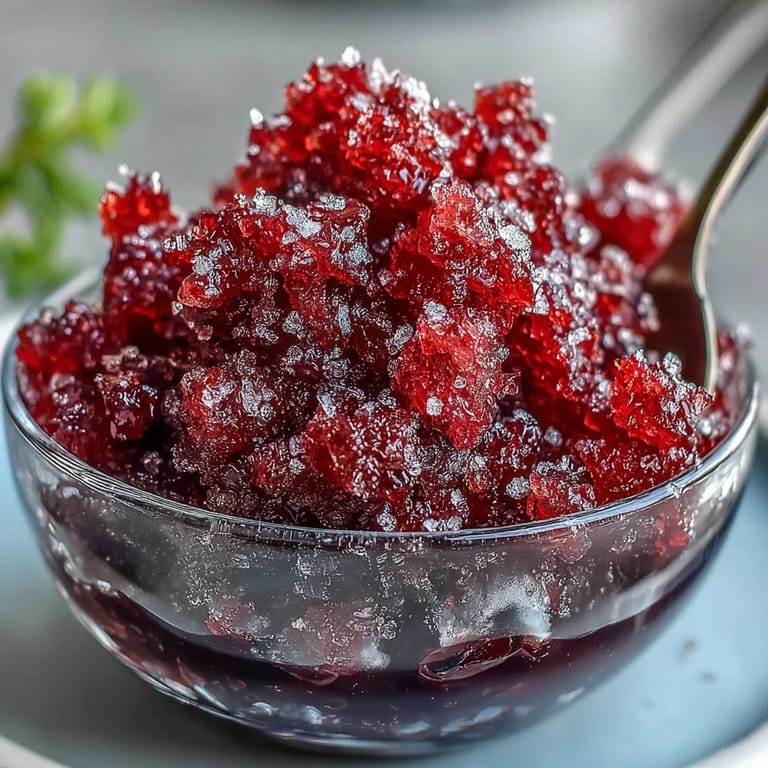
Save My first encounter with black currant granita happened on a sticky August afternoon when a friend arrived from Italy with a small container of homemade version tucked into her carry-on. The moment I tasted it, I understood why she'd gone through the trouble—that sharp, almost wine-like tartness followed by crystalline sweetness felt like summer itself had been frozen mid-sip. She laughed at my expression and said it was the easiest frozen dessert she made, which seemed impossible until she walked me through it. Now I make batches whenever I can find good black currants, and it's become the dessert I reach for when the heat makes everything feel heavy.
I served this to my partner on a night when we'd spent the day moving boxes into our new place, and the kitchen was the only cool room in the house. Watching him scrape the fork through the icy crystals and close his eyes at that first taste made all the effort feel worthwhile, even though the effort was minimal. It became our unofficial housewarming dessert after that, something we'd make whenever friends came by on hot evenings and we wanted something that felt both impressive and effortless.
Ingredients
- Fresh or frozen black currants, 500 g (about 3 cups): Frozen work beautifully if you can't find fresh, and they often have more concentrated flavor since they're picked at peak ripeness.
- Granulated sugar, 150 g (3/4 cup): This amount balances the black currants' natural tartness without making the granita cloyingly sweet.
- Water, 400 ml (1 2/3 cups): The ratio matters here—too little and you'll end up with a slushy texture, too much and it becomes icy rather than fluffy.
- Freshly squeezed lemon juice, 1 tablespoon: This brightens the currant flavor and adds a complexity that lifts the whole dessert.
Tired of Takeout? 🥡
Get 10 meals you can make faster than delivery arrives. Seriously.
One email. No spam. Unsubscribe anytime.
Instructions
- Prepare and rinse:
- Give your black currants a gentle rinse under cold water and remove any stems if you're using fresh ones. If frozen, you can go straight to the next step.
- Simmer the mixture:
- Combine the currants, sugar, and water in a medium saucepan and bring everything to a gentle simmer over medium heat. Stir occasionally for about 10 minutes—you'll notice the currants starting to burst and release their gorgeous deep color into the liquid.
- Cool and blend:
- Remove from heat and let it cool for a few minutes, just enough that it's safe to handle, then blend until completely smooth using a blender or immersion blender. The mixture should look like dark wine.
- Strain for silky texture:
- Pour the mixture through a fine-mesh sieve into a large bowl, pressing gently with the back of a spoon to extract every drop of liquid. You're separating the juice from the seeds and skins, which is what gives granita its signature smooth, crystalline texture.
- Add brightness:
- Stir in the lemon juice to taste—it should feel like a gentle spark of tartness running through the sweetness.
- Freeze with intention:
- Pour the strained mixture into a shallow metal baking dish (metal freezes more evenly than glass) and place it in the freezer. After 45 minutes, use a fork to scrape and break up the icy edges that form on the sides, then return it to the freezer.
- Fluff every 30-45 minutes:
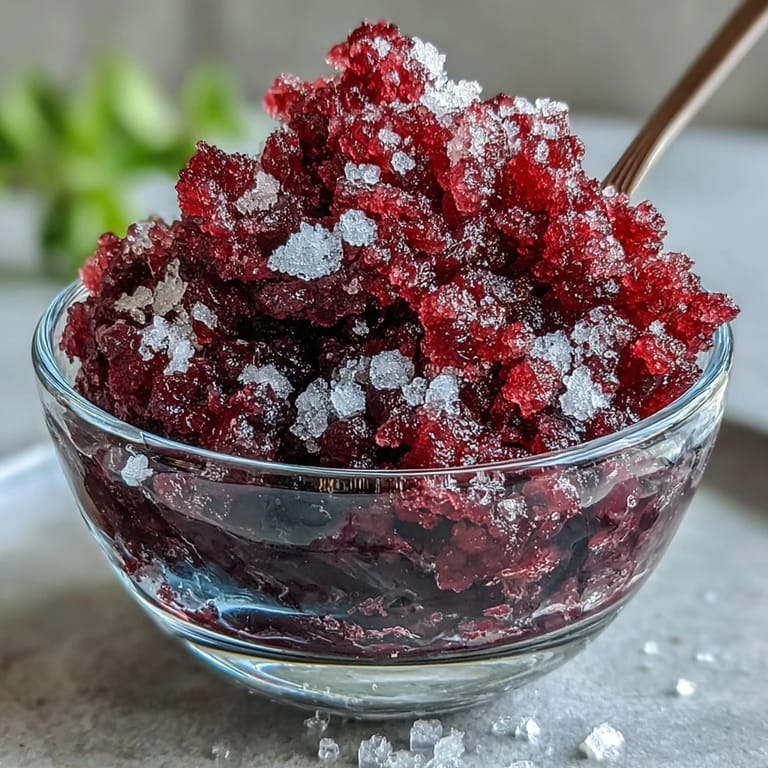
- This is the magic step that transforms a frozen block into fluffy crystals. Every 30 to 45 minutes, take the dish out and vigorously scrape the mixture with a fork, breaking up any large ice crystals and fluffing the whole thing. After about 4 hours total, you'll have a beautiful, light, snow-like consistency.
- Serve immediately:
- Scoop into chilled glasses or bowls right before serving to preserve that delicate, fluffy texture. If it's been sitting for a while, give it one final fluff with your fork.
 Save
Save There was a moment last summer when my nephew tasted this for the first time and couldn't quite believe something so good could be made at home. He kept asking if I'd bought it from somewhere fancy, which made me realize how much joy there is in that small shock of discovering simplicity can create something memorable. That's what black currant granita does—it proves that a handful of ingredients and patience can feel like a tiny celebration.
Making it Your Own
The base recipe is beautifully simple, but there are gentle variations that can shift the whole mood. I've added a splash of crème de cassis to make an adult version that's sophisticated enough for dinner parties, and I've also made it with an extra tablespoon of lemon juice when I wanted something that felt more like a palate cleanser. Some nights I've stirred in a tiny pinch of rose water, which sounds odd but somehow makes the currant flavor feel even more elegant.
Storage and Timing
One of my favorite things about granita is that you can make it a day or two ahead without any guilt. It sits in the freezer quite happily, though you'll want to give it a quick fluff with a fork before serving to restore that fluffy texture. I often prepare the base mixture in the afternoon and do most of the scraping in the evening while catching up on a show or talking with someone in the kitchen.
Serving Suggestions and Final Thoughts
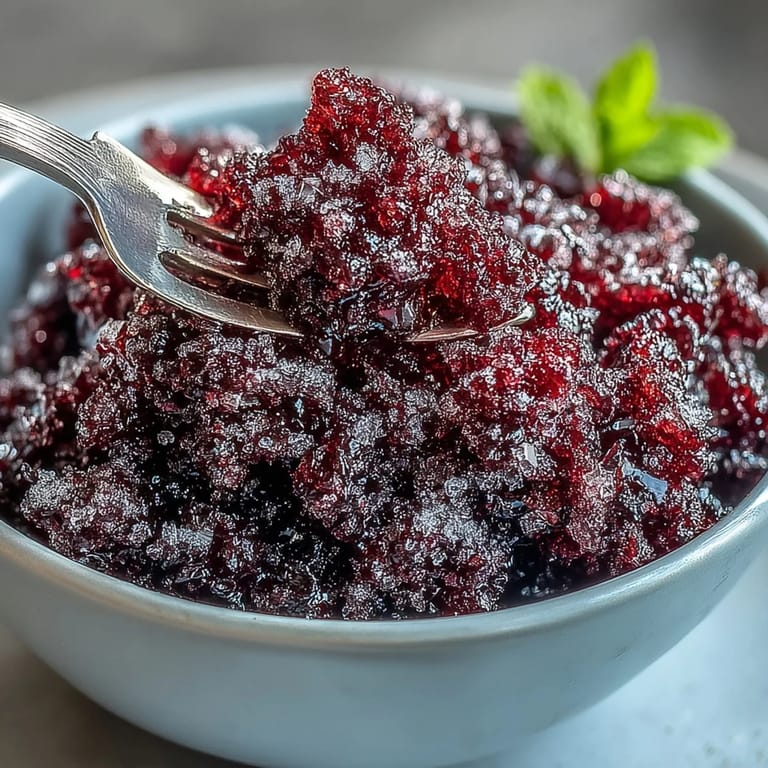
Serve it in chilled glasses or small bowls, and if you want to add a little flourish, garnish with fresh mint or a few whole black currants on top. The contrast between the refreshing icy texture and any warm evening makes this feel like a small, intentional act of kindness to yourself.
- Chill your serving glasses in the freezer for 15 minutes before scooping for maximum textural contrast.
- A small spoon works better than a fork for eating, letting you savor smaller, more delicate bites.
- Eat it immediately after serving, as the crystals will begin to consolidate if left sitting out.
 Save
Save Black currant granita has quietly become the dessert I make when I want to feel like I've given someone something special without fussing for hours. It's a small reminder that the best things often come from patience and simplicity.
Recipe FAQs
- → What makes granita different from sorbet or ice cream?
Granita has a coarser, crystalline texture achieved by periodically scraping the freezing mixture with a fork. Unlike ice cream, it contains no dairy or eggs, and unlike sorbet, it's not churned, resulting in flaky ice crystals rather than smooth creaminess.
- → Can I use frozen black currants instead of fresh?
Absolutely. Frozen currants work perfectly and are often more readily available. There's no need to thaw them first—simply add them directly to the saucepan when cooking.
- → How far in advance can I make this?
You can prepare the granita up to 2 days ahead. Keep it frozen and give it a quick fluff with a fork before serving to restore the ideal texture.
- → Why strain the mixture after pureeing?
Straining removes the seeds and skins from the black currants, ensuring a silky smooth texture. Press firmly against the sieve to extract all the flavorful juice and maximize yield.
- → Can I reduce the amount of sugar?
You can reduce sugar slightly, but keep in mind it helps achieve the proper freezing texture. Too little sugar may result in hard, icy crystals rather than the desired fluffy consistency.
- → What's the purpose of lemon juice in this dessert?
Lemon juice balances the sweetness and enhances the natural tartness of black currants. It also helps preserve the vibrant purple color and adds brightness to the overall flavor profile.