 Save
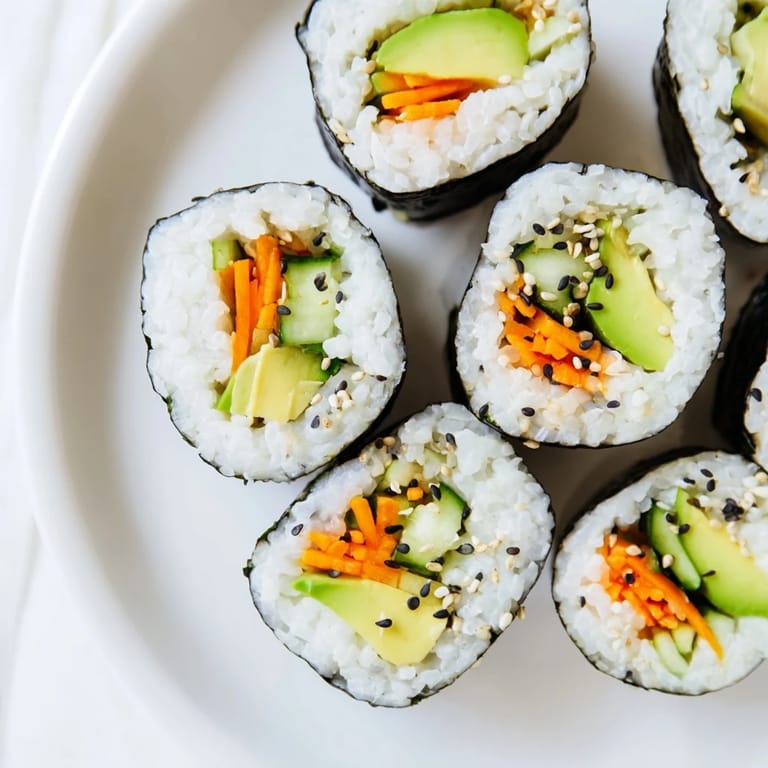
Save The first time I made sushi rolls at home, I was terrified of the nori tearing. I'd watched YouTube videos, borrowed my friend's bamboo mat, and stood in my kitchen holding a sheet of seaweed like it might explode. What I didn't expect was how meditative the whole process would become—spreading rice with wet fingers, arranging those perfect avocado slices, the satisfying sound of the knife slicing through the roll. Now these cucumber and avocado rolls are my go-to when I need something that feels fancy but takes barely longer than a lunch break.
I remember bringing a platter of these to a potluck and watching people pick them up with chopsticks, their faces lighting up at how crisp and bright they tasted. Someone asked if I'd gotten them from a restaurant, and I realized right then that homemade sushi doesn't have to be complicated—it just has to be made with attention. That afternoon, I stopped thinking of sushi as something you ordered and started making it whenever the mood struck.
Ingredients
- Sushi Rice (1 cup): The foundation of everything—short-grain sushi rice has a gentle stickiness that holds rolls together without turning into mush.
- Water (1 ½ cups): The ratio matters more than you'd think; too much water makes soggy rice, too little leaves hard bits.
- Rice Vinegar (2 tbsp): This adds that distinctive tang that makes sushi rice taste like sushi, not just seasoned rice.
- Sugar and Salt: A pinch of each balances the vinegar's sharpness and brings out the rice's natural sweetness.
- Avocado (1 ripe): Choose one that yields slightly to pressure—overripe avocados slide around inside the roll, underripe ones feel grainy.
- Cucumber (½ large): Julienne it into thin matchsticks so each bite gets that cool, refreshing crunch.
- Nori (4 sheets): That glossy seaweed is packed with umami and gives the rolls their identity; store it in an airtight container or it'll absorb humidity and lose its snap.
- Sesame Seeds (optional but encouraged): Toasted seeds add a nutty depth that pushes these simple rolls into something memorable.
Tired of Takeout? 🥡
Get 10 meals you can make faster than delivery arrives. Seriously.
One email. No spam. Unsubscribe anytime.
Instructions
- Rinse and Cook the Rice:
- Run your sushi rice under cold water, stirring gently with your fingers until the water runs nearly clear—this removes excess starch so the finished rice stays distinct and fluffy. Use the standard ratio of rice to water, bring it to a boil, then let it simmer covered on low heat until the water disappears completely.
- Season While Warm:
- While the rice is still steaming, fold in the vinegar mixture gently so each grain gets coated without breaking. Spread it on a clean surface to cool; this is the perfect moment to grab your mat and prep your vegetables.
- Prepare Your Station:
- Lay your bamboo mat on a cutting board, line it with plastic wrap, and have a small bowl of water nearby for your hands and to seal the rolls. Arrange avocado slices, cucumber, and carrot where you can reach them easily.
- Layer the Rice:
- Place nori shiny side down on the mat, wet your hands (this keeps rice from sticking to you), and spread a thin, even quarter of the cooled rice across the nori, leaving that crucial inch border at the top. The rice layer should be just thick enough to hold the filling—too much rice and the roll becomes dense.
- Fill and Roll:
- Lay your avocado and cucumber in a thin line along the rice, about an inch from the bottom edge, sprinkle sesame seeds if using, then use the mat to help you roll tightly away from you while applying gentle, steady pressure. Wet that top border with a finger so it seals as you finish rolling.
- Slice with Intention:
- Use a sharp knife dipped in water, wiping it between cuts so the rice doesn't smear. Aim for six to eight pieces per roll—they'll look like little jewels.
 Save
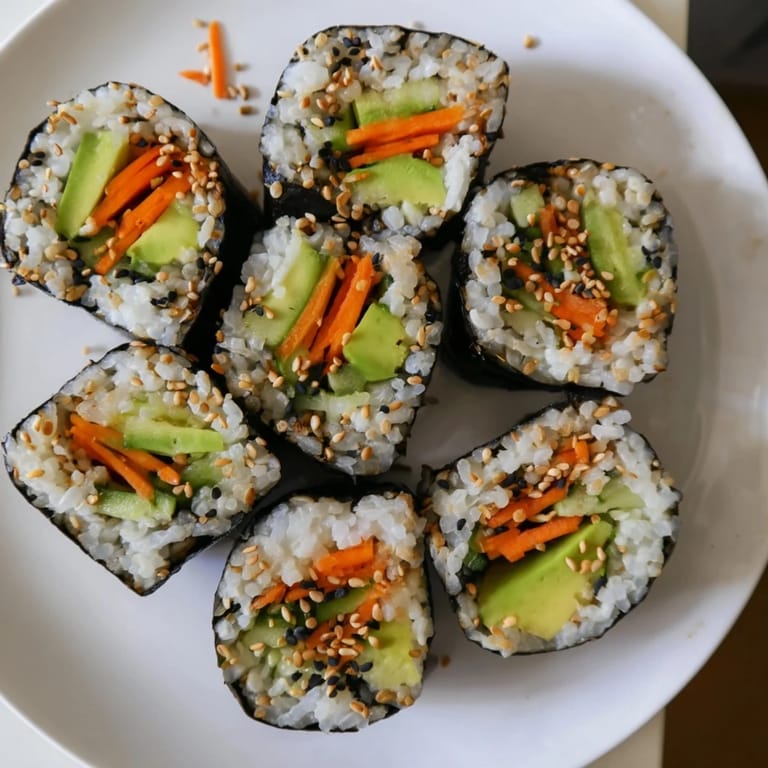
Save There was an afternoon when I made these rolls for my partner who'd had the worst day at work. I didn't say anything grand—just set down a plate with these bright green and white rolls, a small dish of wasabi, and watched them eat three without stopping. They looked up and said, 'I didn't know I needed this,' and I realized that sometimes the best thing food does is show up exactly when it's needed.
The Joy of Vegetables Done Right
The magic of these rolls isn't in technique alone—it's in respecting what the vegetables bring to the table. When you slice that cucumber thin enough, it releases its moisture and becomes tender, not watery. The avocado's creamy richness plays against the crispness, and together they create something that tastes alive. I've learned that the best vegetarian cooking isn't about replacing something; it's about letting ingredients shine as themselves.
Rice Mastery Changes Everything
Getting your sushi rice right is the difference between rolls that hold together and ones that fall apart on the plate. The seasoning needs to go in while the rice is warm so the vinegar actually penetrates each grain. I used to rush this step and wondered why my rolls never tasted quite right. Now I treat rice seasoning like a ritual—slow, intentional, present.
Serving and Sharing Thoughts
These rolls are best eaten within an hour of making them while the nori is still crisp and the rice has that perfect tender texture. They're wonderful served with soy sauce or tamari for dipping, a small mound of wasabi on the side, and thin slices of pickled ginger to refresh your palate between bites. The beauty of homemade sushi is that you control every element, from how fresh the vegetables are to exactly how much seasoning hits your rice.
- If your nori has absorbed humidity and lost its crispness, you can gently wave it over a flame for just a second to revive it.
- Make these rolls in advance if you're hosting—they keep wrapped in plastic for several hours, though the nori will gradually soften.
- Don't stress about perfection; even rolls that look slightly wonky taste incredible when made with attention.
 Save
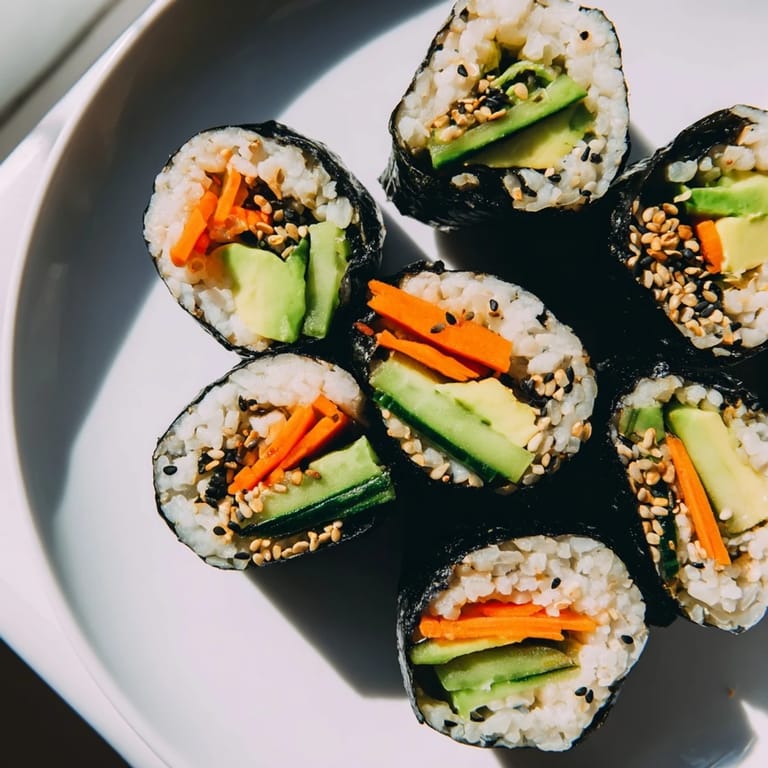
Save These rolls taught me that sushi doesn't require years of training or rare ingredients—just respect for your materials and a willingness to repeat the steps until your hands remember the motion. Every time you roll one, you're one step closer to making sushi that's unmistakably yours.
Recipe FAQs
- → What type of rice is best for these rolls?
Sushi rice, short-grain and sticky, is ideal as it holds together well when rolled and provides the perfect texture to complement the fresh fillings.
- → Can I add other vegetables to these rolls?
Yes, adding vegetables like bell pepper, radish, or carrot juliennes enhances crunch and flavor variety without overpowering the delicate avocado and cucumber.
- → How do I keep the rice from sticking to my hands during assembly?
Rinse your hands with water before handling the rice to prevent sticking and help spread it evenly over the nori sheet.
- → What condiments pair well with these veggie rolls?
Savory soy sauce or gluten-free tamari works well, along with optional pickled ginger and wasabi for extra zing and balance.
- → Can these rolls be prepared ahead of time?
It's best to assemble just before serving to maintain freshness and texture, but you can prep the rice and cut vegetables a few hours in advance.