 Save
Save There's something about spring that makes me crave asparagus soup—not because it's trendy, but because the first time I made it, my kitchen filled with this delicate, almost grassy sweetness that caught me completely off guard. I'd bought a bunch of asparagus at the farmer's market on a whim, and a friend casually mentioned she made soup from it. Two hours later, I was ladling this silky green dream into bowls, and my skeptical partner asked for seconds. That's when I knew this recipe would become a regular in our rotation.
I made this for my in-laws last April when they visited unexpectedly, and I had maybe three hours' notice. Pulling fresh asparagus from the farmers market and throwing together this soup felt like such a confident move—like I had it all figured out. My mother-in-law actually took notes on the recipe, which is saying something from someone who's been cooking longer than I've been alive. That moment made me realize how sometimes the simplest dishes carry the most weight.
Ingredients
- Fresh green asparagus (500 g), trimmed and cut into 2 cm pieces: The heart of this soup—look for firm, bright green stalks and don't skip separating the tips for garnish, as they add a beautiful visual and textural contrast.
- Leek, white and light green parts (1 medium): Use only the pale parts because the dark green can make the soup bitter; slice them and rinse thoroughly between layers to catch any hidden grit.
- Onion (1 small), chopped: This builds the aromatic foundation without overpowering the delicate asparagus flavor.
- Potato (1 medium), peeled and diced: It thickens the soup naturally and adds a subtle earthiness that balances the spring vegetables.
- Vegetable broth (1 L): The backbone of the soup—use something you'd actually drink on its own, as quality broth makes all the difference.
- Heavy cream (150 ml): This finishes the soup with a silky texture and rounds out the flavors beautifully.
- Unsalted butter (2 tbsp): The starting point for all the flavors to bloom, so don't rush this sauté.
- Salt, freshly ground black pepper, and nutmeg (a pinch): Season to taste at the end; the nutmeg is optional but adds an almost invisible warmth.
- Fresh lemon juice (1 tbsp): This brightens everything at the last moment and prevents the soup from tasting flat.
- Reserved asparagus tips and fresh chives or parsley for garnish: These final touches transform the bowl from simple to impressive.
Tired of Takeout? 🥡
Get 10 meals you can make faster than delivery arrives. Seriously.
One email. No spam. Unsubscribe anytime.
Instructions
- Start with the aromatics:
- Melt the butter over medium heat in your saucepan and add the onion, leek, and potato. You'll know they're ready when they're soft and the kitchen smells incredible, about 4–5 minutes—don't let them brown or they'll lose their delicate character.
- Bring in the asparagus stalks:
- Add the asparagus pieces (remember, you've set the tips aside) and cook for 2 minutes so they start to soften. You'll notice the color deepens slightly and that grassy scent intensifies.
- Build the body with broth:
- Pour in the vegetable broth and bring everything to a boil, then lower the heat and let it simmer gently for 15 minutes. The vegetables should be completely tender and the broth will have absorbed all their essence.
- Blanch the tips while you wait:
- In a separate pot of boiling salted water, cook those reserved asparagus tips for 1–2 minutes until they're just tender but still bright green. This keeps them from turning dull and mushy.
- Blend to silky perfection:
- Use an immersion blender to puree the soup until it's completely smooth, working in batches if you're using a countertop blender. The transformation from chunky vegetables to silk happens in seconds.
- Finish with cream and seasoning:
- Stir in the heavy cream and bring the soup back to a gentle simmer. Taste it and add salt, pepper, a whisper of nutmeg if you'd like, and finish with the lemon juice—this last step is where everything clicks into place.
- Plate and celebrate:
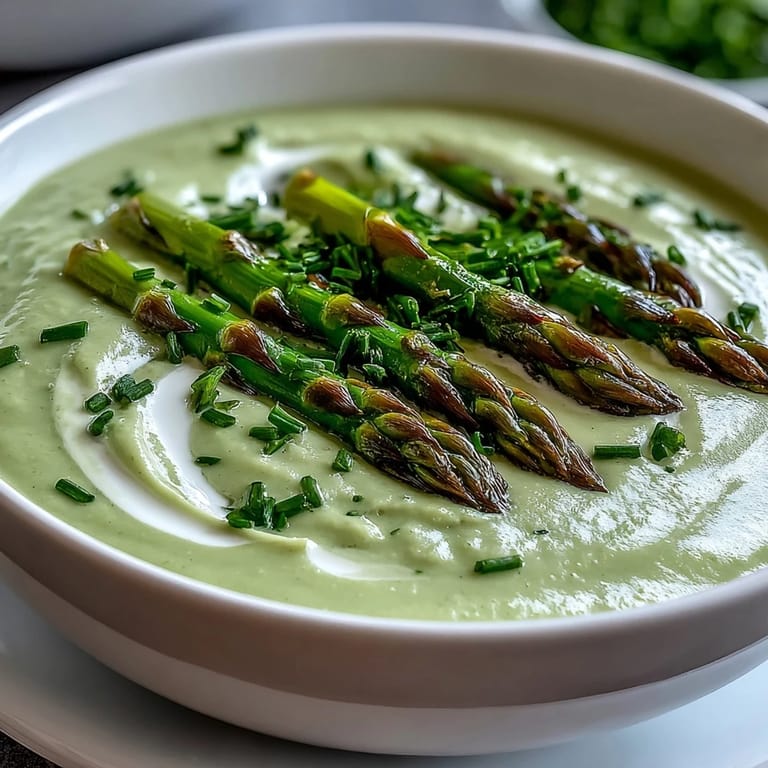
- Ladle into bowls and arrange those blanched asparagus tips on top, then scatter with fresh herbs. The contrast of colors and textures is half the pleasure.
 Save
Save I remember my daughter tasting this soup and saying it tasted like 'fancy vegetable,' which made me laugh out loud. That comment stuck with me because it perfectly captures what this recipe does—it takes everyday ingredients and turns them into something that feels refined without trying. Since then, I've served it to everyone from picky eaters to food critics, and it consistently surprises people with how much flavor lives in simplicity.
The Magic of Spring Vegetables
There's a reason asparagus soup feels seasonal rather than year-round. Fresh spring asparagus has a tender sweetness that doesn't exist in frozen or out-of-season stalks, and building a soup around that brief window of peak flavor teaches you something about respecting what's in season. I learned this the hard way when I tried making this in January with tough, woody asparagus and ended up with something that tasted more like hay than spring.
Texture and Temperature Matter
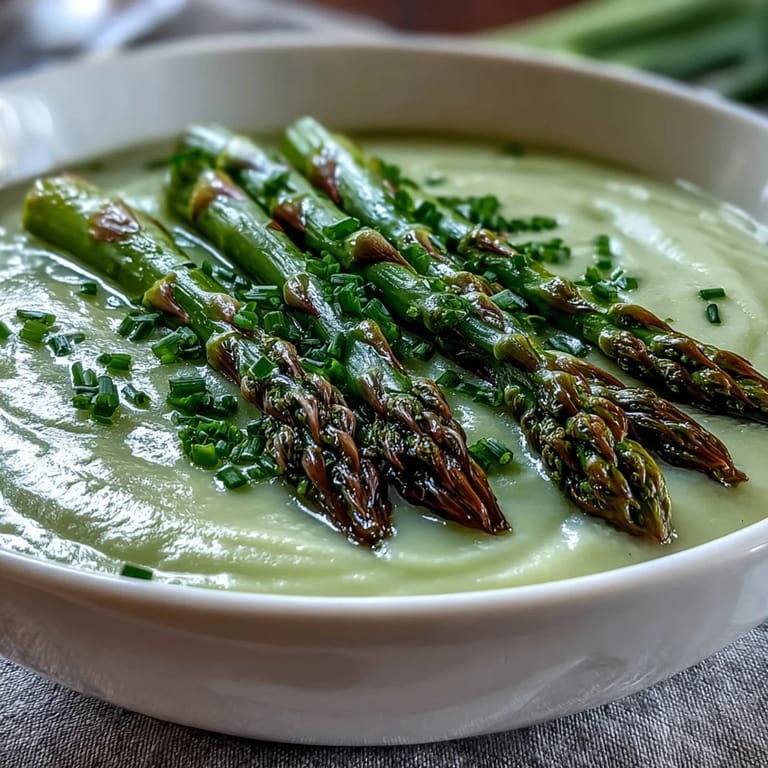
The contrast between the silky puree and those few perfect asparagus tips on top isn't just pretty—it's what makes each spoonful interesting. I used to overcomplicate the garnish, adding too many herbs or croutons, but then I realized that letting the soup itself shine with just a whisper of chives is far more elegant. The same goes for serving temperature; this soup deserves to be hot but not boiling, so the cream doesn't separate and the flavors stay balanced.
Serving and Pairing Ideas
This soup can stand alone as a light lunch or open a meal beautifully. I've served it with crusty bread and a cold glass of Sauvignon Blanc on lazy spring afternoons, and I've also spooned it into shallow bowls with a poached egg on top when I wanted something more substantial. The versatility is part of its charm—it adapts to what you need without losing its identity.
- A slice of toasted sourdough or ciabatta on the side turns this into a complete meal.
- For something richer, try topping with a perfectly poached egg and a sprinkle of fleur de sel.
- A crisp white wine like Sauvignon Blanc or Albariño complements the delicate flavors perfectly.
 Save
Save This soup has become my go-to reminder that cooking doesn't need to be complicated to be memorable. Every time I make it, I'm grateful for spring and for the people gathered around the table.
Recipe FAQs
- → How do I store leftover soup?
Store cooled soup in an airtight container in the refrigerator for up to 3 days. Reheat gently over medium-low heat, stirring occasionally. The cream may separate slightly when reheated but will emulsify again with a good whisk.
- → Can I freeze this soup?
Yes, freeze without the cream for best results. Cool completely, transfer to freezer-safe containers, and freeze for up to 3 months. Thaw overnight in the refrigerator, reheat, and stir in fresh cream when serving.
- → What can I use instead of heavy cream?
Coconut cream works well for dairy-free versions with a subtle tropical note. Greek yogurt adds tangy protein but stir it in off the heat to prevent curdling. For lighter options, half-and-half or whole milk provide silkiness with less fat.
- → Why add potato to the soup?
The potato acts as a natural thickener, creating velvety body without requiring flour or cornstarch. Its mild flavor complements the asparagus while providing starch that helps the puree hold its texture beautifully.
- → How do I know when the asparagus is tender enough?
The stalks should pierce easily with a sharp knife but still hold their shape before blending. Overcooking can dull the bright green color and fresh flavor, so aim for tender-crisp at the 15-minute simmer mark.
- → What wine pairs well with this soup?
Crisp Sauvignon Blanc, Pinot Grigio, or dry Riesling complement the vegetal notes beautifully. The wine's acidity mirrors the lemon's brightness while cutting through the cream's richness for balanced flavor.