 Save
Save There's a particular kind of magic that happens when you're standing in your kitchen on a Tuesday evening, hungry and pressed for time, and you realize you have just enough of the right things to make something that tastes like it took hours. That's when pesto pasta with chicken became my weeknight savior—no complicated techniques, no hunting through the pantry for obscure ingredients, just the smell of garlic and basil hitting you the moment the pesto goes into the warm pasta. The first time I threw this together, I was genuinely surprised at how the simple combination of store-bought pesto, rotisserie chicken, and good olive oil could feel so effortlessly elegant.
I remember serving this to my neighbor one evening after she'd had a long day at work, and watching her twirl the pasta onto her fork, then pause to really taste it—that moment when you see someone realize that simple doesn't mean forgettable. She asked if I'd made the pesto from scratch, and when I admitted it was store-bought, she laughed and said the secret is knowing when to let the ingredients do the work for you. That conversation stuck with me, because it perfectly captures what this dish is about: confidence in choosing quality things and letting them shine.
Ingredients
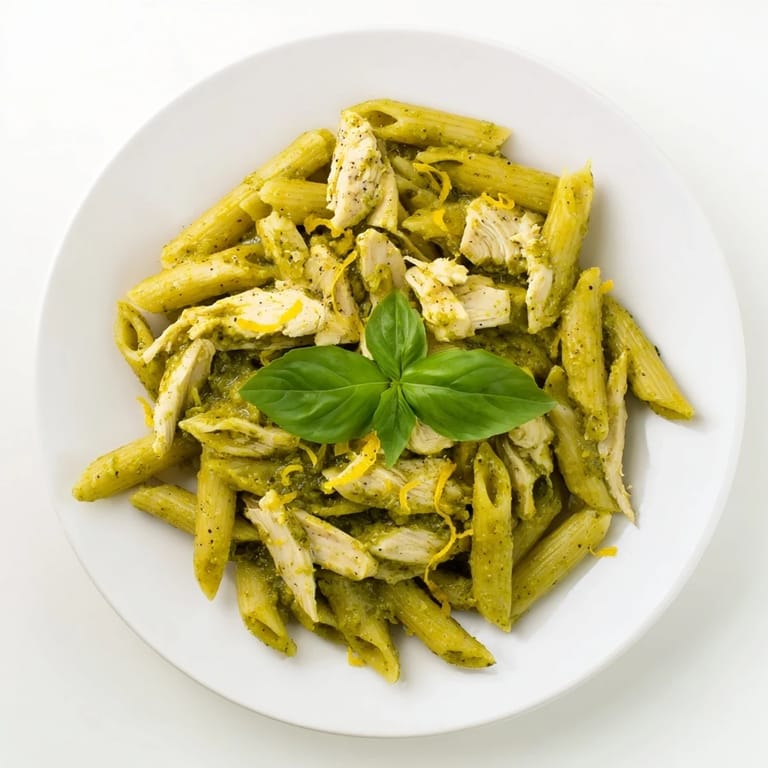
- 340 g (12 oz) dried short pasta: Penne, fusilli, or farfalle work beautifully here because their shapes trap the pesto and create little pockets of flavor—avoid long pasta like spaghetti, which just slides around.
- Salt for the pasta water: This is your only seasoning for the pasta itself, so don't be shy; the water should taste like the sea.
- 2 cups (about 250 g) rotisserie chicken: Buy it already cooked and shredded if you can, because the whole point is saving time and your sanity.
- 120 g (1/2 cup) high-quality store-bought pesto: This is where you splurge slightly—a fresher, more fragrant pesto makes all the difference in such a minimal dish.
- 2 tbsp extra-virgin olive oil: Good olive oil rounds out the sauce and makes it glossy, not greasy.
- 40 g (1/4 cup) grated Parmesan cheese: Use a box grater to shred it yourself rather than pre-grated; it melts more smoothly into the warm pasta.
- Freshly ground black pepper: A small grind right before serving brightens everything.
- 1/2 cup (about 12 g) fresh basil leaves: Optional, but if you have it, torn basil adds a fresh green note that shop-bought pesto sometimes lacks.
- Zest of 1 lemon: A tiny touch of brightness that keeps the whole dish from feeling heavy.
Tired of Takeout? 🥡
Get 10 meals you can make faster than delivery arrives. Seriously.
One email. No spam. Unsubscribe anytime.
Instructions
- Get the water boiling:
- Fill a large pot with water, add salt until it tastes distinctly seasoned, and bring it to a rolling boil. You want the water hot enough that it roars when you add the pasta.
- Cook the pasta:
- Add your pasta and stir it around for the first minute so it doesn't stick to itself. Cook it according to the package time, but taste it a minute or two early—you want it tender but still with a slight bite, not soft. Before you drain it, scoop out about half a cup of the starchy pasta water and set it aside; you'll use this to make the sauce silky.
- Prepare the chicken:
- While the pasta cooks, tear or chop the rotisserie chicken into bite-sized pieces. This doesn't take long, and doing it now means you're not fumbling while everything else is hot.
- Build the sauce:
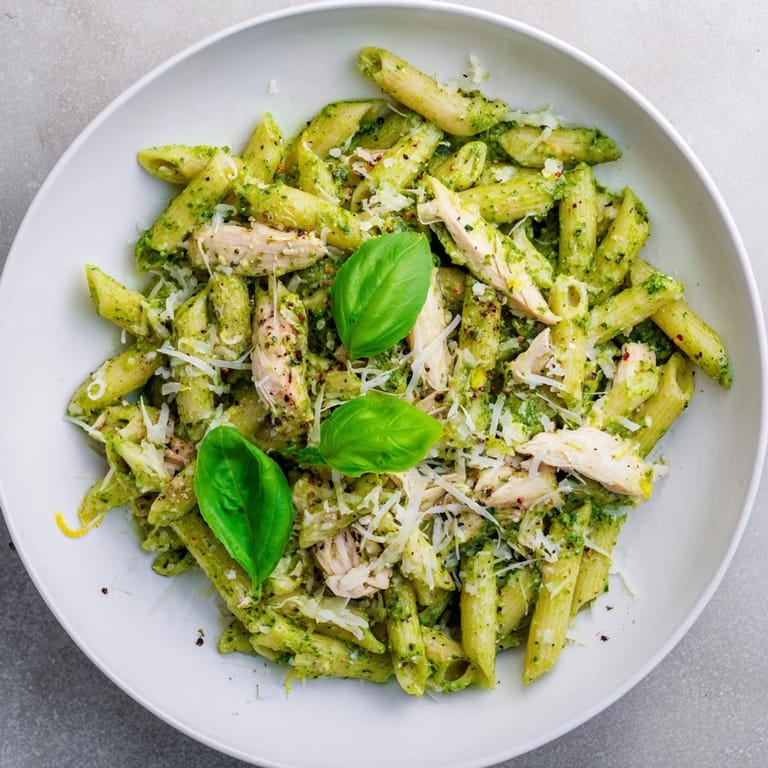
- Drain the pasta and return it to the empty pot over low heat. This is the moment it gets good: drizzle in the olive oil, add the pesto by the spoonful, and pour in a splash of that reserved pasta water. Stir everything together gently but thoroughly, watching as the starchy water and pesto combine into something creamy and glossy.
- Add the chicken and cheese:
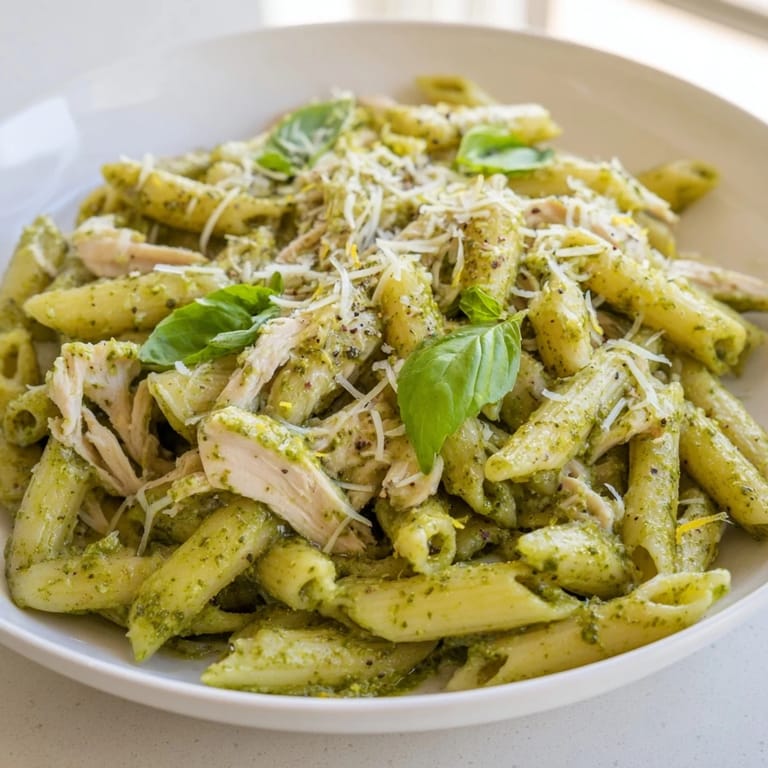
- Toss in your shredded chicken and the Parmesan cheese, stirring until the chicken is warmed through and the cheese has melted into the sauce. If the sauce looks too thick or the pasta seems dry, add another splash or two of pasta water—the sauce should cling to the pasta but still move around slightly when you stir it.
- Final touches:
- Turn off the heat, grind some black pepper over everything, and if you have fresh basil and lemon, tear the basil and stir it in, then finish with the zest. Serve immediately while it's still steaming.
 Save
Save There's a peculiar comfort in realizing that a good meal doesn't require you to be a skilled cook, just present and intentional. This pasta taught me that some of the best dishes are the ones that respect your time and your effort equally, asking you not to prove anything but simply to eat well.
Why This Works as a Weeknight Dinner
The beauty of this dish lives in its restraint. Rather than layering technique on top of technique, each ingredient is chosen because it's already excellent on its own—the pesto is already seasoned and complex, the chicken is already cooked, the pasta is the only thing that needs active cooking time. This means your focus can be on texture and temperature and making sure everything comes together warm and cohesive, rather than on juggling multiple cooking tasks. I've made this on nights when I've been exhausted, distracted, or just not interested in thinking hard about dinner, and it has never disappointed.
Playing With What You Have
Once you understand how this dish works, you can bend it slightly without breaking it. Some evenings I'll add a handful of quartered cherry tomatoes or some sautéed zucchini if I have them, stirring them in with the chicken so they warm through. Other times I'll use sun-dried tomato pesto instead of basil, which gives the whole thing a deeper, slightly earthier flavor. The bones of the recipe stay the same—pasta, pesto, something protein, something creamy—but the details become flexible enough to match what you actually have in the kitchen and what sounds good at that moment.
Serving and Pairing
This is a complete meal on its own, but if you're setting a table or making it feel more intentional, a crisp white wine like Pinot Grigio drinks beautifully alongside it, echoing the brightness of the basil and lemon. A simple green salad on the side—just arugula or mixed greens with a quick vinaigrette—adds a gentle counterpoint to the richness of the pesto without making extra work for yourself. If you're serving this to people who matter to you, the care shows itself in the quality of what you're using, not in how long you spent at the stove.
- A light salad dressed with lemon and olive oil balances the pesto beautifully without requiring more than five minutes to prepare.
- If anyone at your table prefers no chicken, it's easy enough to set aside a portion and toss it with vegetables instead, making this naturally accommodating.
- Any leftovers will keep in the fridge for a day or two, though the pasta will stiffen slightly as it cools—a splash of olive oil and a few seconds in the microwave brings it back to life.
 Save
Save This is the kind of recipe that becomes a quiet favorite, the one you make when you want something that tastes intentional but doesn't demand anything difficult from you. It's taught me that cooking well isn't always about complexity; sometimes it's about knowing which corners you can cut and which ones matter, then moving forward with confidence.
Recipe FAQs
- → Can I use other types of pasta?
Yes, short pasta varieties like penne, fusilli, or farfalle work best to hold the sauce and chicken well.
- → Is rotisserie chicken necessary?
Rotisserie chicken adds juicy, cooked protein quickly, but leftover or grilled chicken can be used as alternatives.
- → How can I make this dish vegetarian?
Simply omit the chicken and add sautéed vegetables like zucchini or cherry tomatoes for a veggie-friendly option.
- → What can I substitute for store-bought pesto?
Homemade pesto or alternatives like sun-dried tomato pesto provide delicious variations with similar fresh flavors.
- → How is the sauce kept creamy?
The reserved pasta water helps bind the pesto and olive oil to the pasta, creating a smooth, creamy consistency.
- → Can I prepare this dish gluten-free?
Yes, substituting regular pasta with gluten-free pasta ensures that the dish suits gluten sensitivities.